Stories · Rome
The day two gladiators walked out of the Colosseum free
Priscus and Verus fought to a standstill on the Colosseum's opening games. The crowd wanted both spared, and the emperor found a way.
2 min read

Stories · Rome
Priscus and Verus fought to a standstill on the Colosseum's opening games. The crowd wanted both spared, and the emperor found a way.
2 min read
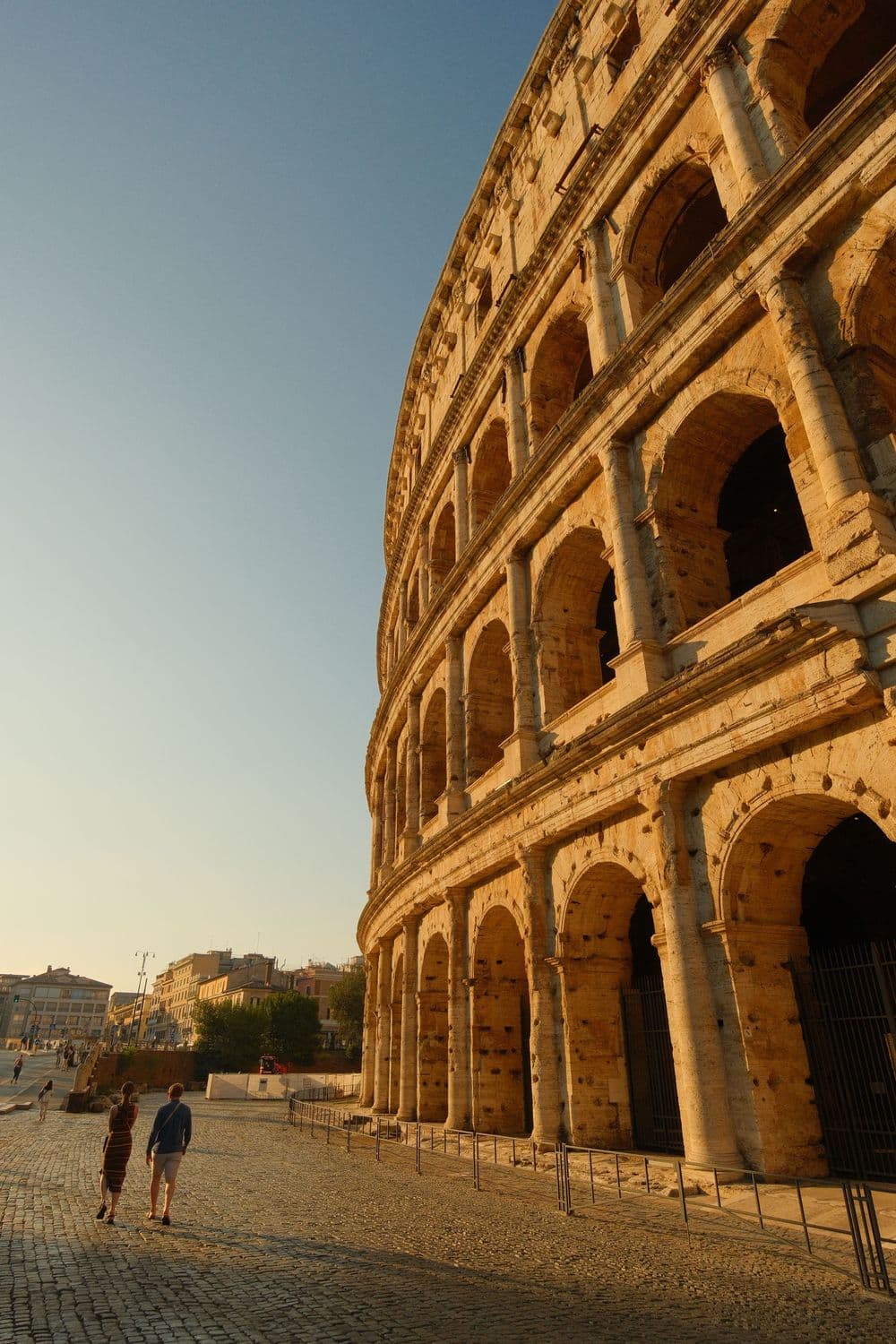
Most people picture the Colosseum as a place where somebody always lost. The one gladiator fight we know blow by blow, from anywhere in the Roman world, ended with nobody losing at all.
It happened in AD 80, at the games that opened the building. The emperor Titus put on a hundred days of shows. The historian Cassius Dio says nine thousand animals were killed. And on one of those days, two gladiators called Priscus and Verus walked out onto the sand.
We know about it because the poet Martial was in the stands, and he wrote it down.
The two men were evenly matched, and the fight went on and on. The crowd started shouting for both of them to be released. Titus kept to the rules: a bout lasted until one fighter raised a finger to say he'd had enough.
Then, says Martial, both men raised a finger at the same moment.
Titus sent each of them a wooden sword, the sign that a gladiator had won his freedom, and a victor's palm. Martial's line about it still works as a headline: "two fought, and both won." Nothing like it, he adds, had happened under any emperor before.
Priscus and Verus left as free men. The crowd that watched them had come in through numbered arches, and you can still see the numbers.
On the north side of the Colosseum, where the outer wall stands to its full height, look above the ground-floor arches for the Roman numerals: LII, LIII, LIV. Each public entrance had one. A spectator's ticket was a small token marked with an entrance, a section and a row, so tens of thousands of people could reach their seats without a crush. Seventy-six of the eighty arches were numbered. The four on the main axes weren't. Those were for the emperor and his guests.
From the Arch of Constantine, walk about 190 metres along the outer wall with the building on your right, to where the outer ring still stands to its full height. Stand back far enough to read the numbers over the arches. That's the stretch the crowd walked through on opening day. No ticket needed: it's outside.
Inside, the first-level viewpoint on the same side looks down on the arena, where a rebuilt section of wooden floor shows the kind of floor Priscus and Verus fought on. Underneath it is the basement of lifts and cages that Titus's younger brother, Domitian, added after him, and that's a story of its own.
The Trevlo tour of the Colosseum tells this story at the numbered arches, then takes you inside to the arena, the basement and the brick wall that has held the east end mid-collapse since 1807. Five stops, about eleven minutes of listening, at your own pace.
The first stop is free to play on this page, and your first tour in the app is free.