Stories · New York
Who was Emily Roebling?
Emily Warren Roebling ran her bedridden husband's work on the Brooklyn Bridge for over ten years, and was the first to cross it, in 1883.
3 min read

Stories · New York
Emily Warren Roebling ran her bedridden husband's work on the Brooklyn Bridge for over ten years, and was the first to cross it, in 1883.
3 min read
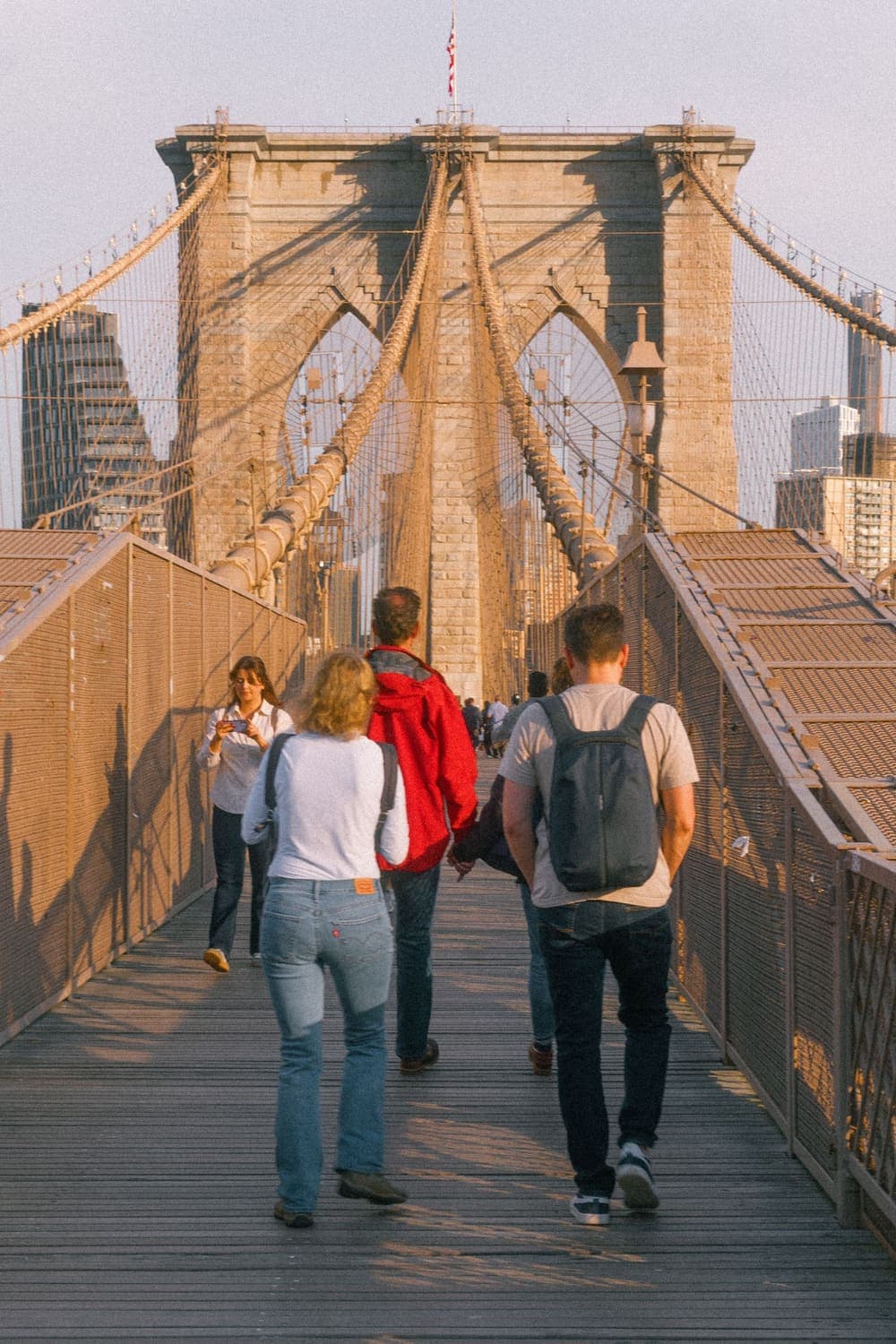
Emily Warren Roebling was the wife of Washington Roebling, chief engineer of the Brooklyn Bridge. When illness confined him to his house in Brooklyn Heights, she became his go-between with the bridge for more than ten years: she learned the engineering, carried his orders to the site, and dealt with the contractors and politicians. Before the opening ceremonies in May 1883, she was the first person driven across the finished bridge, with a live rooster in her lap for victory.
She was born Emily Warren in Cold Spring, New York, in 1843. In 1864, visiting her brother, the Union general Gouverneur K. Warren, at his army headquarters, she met one of his officers at a soldiers' ball. He was Washington Roebling, and they married the next year.
His father, John Roebling, designed the Brooklyn Bridge. In June 1869 a ferry crushed John's foot at the Brooklyn shore, and he died of tetanus in July, before building began. Washington, 32, took over.
Washington's towers stood on caissons, huge timber boxes sunk to the riverbed and filled with compressed air so men could dig inside. He spent long hours down there. In 1872 the bends, the caisson disease that also killed three workers that spring, left him an invalid.
From then on he directed the bridge from the house on Columbia Heights, watching through field glasses from a back window. Emily became the link. She studied the strength of materials, the making of cables and the mathematics of the curve they hang in. She took his instructions to the engineers, wrote his letters and met the bridge's trustees. Most historians think that in the last years she was running much of the job herself.
In 1882, with the chief engineer still unseen on site, there was a move to replace him. Emily lobbied the engineers and politicians, and Washington kept his post.
The bridge was finished in May 1883. Before the ceremonies, Emily rode across in an open carriage with a rooster on her lap, and the workers raised their hats as she passed.
On opening day, 24 May, the congressman Abram Hewitt told the crowd the bridge was "an everlasting monument to the self-sacrificing devotion of woman", and said her name would always be linked with it. Washington watched the day from his window.
Emily didn't stop there. She took a law course at New York University, earned its certificate, and wrote an essay on the legal disabilities of married women. She died in 1903, aged 59.
On the bridge's walkway, at the Brooklyn tower, find the bronze plaque on the stonework beside the path, on the side facing Manhattan. The Brooklyn Engineers Club put it up with money raised from the public. It names all three Roeblings: John, who gave his life to the bridge; Washington, who completed it; and, first of all, Emily, whose faith and courage helped him do it.
The Trevlo tour Brooklyn Bridge & DUMBO starts at the Manhattan entrance across from City Hall Park, where John Roebling's story begins. It walks out to the Manhattan tower and its foundation of sand, stops at midspan with the cables and their crooked wire, reaches Emily's plaque on the Brooklyn tower, and comes down past the anchorage the elephants crossed. Then it goes into DUMBO's cobbled streets under the Manhattan Bridge and ends at Fulton Ferry Landing, where John Roebling was hurt. Seven stops, about nineteen minutes of listening, at your own pace.
The first stop is free to play on this page, and your first tour in the app is free.