Stories · Rome
Why is the Colosseum half broken?
The Colosseum's south side stood on soft ground. Settling and earthquakes brought it down, and Rome carted the stone off for centuries, some to St Peter's.
3 min read

Stories · Rome
The Colosseum's south side stood on soft ground. Settling and earthquakes brought it down, and Rome carted the stone off for centuries, some to St Peter's.
3 min read
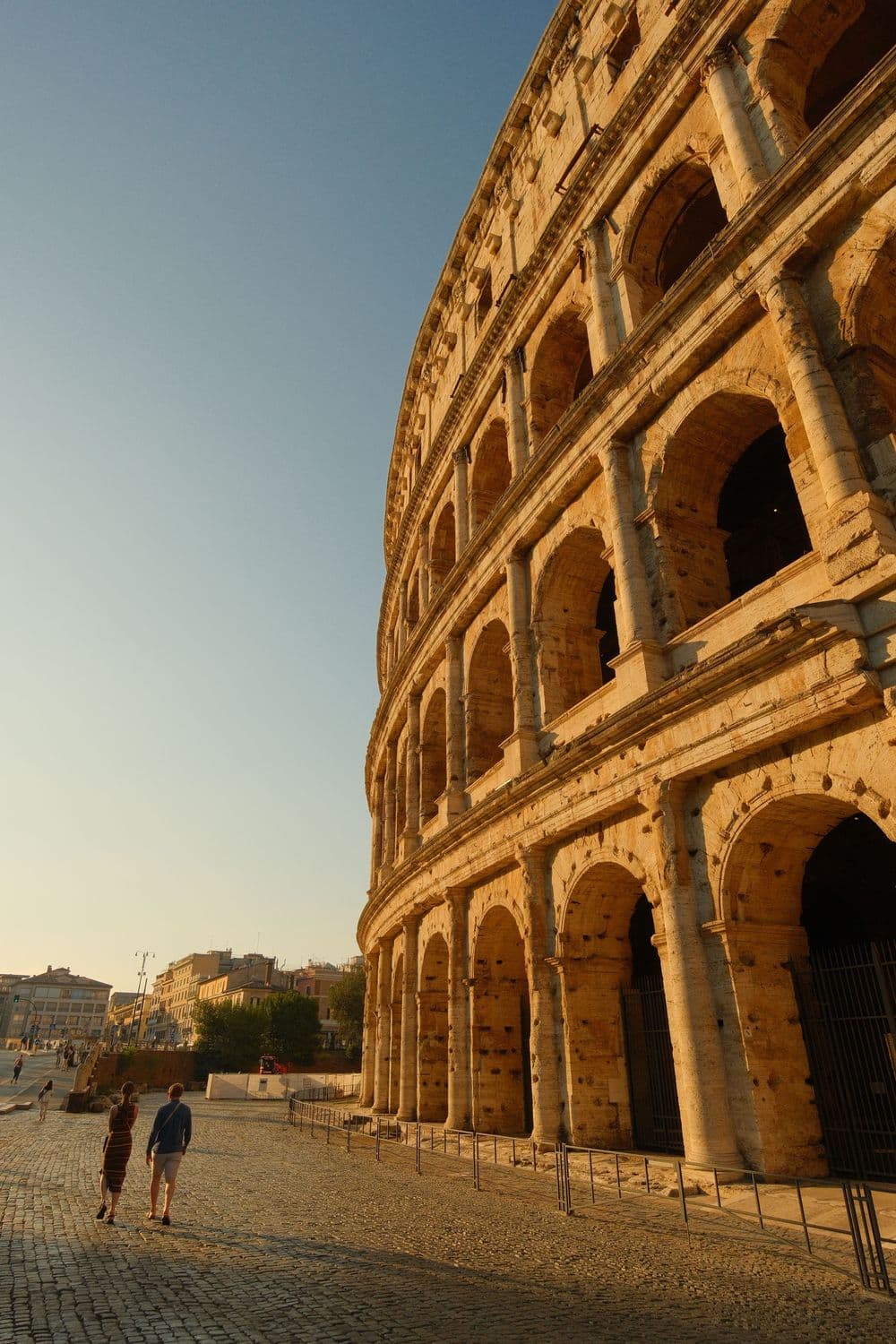
The Colosseum is half broken because its south side was built on softer ground than its north. From the 500s onwards the ground settled, earthquakes struck, and that side came down piece by piece. Then Rome treated the fallen stone as a quarry for about four hundred years. The north side, on firmer ground, still rises to its full height.
What's missing is the outer shell. The building was ringed by two outer corridors of arches, and on the south side both are gone. Of the 80 great arches that once ran round the outside, only 33 were left standing, all on the north. The floor and the seats are another story.
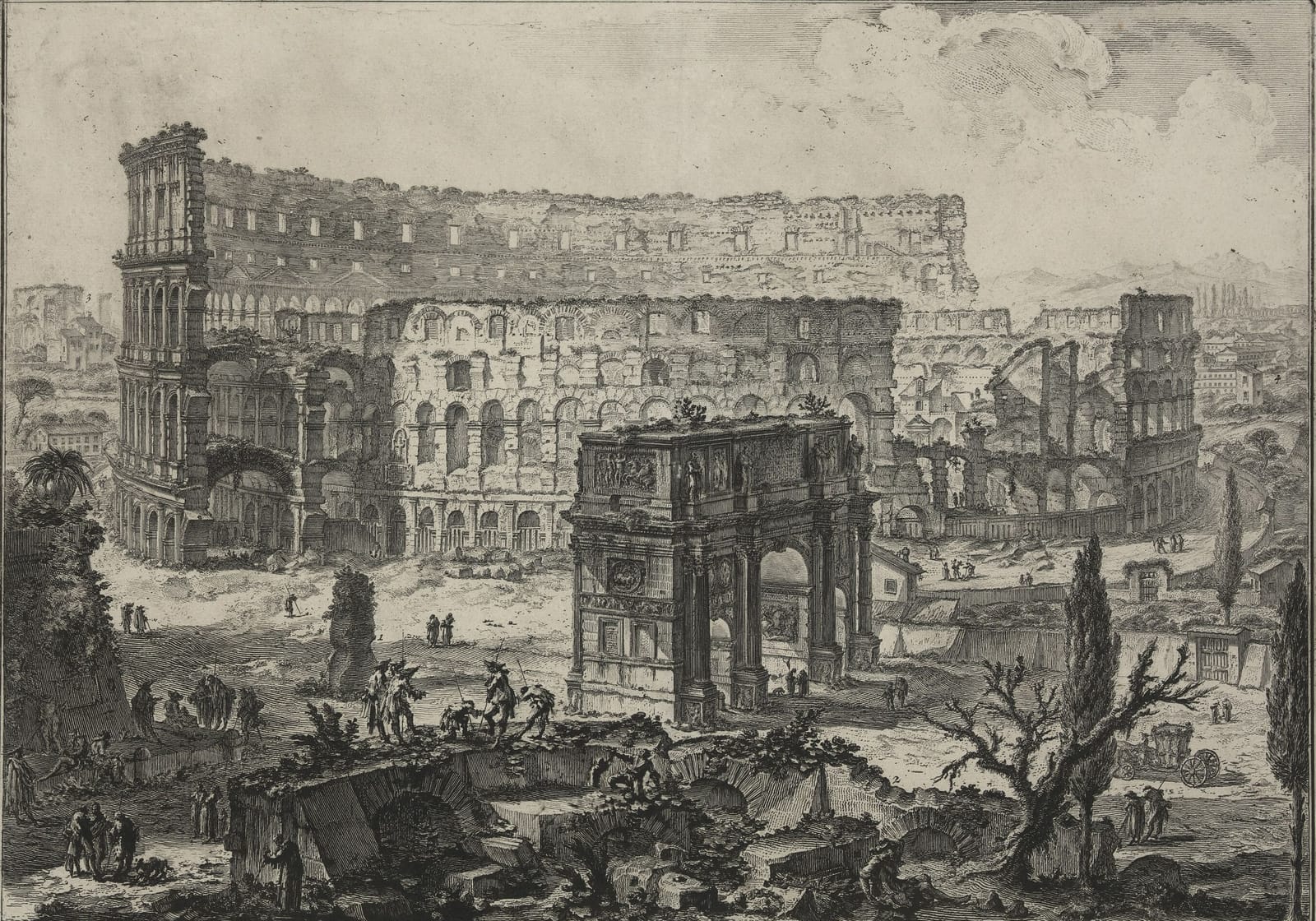
When the amphitheatre opened in the year 80, both sides were the same, about 50 metres tall. The trouble was underneath. The south side sits over a valley of soft ground laid down by water, and geologists who studied it found that ground like this can make an earthquake shake harder. Nobody can say which earthquake did the worst damage. The people who look after the Colosseum point to one in 847, and others to one in 1349.
What fell became a quarry. Fifteenth-century builders, whether popes, cardinals, noblemen or ordinary citizens, would claim an ancient ruin and take its stone, and the Colosseum suffered as much as any. In 1452 a contractor called Giovanni Paglia Lombardo was licensed to take 2,522 cartloads of it in nine months, about nine carts a day, every day. Part of the Colosseum went into St Peter's Basilica. The archaeologist Rodolfo Lanciani, writing about the fallen heap, put it this way.
It has taken four centuries and fifteen generations of stone-cutters and lime-burners to exhaust it.
The metal went as well. The blocks were joined with links of brass or iron, and the walls are pitted with holes where people most likely dug them out. Nobody can be entirely sure. A learned bishop once wrote a whole treatise weighing up seven or eight possible causes.
In the end, what stopped the taking was a belief. When Cardinal Altieri let the arena be used for bullfights in 1671, a priest named Carlo Tomassi was appalled, and he answered with a pamphlet. The Colosseum, he argued, was sacred, a place made holy by the blood of the early Christians. Rome was persuaded. Four years later the outer arches were closed and the Colosseum became a sanctuary. In 1744 Pope Benedict XIV issued an edict against profaning it, and for the Holy Year of 1750 he consecrated the arena to the martyrs. Nobody actually knows whether a single Christian died there, and no martyr's name survives. But a sacred place could no longer be a quarry, and the building was saved.
The broken ends still needed holding up. In the 1800s a great buttress was built against each one, and the Colosseum's keepers count the western one as the birth of modern restoration.
Start outside on the north side, in front of the full-height wall, to see what the whole building once looked like. Then walk round to the south side, where a pale travertine square opened in March 2026. Its paving traces the two corridors that fell, and low blocks stand where their pillars rose. The western buttress stands beside the entrance. Inside, from the second tier, look across the bowl at the lowest, thinnest side. That is the half that came down.
The Colosseum tour has eight stops, about seventeen minutes of listening, from the full-height north side through the arena to the buttress at the end of the broken wall. Its sixth stop is the missing half, heard from the second tier while you look across at it.
A free preview of the tour plays on this page, and your first tour in the app is free.