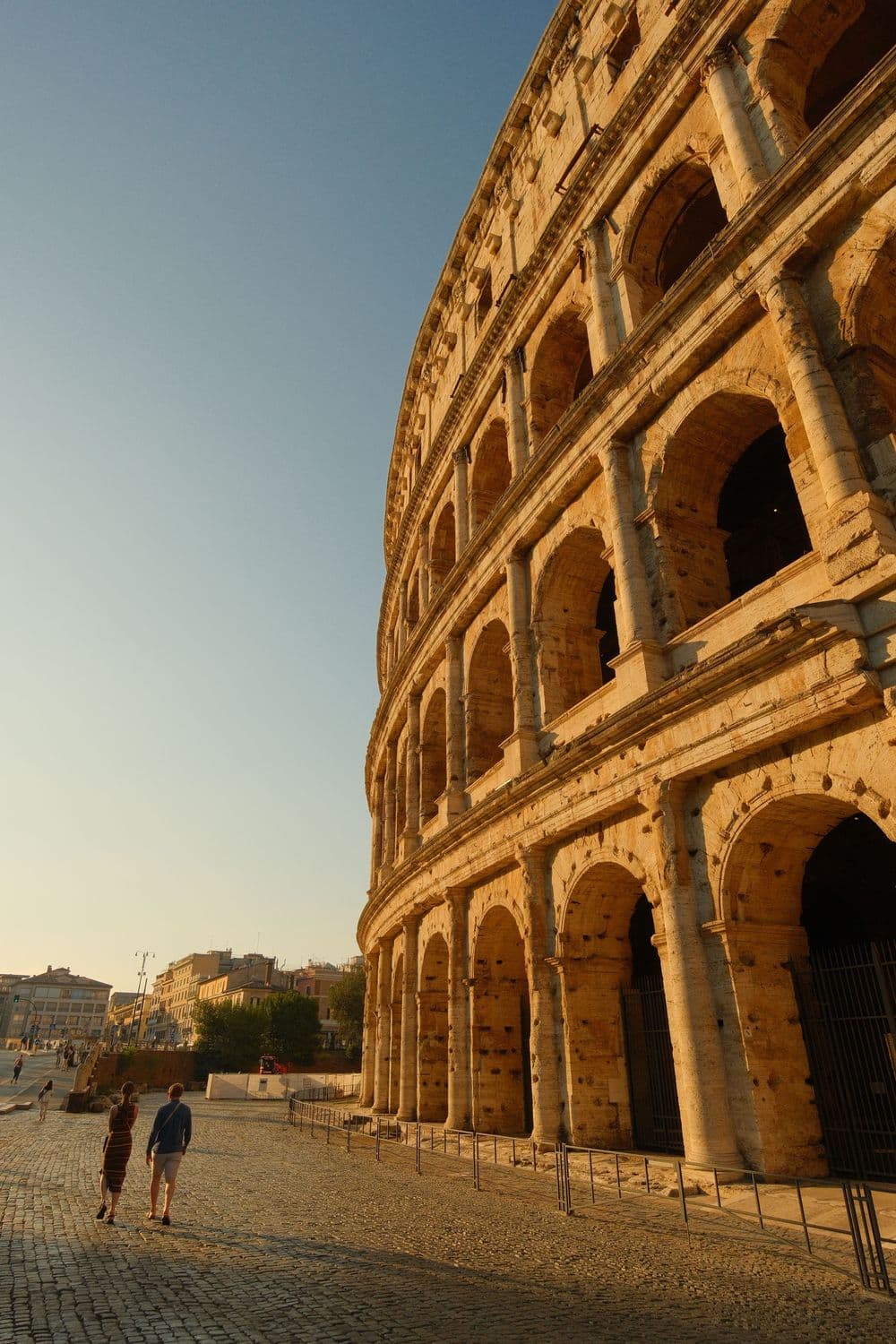
Stories · Rome
Why is the Roman Forum so low?
It's a valley. Floods and soil from the hills buried it for centuries, until cows grazed metres above the Roman paving. Since 1803 it has been dug out.
3 min read

Stories · Rome
It's a valley. Floods and soil from the hills buried it for centuries, until cows grazed metres above the Roman paving. Since 1803 it has been dug out.
3 min read
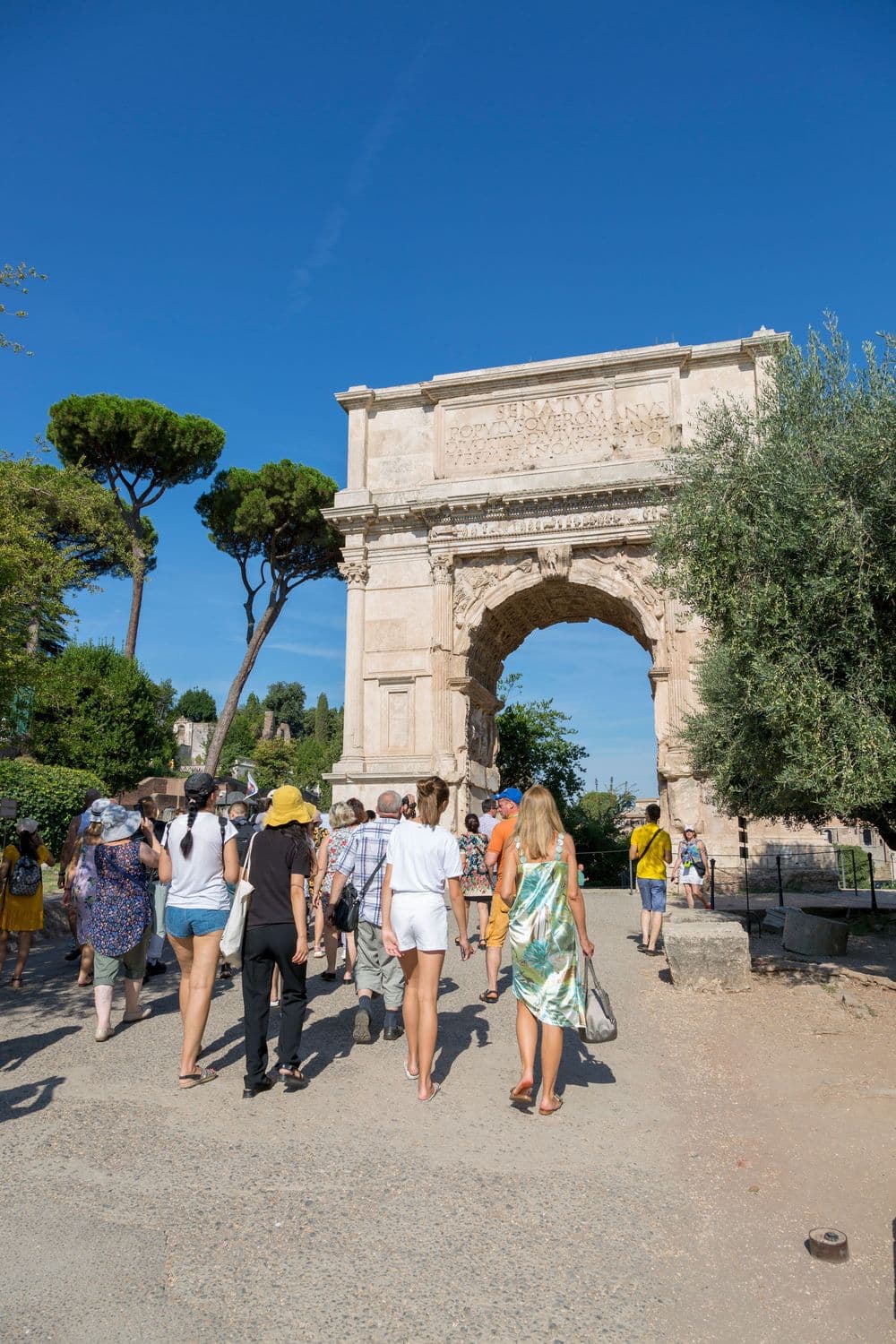
The Roman Forum is low because it sits at the bottom of a valley that kept filling up. Century after century, Tiber floods and earth eroding off the surrounding hills lifted its floor, until the ancient square lay metres down and cows grazed above it. The clearing began in 1803, and the diggers went back down to the Roman paving, which you can still see.
Before there was a Forum there was a swamp, a marshy lake where the water from the surrounding hills drained. It was drained in the late 600s BC, and the valley became the centre of Rome's public life for more than a thousand years. Excavated layers of paving show that the floor was already rising in the early Republic. As the ground rose around their buildings, the Romans simply paved over whatever was too much to clear away. The last of them, a travertine paving you can still see, dates from the reign of Augustus.
After the last monument went up, a column for the emperor Phocas in 608, nobody kept the valley clear. Silt came in, and parts turned to meadow. By the Middle Ages most of its monuments lay under debris, and the place was known as the Campo Vaccino, the cattle field, for the livestock grazing there.
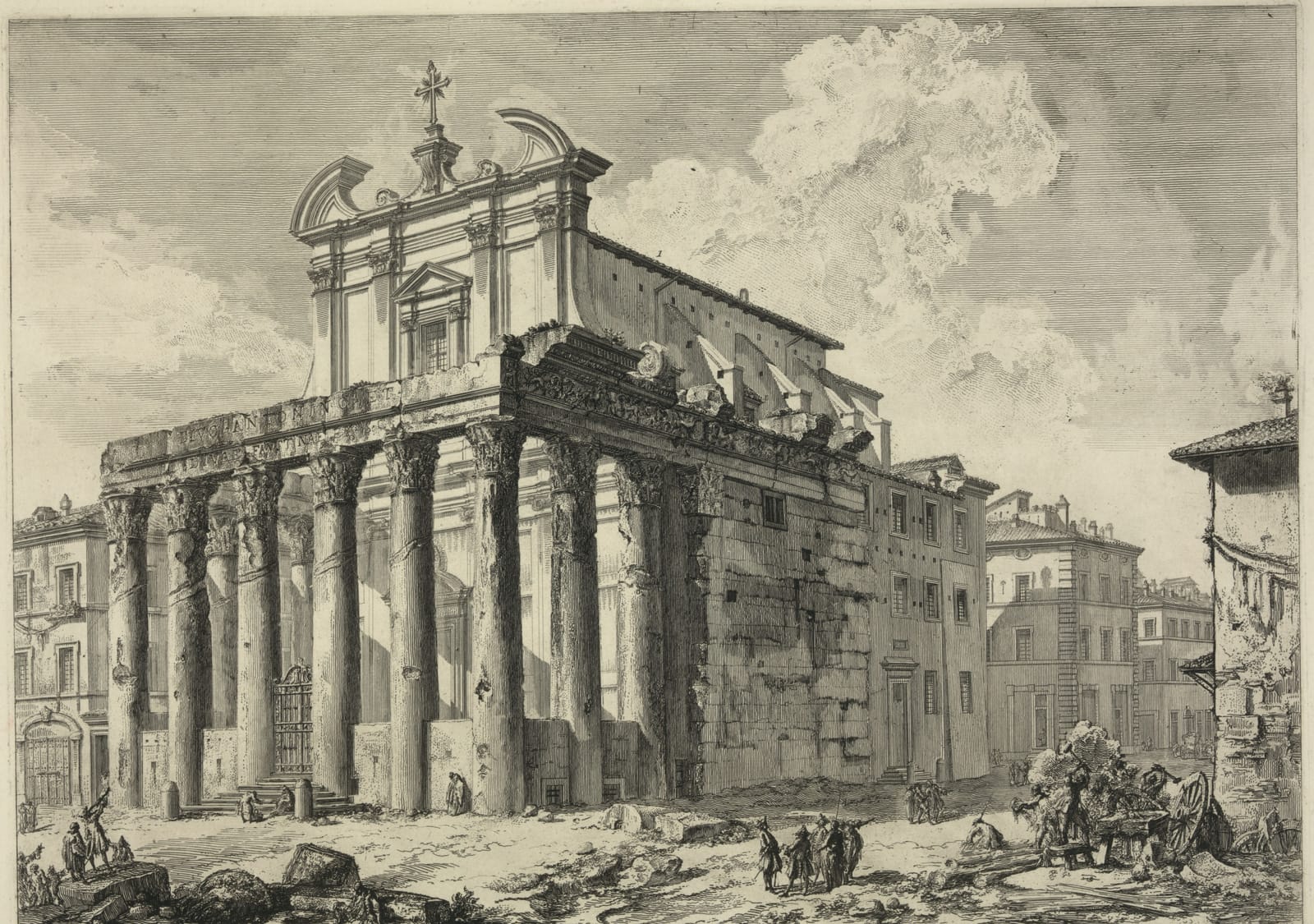
The clearest measure of how deep it went is a door. The emperor Antoninus Pius began the Temple of Antoninus and Faustina in 141 for his dead wife. In the 600s it was turned into a church, later known as San Lorenzo in Miranda, and in 1429 or 1430 the Pope gave it to the pharmacists' guild, so it became San Lorenzo degli Speziali in Campo Vaccino: St Lawrence of the Apothecaries in the Cattle Field. The bronze door survives, stranded high above the Via Sacra, about six metres up from the foot of its steps. Until the excavations, it opened onto the ground.
Other monuments disappeared the same way, as the ground rose around them. Around the Arch of Septimius Severus the level climbed so high that by the 300s a road was cut through the arch for the first time. Canaletto, painting it in 1742, could show only its upper half. By the middle of the 1700s the Column of Phocas stood up out of the field with its base completely buried, and Lord Byron later wrote two lines to it.
Tully was not so eloquent as thou, Thou nameless column with the buried base!
Tully was the English name for Cicero, so Byron rated the buried column above Cicero himself. The clearing of the Forum began in 1803, when Carlo Fea started on the debris around the Arch of Septimius Severus. The first systematic excavations came after Italy was unified, and Giacomo Boni ran them from 1898 to his death in 1925. They found one layer of paving on top of another.
Find the six tall columns of the Temple of Antoninus and Faustina beside the Via Sacra, and look up at the church door behind them. Then walk down to the Arch of Septimius Severus at the foot of the Capitoline Hill, whose lower half was underground in Canaletto's day, and the Column of Phocas near it. For the whole drop at once, the free terrace on the Capitoline, between the Palazzo dei Conservatori and the Senatorial Palace, looks down over the Forum.
The Trevlo tour of the Roman Forum walks the Via Sacra downhill from the Arch of Titus to the foot of the Capitol: 8 stops, about 18 minutes of listening. "The door in mid-air" stands you in front of the pharmacists' church, and "Where Rome argued" puts you beside Byron's column.
A free preview of the tour plays on this page, and your first tour in the app is free.