Stories · London
How did the Palace of Westminster burn down?
On 16 October 1834, workmen burning old wooden tally sticks overheated the furnaces under the House of Lords, and most of the Palace of Westminster burned.
3 min read

Stories · London
On 16 October 1834, workmen burning old wooden tally sticks overheated the furnaces under the House of Lords, and most of the Palace of Westminster burned.
3 min read
Two labourers, Joshua Cross and Patrick Furlong, fed the furnaces all day and went home at about four. By six, a doorkeeper's wife saw flames under the door of the House of Lords. The fire burned through the night. By morning most of the medieval palace was gone. Westminster Hall was saved, and nobody died.
A tally stick was a length of willow, notched to record a payment to the Exchequer, the government's treasury, and split in two so each side kept a matching half. The Exchequer had used them since the Middle Ages. Paper had long since replaced them, and by 1834 about two cartloads of old tallies were waiting to be got rid of.
Richard Weobley, the Clerk of Works, could have given them to staff as firewood. Instead he had them burned in the two furnaces under the floor of the House of Lords, while Parliament was not sitting. The furnaces were built for coal. Heat from the dry wood ran up the flues and set fire to the panelling above.
That afternoon, visitors who had come to see the tapestries in the Lords noticed thick smoke and felt heat coming through the floor. Nobody raised the alarm. Within half an hour of the first flames, the Lords chamber was ablaze.
A south-westerly wind drove the fire on to St Stephen's Chapel, where the House of Commons met, and its roof fell in. Crowds packed the riverbanks, the bridges and boats on the Thames. The writer Thomas Carlyle found the crowd "rather pleased than otherwise". Some shouted that it was a judgement for the Poor Law, the hated law Parliament had passed that summer.
Two of Britain's best-known painters were there. J.M.W. Turner, then 59, sketched from the south bank and from a hired boat, and later painted two oils of the fire. They now hang in Philadelphia and Cleveland. John Constable sketched it from Westminster Bridge.
James Braidwood, the head of London's fire engine service, decided what to save. His firemen cut away the roof linking Westminster Hall to the burning Speaker's House, and soaked the Hall's great timber roof. Then the wind changed. By about two in the morning, the Hall, built in 1097, was safe.
In 1835 a competition asked for a new palace in the Gothic or Elizabethan style. There were 97 entries. Charles Barry won in 1836, and he worked with Augustus Pugin, a 23-year-old Gothic designer, who drew much of the detail. The Lords moved into their new chamber in 1847 and the Commons in 1852. The clock tower that holds Big Ben was finished in 1859.
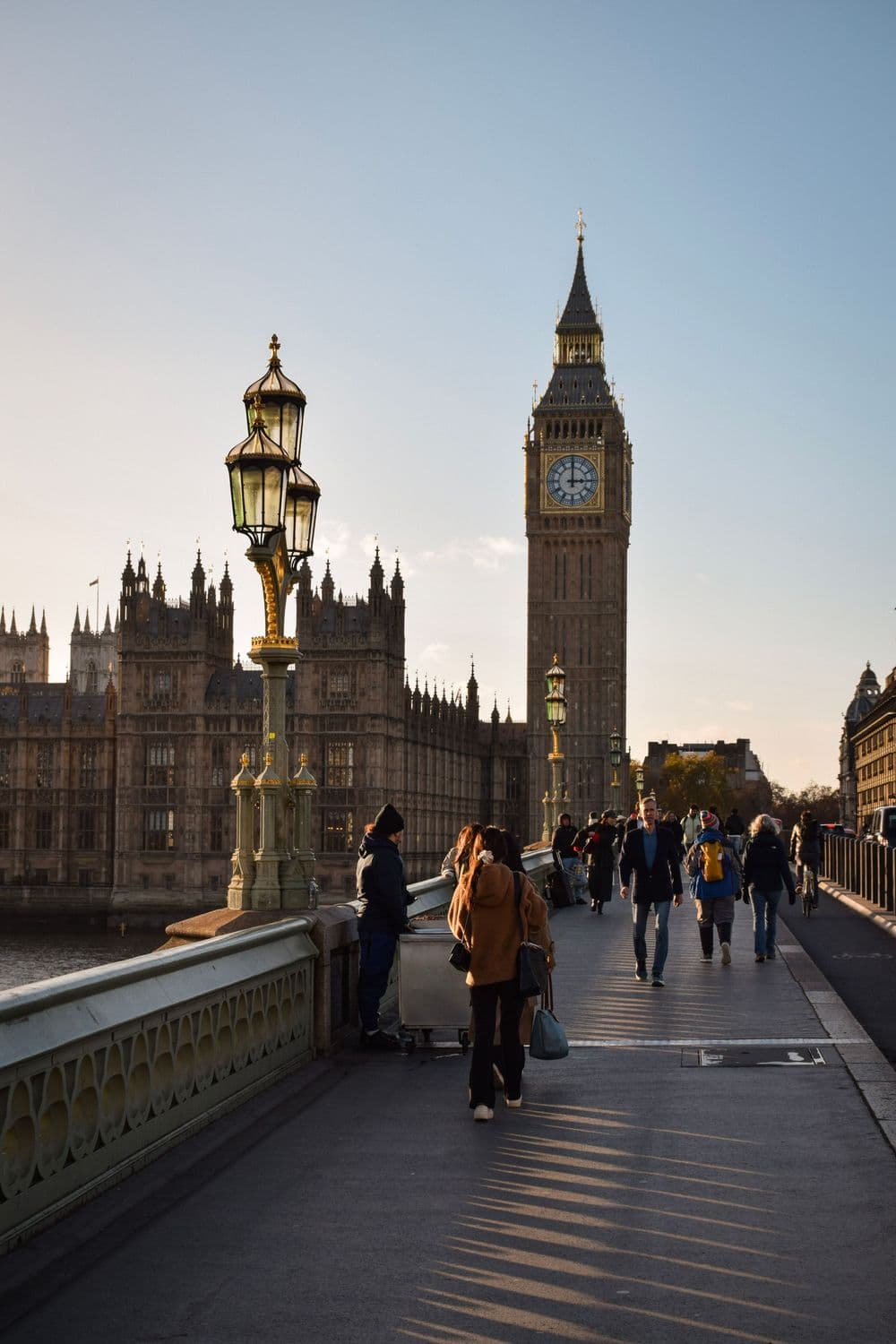
Stop in the middle of Westminster Bridge, with Parliament's long river front in view. Constable sketched the fire from the bridge that stood here before this one, which was replaced in 1862. Almost everything along that river front was built after the fire.
The tour's next stop is St Stephen's Entrance, on the far side of the building. The tall medieval hall to its left is Westminster Hall, the building Braidwood's firemen saved.
The Trevlo tour of the Houses of Parliament tells this story on Westminster Bridge, its first stop. It then visits St Stephen's Entrance, St Stephen's Hall on the site of the old Commons chapel, the foot of Big Ben and Westminster Pier. Five stops, about twenty-seven minutes of listening, at your own pace.
The first stop is free to play on this page, and your first tour in the app is free.