Stories · New York
How did they build Central Park?
Almost entirely by hand. From 1857, more than 3,800 men at a time blasted rock, drained swamps and moved nearly ten million cartloads of earth and stone.
3 min read

Stories · New York
Almost entirely by hand. From 1857, more than 3,800 men at a time blasted rock, drained swamps and moved nearly ten million cartloads of earth and stone.
3 min read
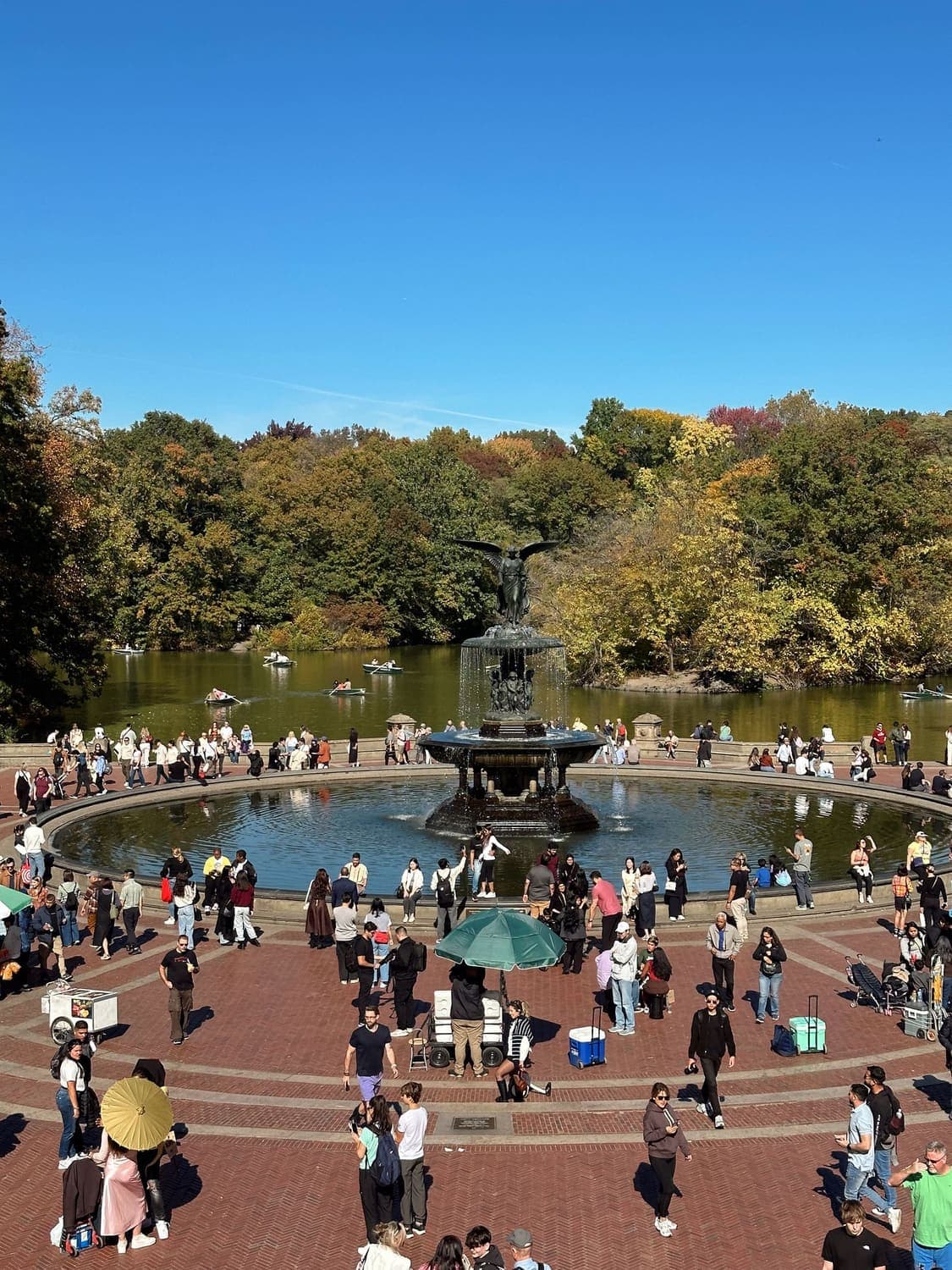
Almost entirely by hand, with horses, carts and gunpowder. From 1857 into the 1870s, thousands of labourers, many of them Irish and more than 3,800 at once at the peak in 1859, blasted away rock, drained swamps and turned them into lakes, laid miles of hidden drains and planted a quarter of a million trees and shrubs. The countryside in the middle of Manhattan was made, nearly all of it, on ground that was mostly bare granite and swamp.
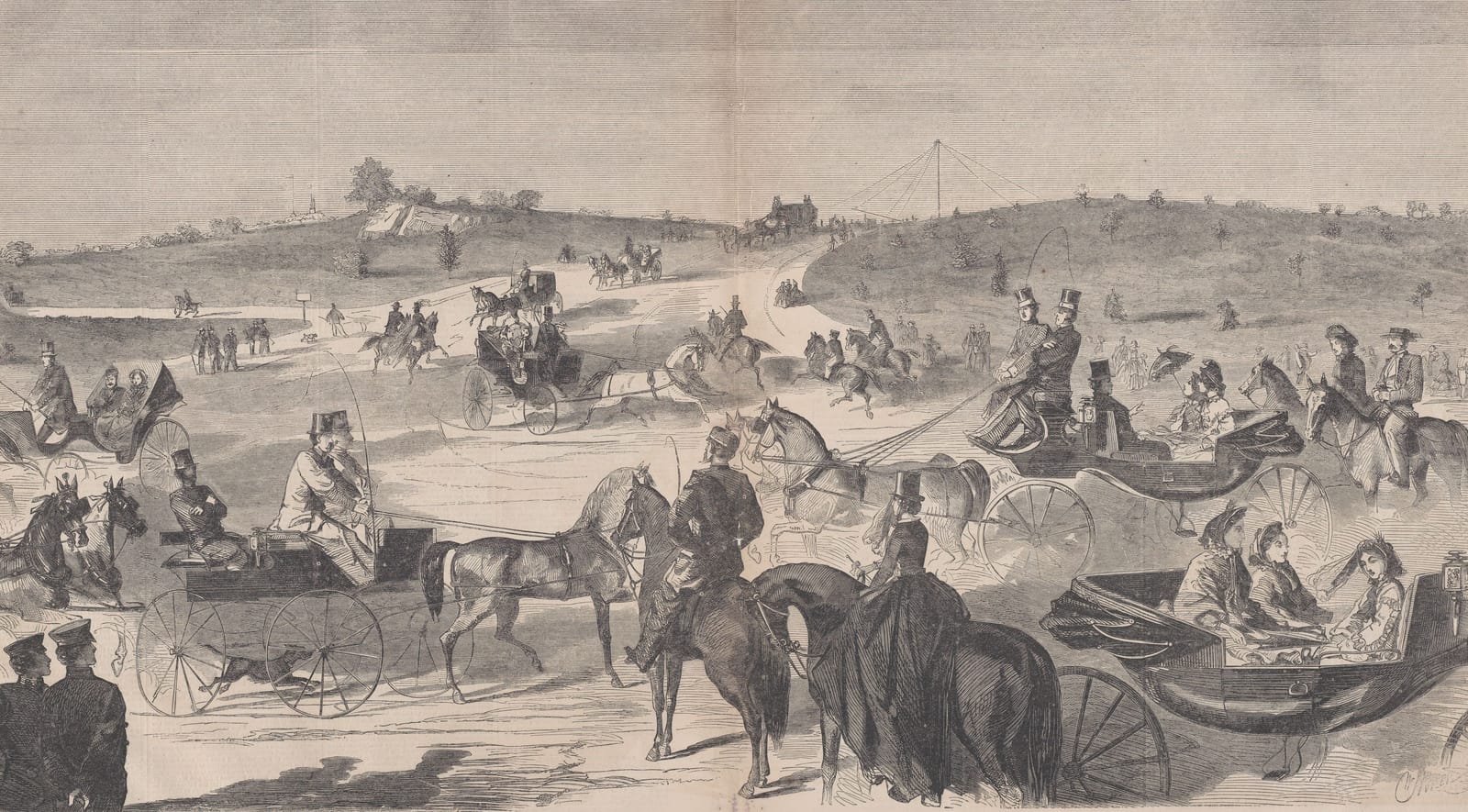
The design was Greensward, drawn at night by Frederick Law Olmsted and the architect Calvert Vaux, which won the city's competition in 1858. The building fell to Olmsted, made superintendent of the work in September 1857 by a single vote. The strongest objection to him, he wrote, was that he was "a literary man, not active." On his first day a foreman steered him straight through the worst sloughs, where he sometimes went in nearly half-leg deep. The low ground was soaked with the drainage of pig farms, slaughterhouses and works where bones were boiled down, and Olmsted remembered the smell as sickening.
The Panic of 1857 had thrown thousands out of work, and for several days a crowd surrounded Olmsted's office and sent in a list of ten thousand names, men said to have starving families, all wanting places on the park. Within a week he had a thousand at work, at about a dollar a day. He once had more than seven thousand letters of advice about whom to hire in six days, nearly all from men in office.
Then came the blasting. A red flag went up as the signal for the day's blasts, and in June 1859 the diarist George Templeton Strong, walking the unfinished park, heard what followed.
They were all around us for some twenty minutes, now booming far off to the north, now quite near, now distant again, like a desultory 'affair' between advanced posts of two great armies.
Five men died over the whole build. One of them, Timothy McNamara, was killed by a stone thrown from a blast five hundred feet away. Sheep Meadow was the dearest piece of all: a sixteen-foot ridge of rock was blasted away, and two feet of fill brought from New Jersey went down on top.
The ground was not empty, either. In the autumn of 1857 the park's commissioners removed three hundred dwellings across the site, and the people of Seneca Village, most of them Black and many of them landowners, had to leave that year too. Ten thousand loads of loose stone from the cleared land went to build the park's first boundary wall.
By 1873 the park's managers reckoned the earth and rock moved came to nearly ten million one-horse cartloads, a procession thirty thousand miles long. They had laid 114 miles of pipes and drains, and they noted that most of their masonry was underground or below eye level, hidden from view. Even the stream in the Ramble begins at a pipe.
Start at the Pond, just inside Fifth Avenue and 60th Street, which was swamp when Olmsted arrived. Lie on the grass of Sheep Meadow, on the New Jersey soil. In the Ramble, look for the Gill coming out from under its ledge of rock. Belvedere Castle stands on Vista Rock, where a bell tower once timed the builders' working day. At Summit Rock, Seneca Village's ground lies about a foot under the lawn.
The Central Park tour walks two and a half miles from Fifth Avenue and 60th Street to Summit Rock, by Central Park West: 13 stops, about 65 minutes of listening. Olmsted's first days are told at the Pond, and the village under the grass at the end.
A free preview of the tour plays on this page, and your first tour in the app is free.