Stories · New York
Why does the Statue of Liberty have chains on her feet?
A broken shackle and chain lie at her feet to celebrate the end of slavery after the Civil War. They sit 150 feet up, too high to see from the ground.
3 min read

Stories · New York
A broken shackle and chain lie at her feet to celebrate the end of slavery after the Civil War. They sit 150 feet up, too high to see from the ground.
3 min read
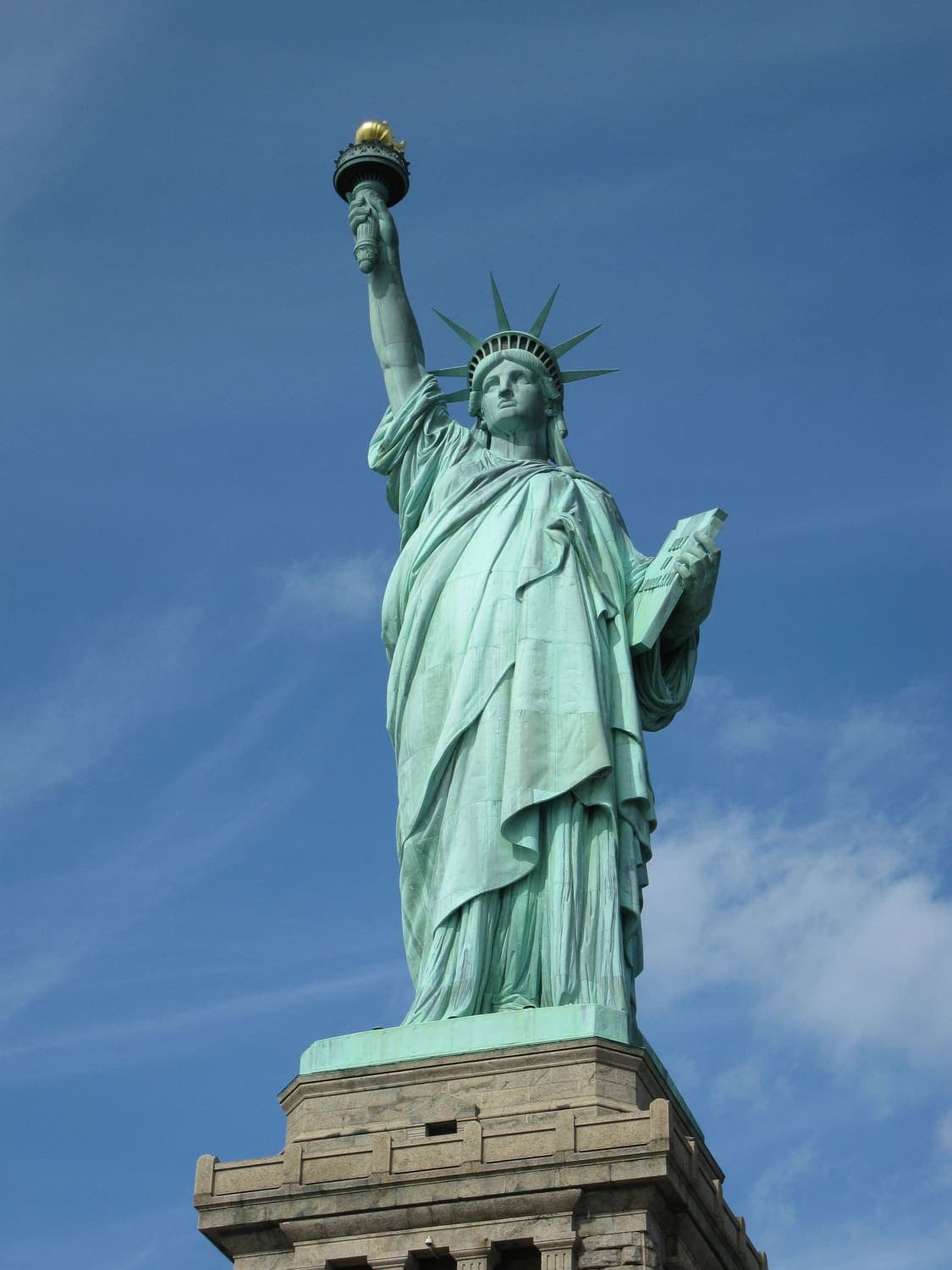
The Statue of Liberty has a broken shackle and chain at her feet because she was meant, in part, to celebrate the end of slavery in the United States. The National Park Service describes it exactly: the shackle lies by her right foot, the chain slips under the hem of her robe and reappears ahead of her left foot, and its final link is snapped open. It rests on a pedestal more than a hundred and fifty feet up, and the Park Service says it can't be seen from below.
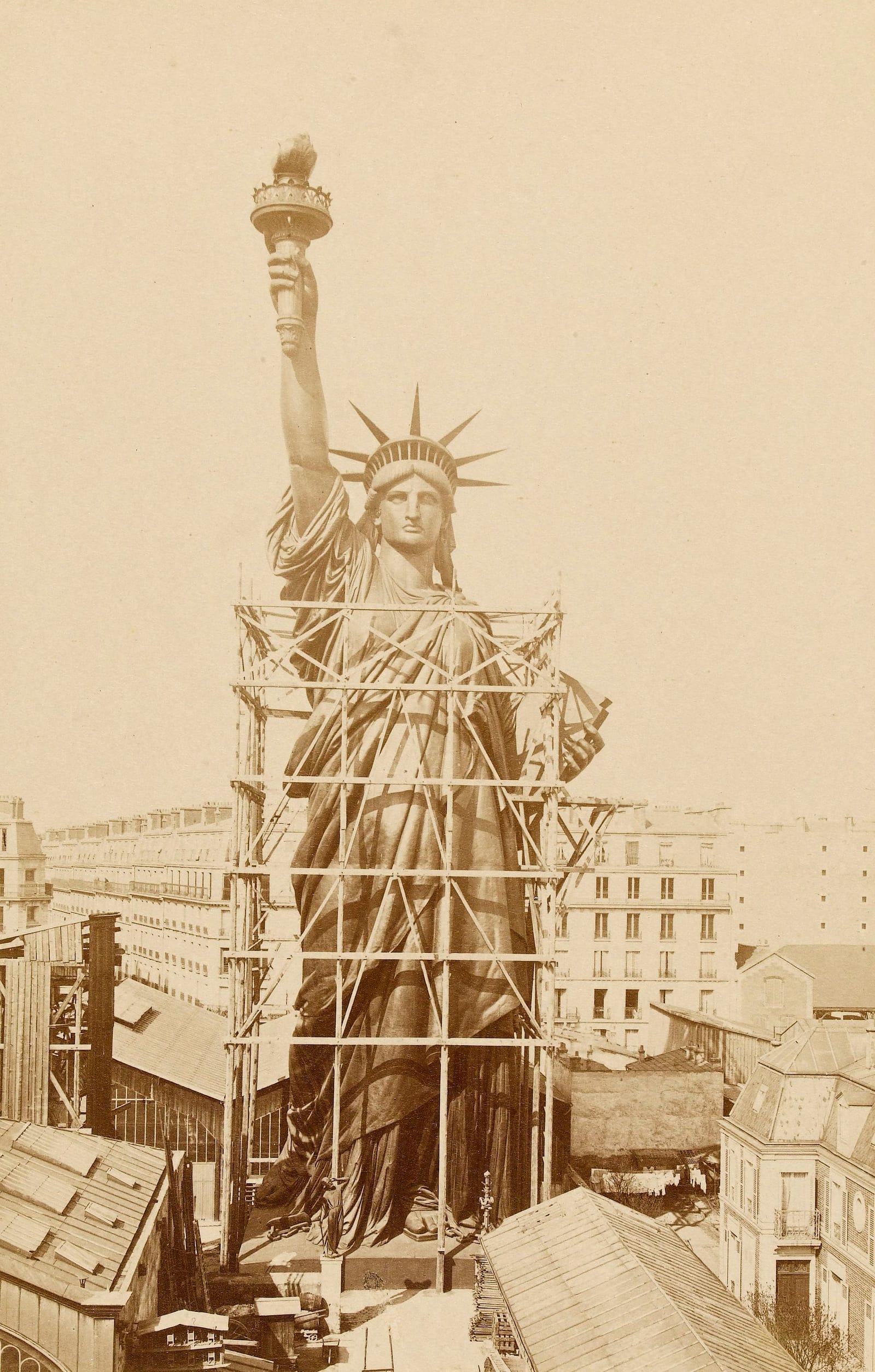
It began with Édouard de Laboulaye, the French professor who first proposed the statue. A specialist in the United States Constitution, he had supported Abraham Lincoln during the Civil War. In 1865, as the war was ending, he co-founded the French Anti-Slavery Society and served as its president. It urged every country on earth to abolish slavery, and its members collected money for people newly freed from slavery in the United States. Abolition was also a quiet protest at home. France had an emperor, and a free republic that had ended slavery was a lesson Laboulaye hoped his own country would learn. The monument he proposed was meant to honour the North's victory and abolition among other things.
Bartholdi, the sculptor, considered having her hold a broken chain in her hand. He let the idea go: a country barely out of a civil war would have found it too divisive. Instead the broken chain lies at her feet, half-hidden by her robe, and her hands hold a torch and a tablet dated the fourth of July 1776. The historian Maria Cristina Garcia argues that this is why the history slipped out of American memory. You can barely see it.
Her pose gives a hint, though. Face her head-on and she seems to stand still. Walk round to her side and her right foot is raised and set back, mid-step, as she strides over the broken iron at her feet.
When she was unveiled in October 1886, the freedom that shackle stood for was not yet real for Black Americans, and their newspapers said so. Soon afterwards the Cleveland Gazette, a Black paper in Ohio, wrote that her grand title made them sick, and suggested her torch should not be lit until the country was free in reality.
Shove the Bartholdi statue, torch and all, into the ocean until the "liberty" of this country is such as to make it possible for an inoffensive and industrious colored man to earn a respectable living for himself and family, without being ku-kluxed, perhaps murdered, his daughter and wife outraged, and his property destroyed.
Years later the scholar W. E. B. Du Bois passed her by ship, returning from Europe, and wrote that he could not share the hope he imagined new arrivals felt at the sight of her. The broken chain was meant sincerely, and it ended up where almost no one can see it.
The chain is on top of the pedestal, so no spot on Liberty Island shows it. The best you can do is the path by the water at her side, where she stands in profile and the stride is easy to see. That is where stop 5 of the Trevlo tour, "The chain you can't see", tells this story.
The Trevlo Statue of Liberty tour has 10 stops, about 47 minutes of listening. It starts in the ferry security line at Castle Clinton in Battery Park, carries on across the harbour, and walks round Liberty Island to the museum and its original torch.
A free preview of the tour plays on this page, and your first tour in the app is free.