Stories · Rome
Why does the Colosseum have holes?
The holes mark where iron clamps once held the stone blocks together. After the games ended, Romans chiselled the iron out, one clamp at a time.
3 min read

Stories · Rome
The holes mark where iron clamps once held the stone blocks together. After the games ended, Romans chiselled the iron out, one clamp at a time.
3 min read
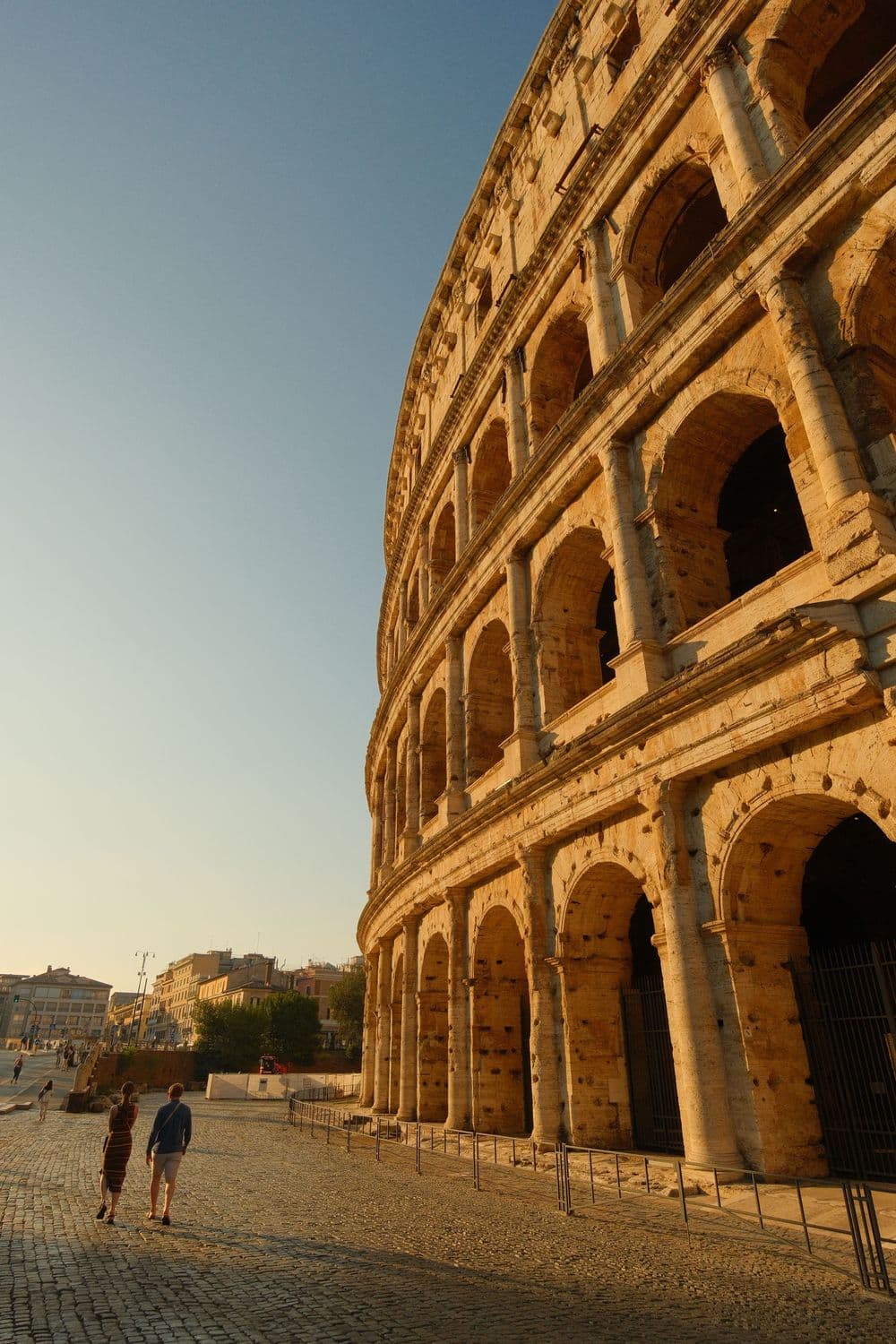
The holes are where the iron used to be. The Colosseum's outer wall was built of great travertine blocks laid without mortar, and what held them together was iron: clamps and dowels set into carved pockets in the stone, around 300 tons of it across the wall. In the centuries after the games ended, Romans chiselled into the stone to get that iron out. Most of the pockmarks on the outside walls are the places where somebody did exactly that. (The open maze where the arena floor should be is something else: the underground rooms and lifts, which lost their wooden floor long ago.)
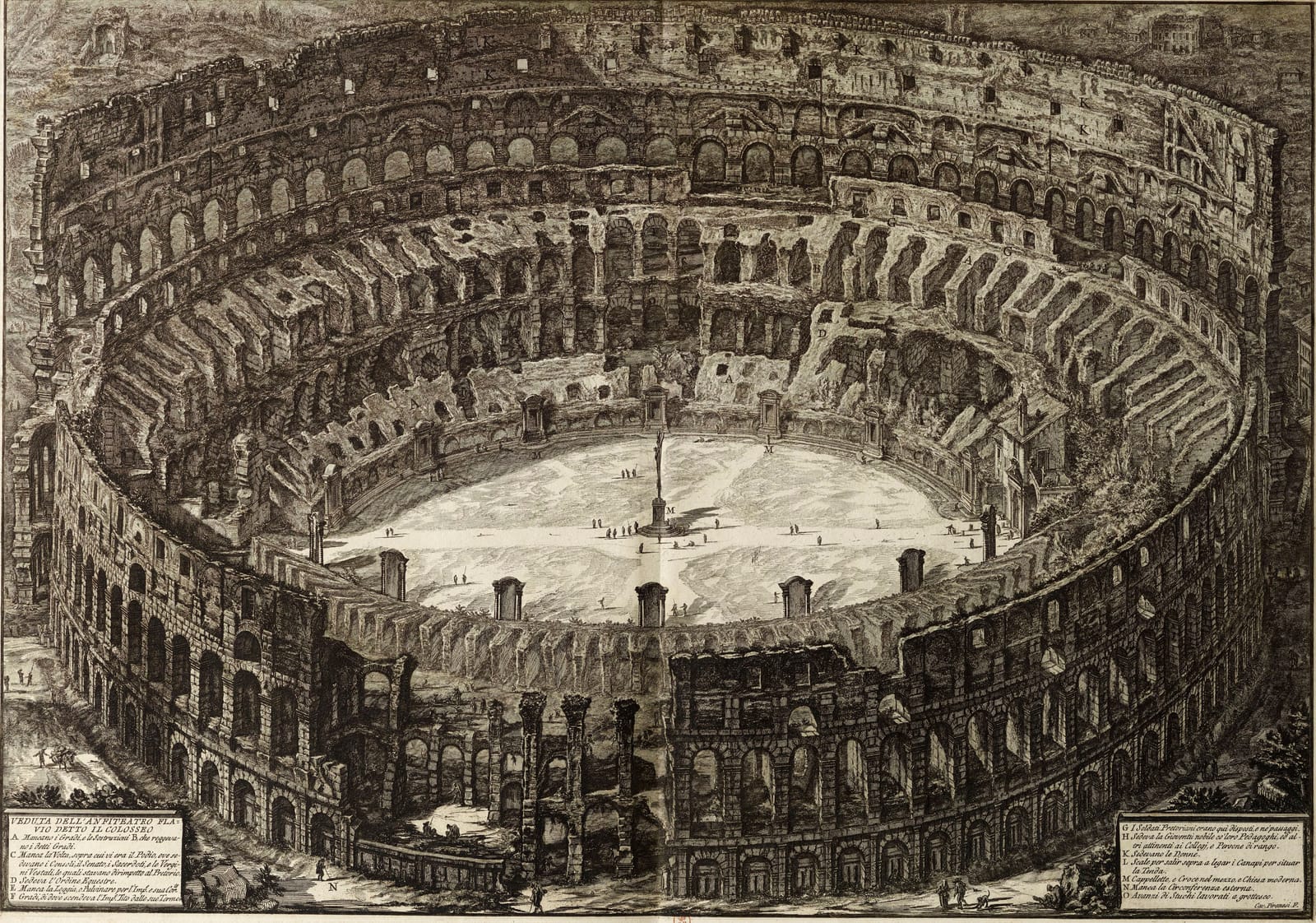
It helps to picture how the wall was made. The builders brought in more than 100,000 cubic metres of travertine, a pale, hard limestone, and built it into a wall four storeys high. Instead of thick mortar joints, they locked the courses of stone together with iron, set into pockets carved in the blocks, so that each block was tied to its neighbours.
For as long as the shows went on, that iron did its job unseen. Then the games faded. The last gladiators are mentioned in the 430s, the last animal hunts in the 520s, and Rome became a much smaller and poorer city living among enormous ruins. Iron became valuable. Here was a building holding tons of it, free to anyone with a hammer, a chisel and the nerve to climb.
So people came for it. The recycling of the building began in the reign of the Gothic king Theodoric, who ruled Italy until 526, and most of the iron grips were taken during the long war between the Goths and the Eastern Roman Empire that followed, between 535 and 553. Workers hacked away the stone around each piece of iron until they could pull it free, often leaving the rectangular or wedge-shaped cavities you see today, and moved on to the next. The metal was melted down and reused, mostly, it seems, for weapons.
The iron wasn't the only thing taken. The marble that faced parts of the building was burned for lime, and in 1349 an earthquake brought down the outer wall on the south side, which stands on softer ground. In 1362 Rome's great families agreed to treat the ruin as common property, a quarry anyone could profit from. That went on until 1749, when Pope Benedict XIV declared the Colosseum sacred to the Christian martyrs, on a belief historians have found no evidence for, and banned anyone from taking its stone. The belief may have been thin, but it saved the building.
The north side of the outer wall still stands, holes and all, though in the early 1800s it needed great brick buttresses at each end to keep it up. The holes tell the building's story better than any sign: a city that found a use for every part of it.
Go to the end of the tall outer wall, by the huge sloping brick buttress near the entrance, not far from the Arch of Constantine. The buttress is one of those 19th-century supports. Look closely at the travertine beside it, from the ground up, and you'll see the cavities left by the iron, many of them along the seams where one block was tied to the next.
The Colosseum tour tells this story at stop 3, "The wall", about seven minutes in, standing right beside those holes. The whole tour is 12 stops, about 40 minutes of listening, from Nero's private lake to the cross in the arena.
A free preview of the tour plays on this page, and your first tour in the app is free.