Stories · Rome
Who is buried in the Roman Forum?
Nobody famous. Julius Caesar was burned there in 44 BC, not buried. The only graves found date from the 10th century BC, before the Forum existed.
3 min read

Stories · Rome
Nobody famous. Julius Caesar was burned there in 44 BC, not buried. The only graves found date from the 10th century BC, before the Forum existed.
3 min read
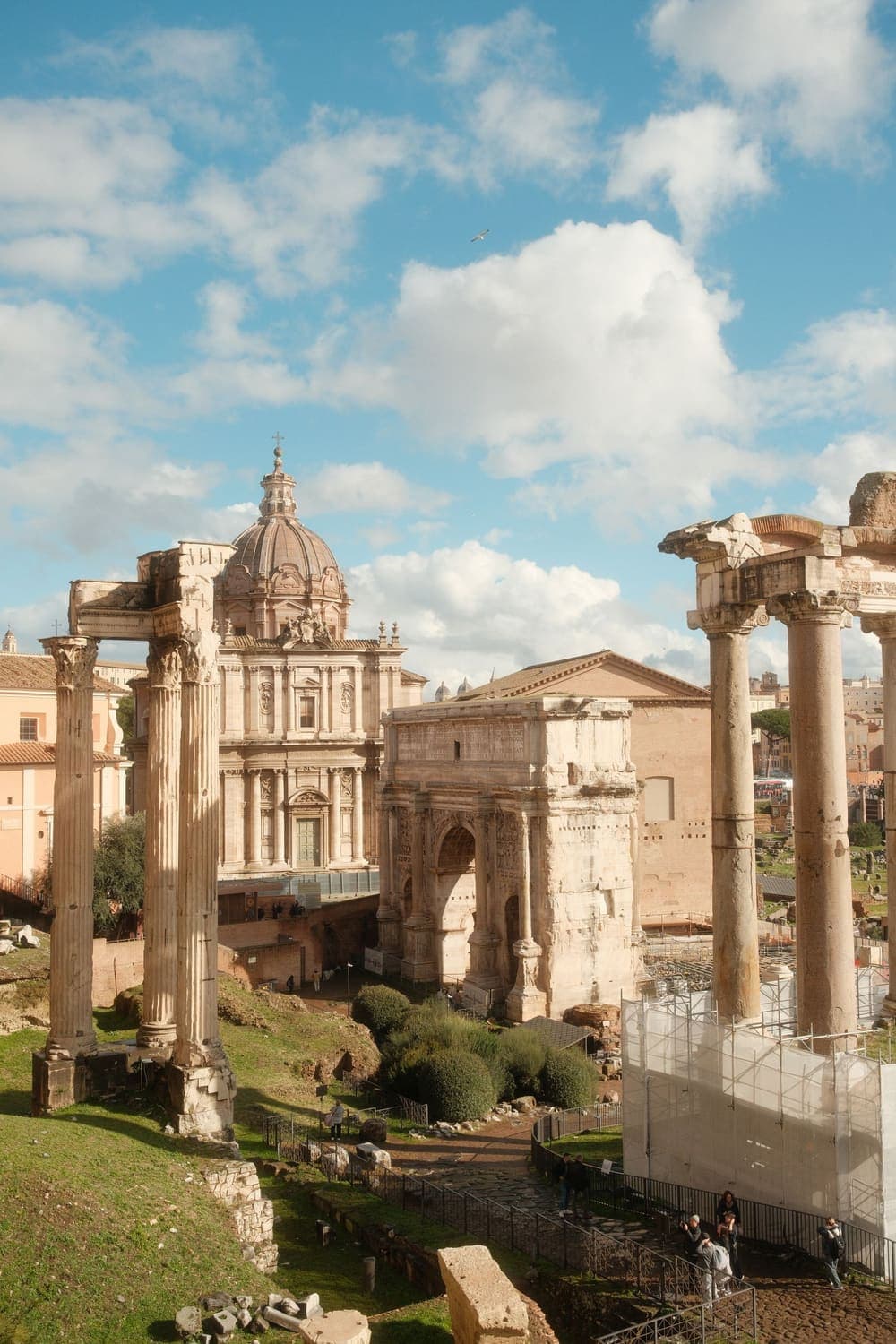
Nobody famous is buried in the Roman Forum. Roman law kept the dead out of the city, so the square was never a cemetery for its great men. Julius Caesar was cremated there in 44 BC, when the crowd at his funeral set fire to his bier, but his ashes went to his family tomb. The only graves ever found there are far older, mostly urns of ashes from the 10th century BC, long before the valley became a square.
The Twelve Tables, Rome's earliest written laws, put it in a single line.
A dead person shall not be buried or burned in the city.
Caesar, the general who had made himself dictator for life, was stabbed to death by senators who feared he meant to rule as a king. A few days after the Ides of March in 44 BC, his body was carried to the speakers' platform in the Forum and laid on an ivory couch in a little gilded shrine, the bloodied robe from the murder hanging at its head. A pyre was waiting for him out on the Campus Martius, close to his daughter Julia's tomb.
Instead, people argued over where to burn him, at the great temple on the Capitol or in the hall at Pompey's theatre where he had been killed. Suetonius says two mysterious figures with swords at their sides settled it by putting torches to the bier. Everyone near them fed the blaze, with kindling, with the benches and judgment seats of the law courts, then with their own things. Performers who had dressed in costumes from Caesar's triumphs ripped them apart for the flames. Old soldiers gave up their arms, and women gave up their jewellery and their children's amulets and clothes. Appian says the people kept watch over the fire until morning.
An altar was raised where the fire had burned, and Augustus, Caesar's adopted heir, later put up a temple there to the deified Caesar. Its ruin still stands, and fresh flowers appear on it daily. Caesar had been promised a tomb inside the city during his lifetime, yet his ashes ended up in the family tomb.
The Forum's genuine dead are much older. Around the 10th century BC, people, possibly from the villages on the Palatine and Capitoline, buried their dead near where the Temple of Antoninus and Faustina stands today. A few were buried whole, but cremation was the usual custom: the ashes were sealed in an urn, set inside a large pottery jar with a few possessions, and lowered into a pit under a stone lid. Giacomo Boni uncovered them in the excavations he led from 1898.
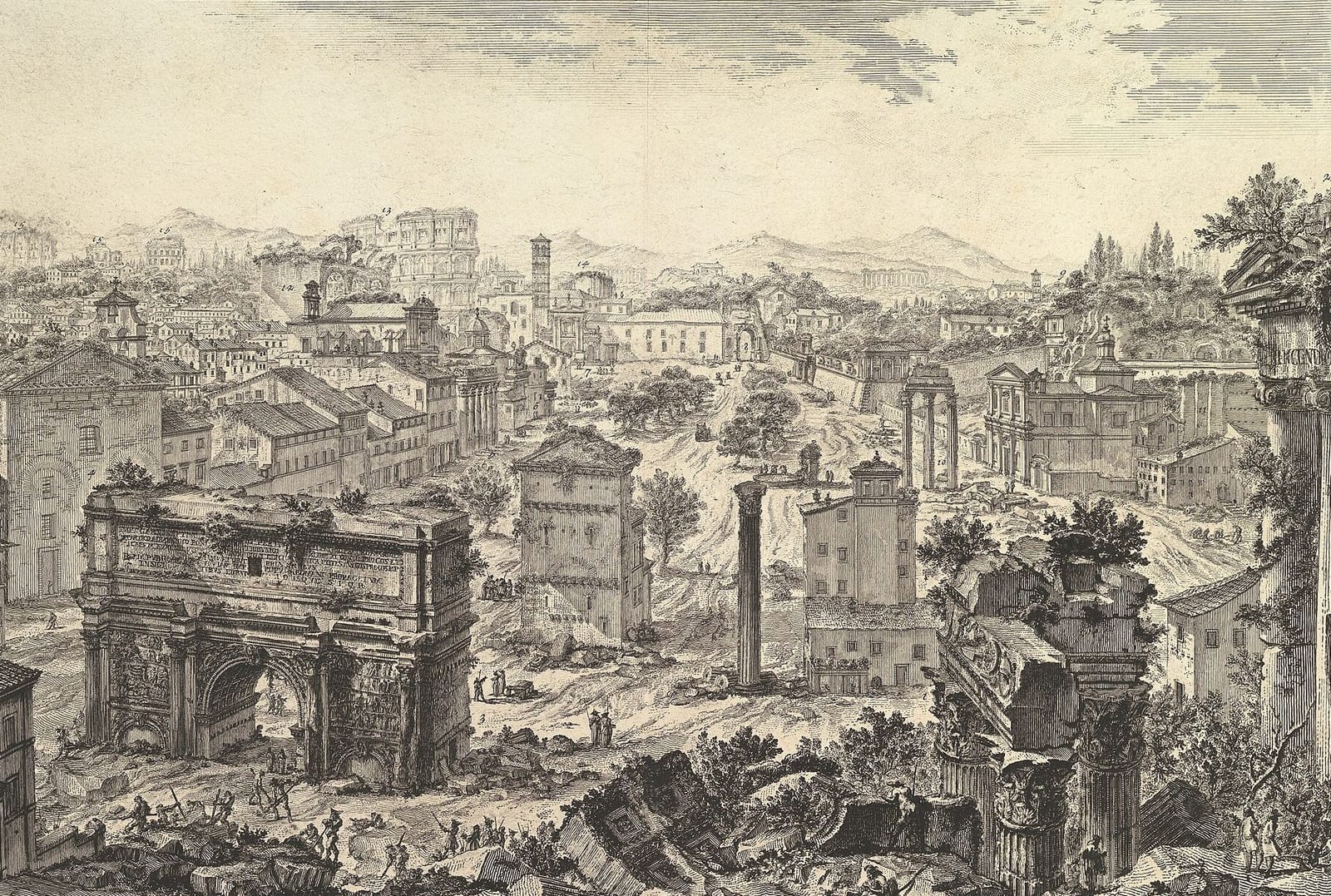
Later Romans told stories about a patch of black paving in front of the Senate House. Some said it was the grave of Romulus, the city's founder, others the spot where he was murdered; by then nobody remembered what the shrine really was. In 2020 archaeologists found a sarcophagus from the 6th century BC in the Forum, and experts still disagree over whether it was ever a memorial to Romulus.
Caesar was burned at the Temple of Caesar, the low roofed ruin at the east end of the square, where the flowers are. The Iron Age graves were found beside the Temple of Antoninus and Faustina, whose door hangs high above its steps. The black paving said to cover Romulus's grave lies in front of the Senate House, at the far corner of the square.
The Roman Forum tour walks down the Via Sacra from the Arch of Titus to the Temple of Saturn: 11 stops, about 54 minutes of listening. Caesar's funeral is stop 4, told at the Temple of Caesar, and the old graves come at stop 3. A free preview of the tour plays on this page, and your first tour in the app is free.