Stories · Athens
How was the Parthenon destroyed?
The Parthenon in Athens was blown apart on 26 September 1687, when a Venetian mortar shell hit gunpowder the Ottomans had stored inside it.
3 min read

Stories · Athens
The Parthenon in Athens was blown apart on 26 September 1687, when a Venetian mortar shell hit gunpowder the Ottomans had stored inside it.
3 min read
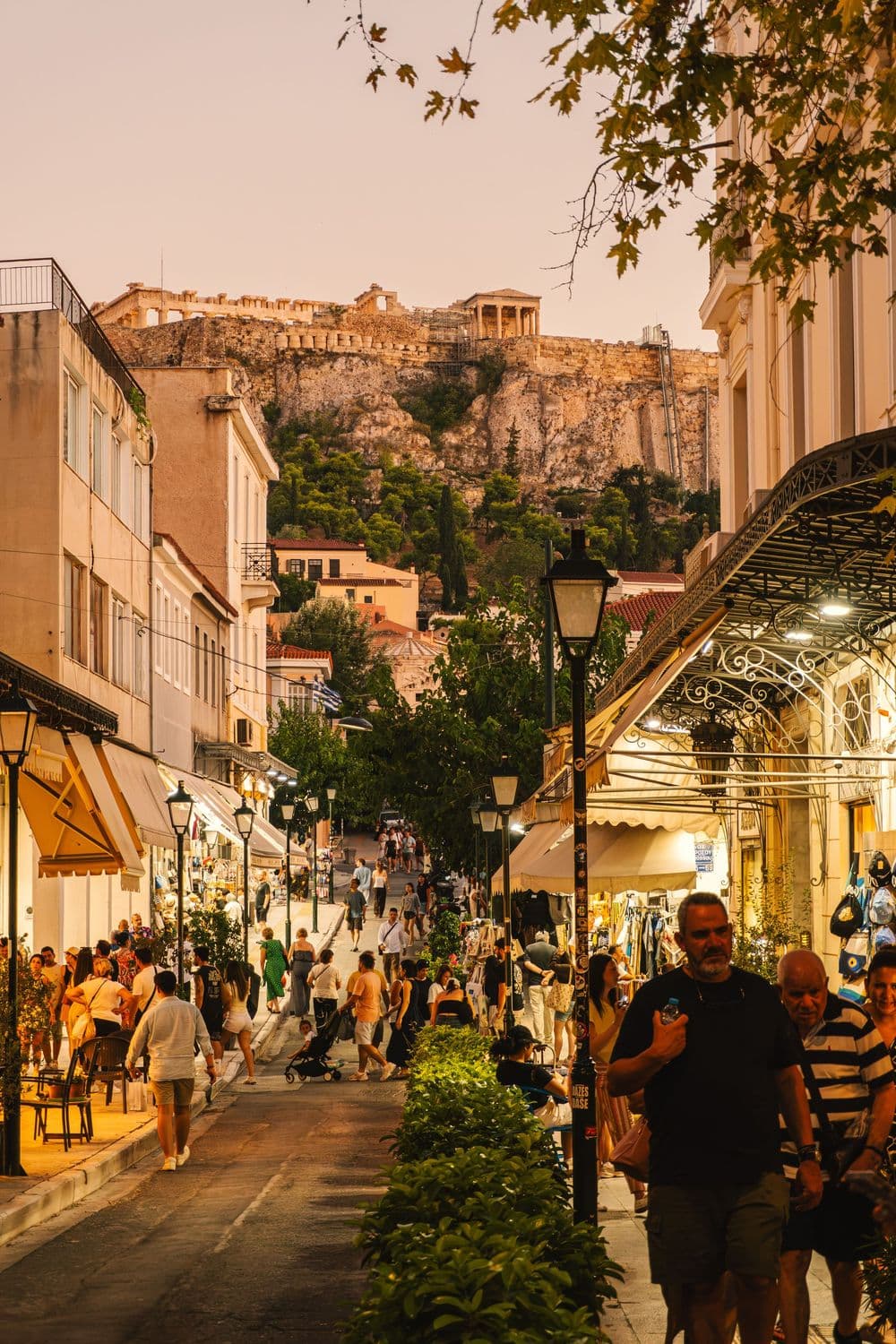
A Venetian army under Francesco Morosini was besieging the Acropolis, then an Ottoman fortress. The blast blew out the middle of the temple, wrecked its walls, brought down long stretches of its columns, and killed about three hundred people. Until that evening, the building had stood more or less complete for more than two thousand years.
The Parthenon was built between 447 and 432 BC as a temple to Athena, the goddess of Athens. Around a thousand years later, Christians made it a church of the Virgin Mary. After the Ottoman Turks took Athens in the 1450s, it became a mosque, with a minaret added.
Each new owner changed the inside. The great stone shell survived all of them.
By the 1680s, Athens was caught up in a war between Venice and the Ottoman Empire. The Acropolis was the Ottoman garrison's fortress. The garrison even took apart the little Temple of Athena Nike, by the gateway, to build its stones into a gun platform.
The Venetian army arrived in late September. Morosini, a Venetian admiral, was in overall command, and a Swedish general, Otto Wilhelm Königsmarck, led the troops on land. Their mortars fired from the Hill of Philopappos, the hill across the valley to the south-west.
The garrison kept its gunpowder inside the Parthenon, the strongest building on the rock. Families from the Turkish community sheltered there too.
On the evening of the 26th, a mortar shell came down through the roof and into the powder. The explosion burst the temple open from the middle. Three of the four walls of the inner hall nearly collapsed, and much of the carved frieze that ran around them fell. About three hundred people were killed.
Morosini reported it to Venice as "a fortunate shot." Three days later the garrison surrendered.
The Venetians stayed in Athens for only about six months. Before they left, Morosini wanted a trophy from the temple's west end: the marble horses of Athena's chariot, and Poseidon, the sea god. As his men lowered them, the rope gave way. They fell and smashed on the rock.
The rest of the losses came more slowly. In the early 1800s, agents of Lord Elgin, Britain's ambassador to the Ottoman Empire, shipped about half the surviving sculptures to Britain. As of October 2026 they are in the British Museum, and Greece is still asking for them back.
Restorers have been putting the building back together since 1975, block by block.
Walk halfway along the north side of the Parthenon, by its long row of columns. It's the left-hand side as you come from the gateway. The gap along the middle of this side is the explosion's work, and many of the columns around you have been rebuilt.
Find the bright white blocks among the honey-coloured ones. They are new marble from Mount Pentelicus, the same mountain outside Athens that supplied the original stone, cut to fill the gaps.
The Trevlo tour of the Acropolis tells this story on the Parthenon's north side. It starts at the theatre where Socrates stood up during a comedy that mocked him. It ends at the Porch of the Caryatids, whose sixth stone woman is in London. Six stops, about thirteen minutes of listening, at your own pace.
The first stop is free to play on this page, and your first tour in the app is free.