Stories · London
Who is buried in Westminster Abbey?
More than 3,300 people: thirty kings and queens, writers from Chaucer to Dickens, Newton, Darwin and Hawking, and a soldier whose name nobody knows.
3 min read

Stories · London
More than 3,300 people: thirty kings and queens, writers from Chaucer to Dickens, Newton, Darwin and Hawking, and a soldier whose name nobody knows.
3 min read
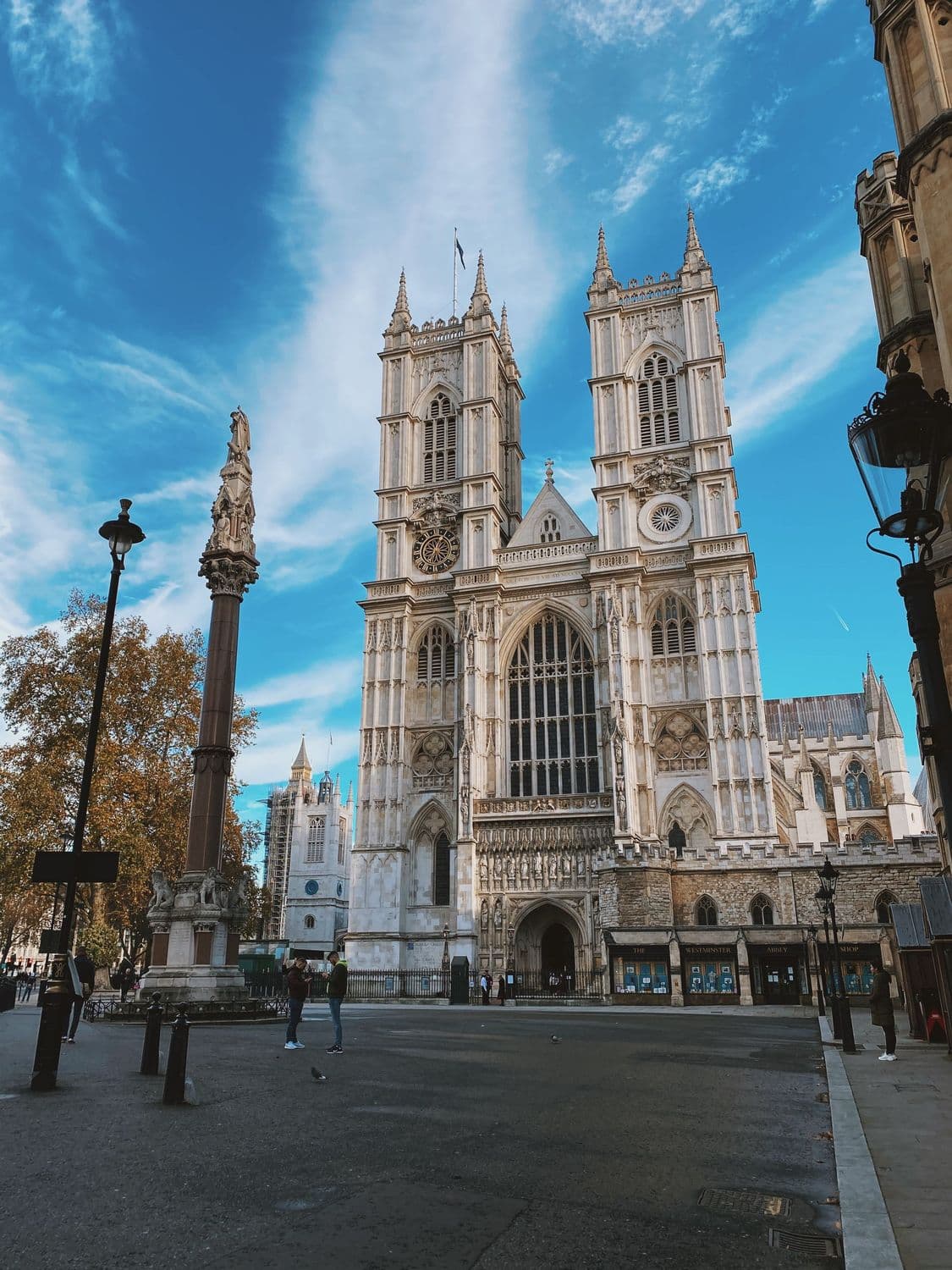
More than 3,300 people are buried in Westminster Abbey and its cloisters, and hundreds more have memorials there. Thirty are kings and queens, from Edward the Confessor in 1066 to George II in 1760, after whom monarchs went to Windsor. Around them lie abbots and monks, statesmen, writers from Geoffrey Chaucer to Charles Dickens, scientists from Isaac Newton to Stephen Hawking, and a soldier of the First World War whom nobody can name. Plenty of them never asked to come.
In the Middle Ages the monks kept burial here for monarchs, abbots and a handful of loyal nobles. Once Edward became a saint, and Henry III rebuilt the church around his shrine, kings wanted to lie beside him. Chaucer was buried here as a royal official renting a house from the monks, not as a poet. Newton's grand funeral in 1727 did much to change that, and by Victorian times a grave in the Abbey was an honour the nation gave, whatever the dead had wanted. Dickens expected to be buried near his home in Kent, until The Times led the call for the Abbey.
Charles Darwin is the clearest case. He died at home in Downe, in Kent, in April 1882, and the family meant to bury him in the village, next to his brother Erasmus. The local carpenter built him a plain, unpolished box, exactly as Darwin had asked.
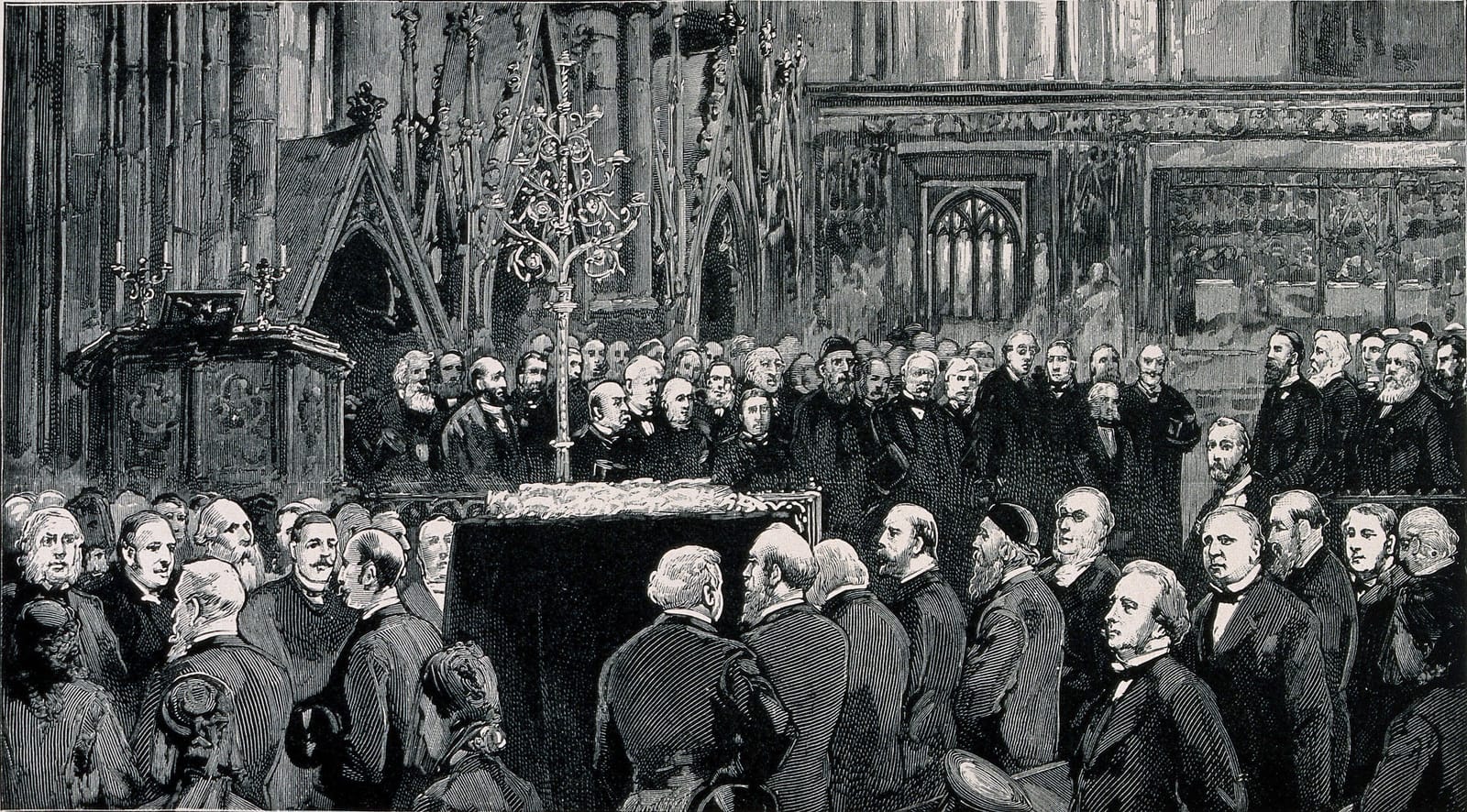
His scientific friends had grander plans. Two days after the death, John Lubbock, his neighbour and an MP, sent the Dean of Westminster a request signed by twenty or so Members of Parliament. Even Lubbock confessed to the family that he would rather have kept his friend in Downe. The Dean, away in France, telegraphed his answer in French: yes, without the slightest hesitation.
The moment the thought arose, not, apparently, in any single mind, but spontaneously and everywhere, that the body of the great naturalist ought to be buried at Westminster, it was felt that the Abbey needed it more than it needed the Abbey.
Darwin's widow, Emma, admitted it hurt not to leave him by his brother, but their eldest son William was firm, and she came round. By moonlight the carpenter helped shift the body into a second coffin, and four black horses drew the hearse to London.
Emma didn't go. William sat in the front row as chief mourner, felt a draught on his bald head, and spent the whole service with his black gloves balanced on top of it. Darwin went into the nave beside the astronomer John Herschel, a few feet from Newton. In 2018 Stephen Hawking's ashes went in between Newton and Darwin.
The grave just inside the west door holds a man nobody can name. In November 1920 an unidentified British soldier was brought home from France and buried there, before about a thousand mourners, most of them widows and mothers. His stone says he lies among the kings.
Darwin's pale stone lies in the nave's north aisle, by the corner of the screen, near Newton's monument and Hawking's dark slate. The royal tombs circle the Confessor's shrine behind the High Altar, and Elizabeth I shares a vault with her sister Mary I in the Lady Chapel. Chaucer and Dickens lie in Poets' Corner, the south transept, among memorials to many writers buried elsewhere. The Unknown Warrior's black stone, edged with poppies, is inside the Great West Door, the one grave in the floor that visitors step around.
The Westminster Abbey tour takes the Abbey's own route in 11 stops, about 58 minutes of listening. Darwin's funeral is stop 3, the Confessor stop 5, the two sisters stop 6, Poets' Corner stop 9, and it finishes at the Unknown Warrior.
A free preview of the tour plays on this page, and your first tour in the app is free.