Stories · London
Why does the Tower of London have ravens?
Probably as Victorian props. The first on record, in 1883, stood by an execution memorial. The legend that Britain falls without them dates from 1944.
3 min read

Stories · London
Probably as Victorian props. The first on record, in 1883, stood by an execution memorial. The legend that Britain falls without them dates from 1944.
3 min read
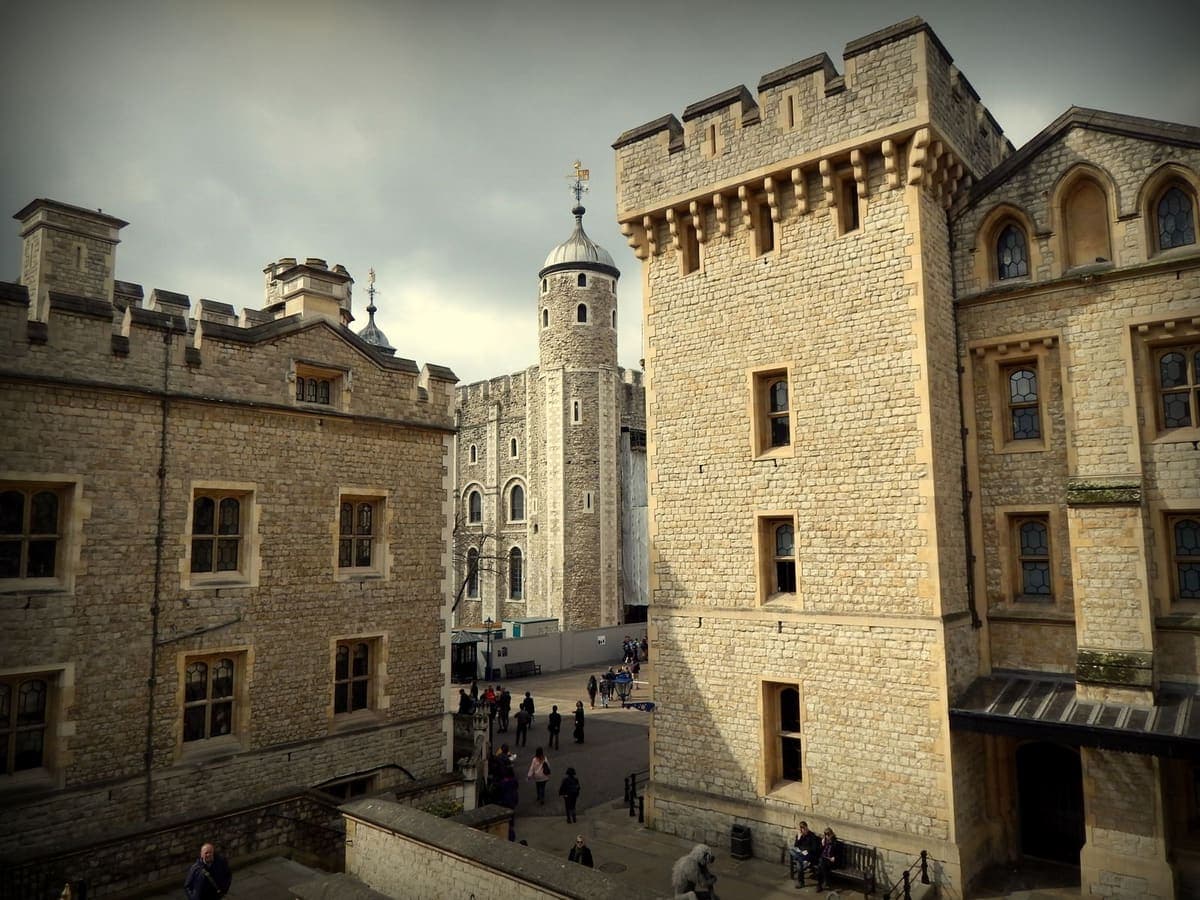
The ravens seem to have come with the Victorians, who were turning the Tower into a place to visit, probably to add a shiver to its execution stories. The first ones on record, in 1883, stand beside the execution site the Victorians had marked on Tower Green. The prophecy that Britain will fall if they ever leave is younger still. It first appears in 1944.
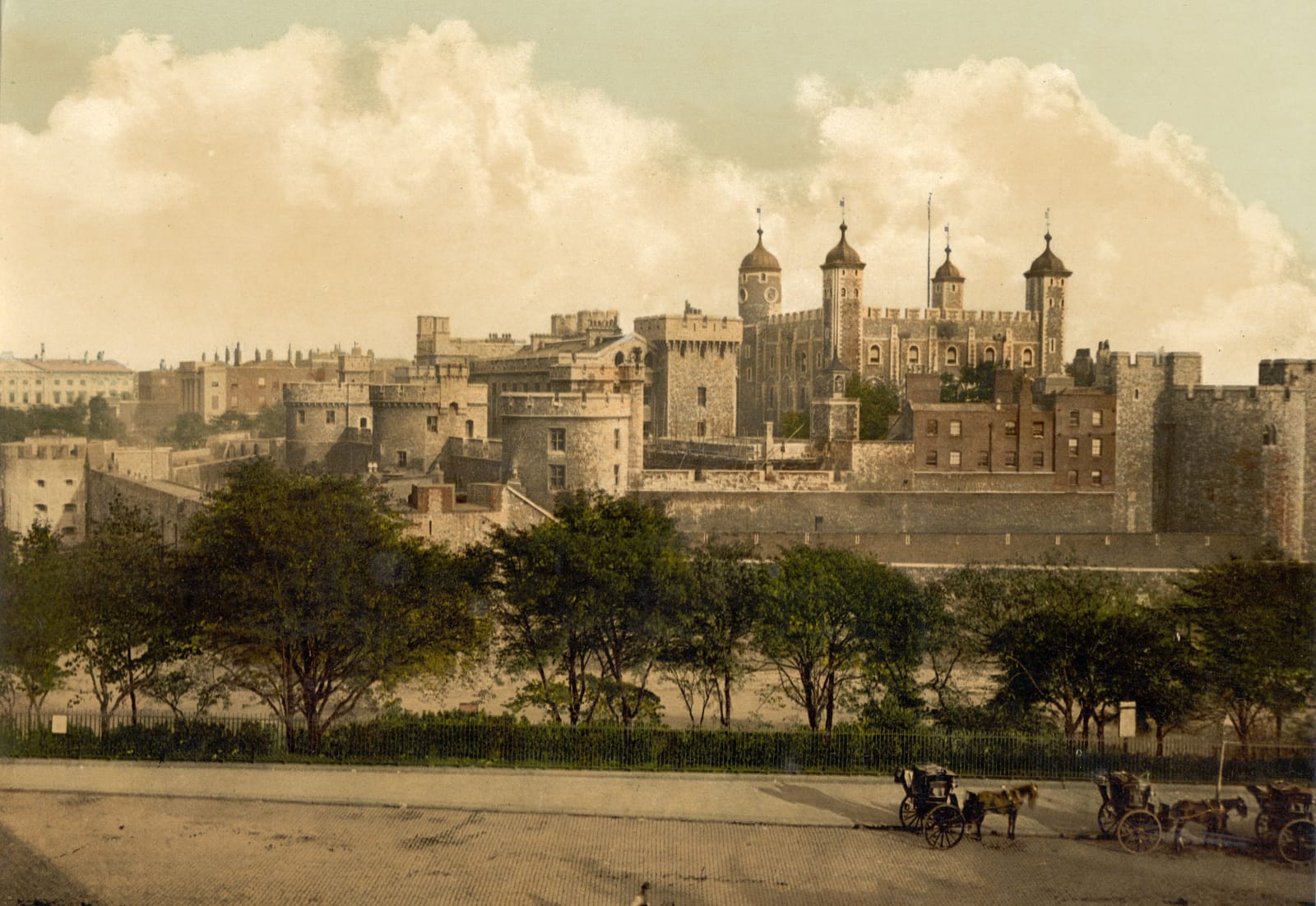
In 1861 Prince Albert mentioned on a visit that Victoria would like to see the place where Anne Boleyn was beheaded. Three Highland soldiers had been shot by the chapel in 1743, so it was assumed that executions happened on that patch of lawn, and a spot there was chosen. By 1866 it was railed and marked, and visitors flocked to it. The earliest accounts actually put Anne's scaffold north of the White Tower, near today's Waterloo Block.
No older record of them has been found. They first turn up in a drawing, and they turn up at that spot. Every early picture puts them there. In 1904 a writer found five pet ravens on the green "in ominous proximity to the site of the Block", a private gift whose donor replaced any bird that died. Ravens were the old birds of doom, the kind said to gather at scaffolds, and executioners' blocks had once been called ravenstones. Boria Sax, who searched the archives for a year, thinks they were brought in to dress the execution story. The Tower's historian, Geoffrey Parnell, reached the same dates but thinks the first birds were staff pets, perhaps later topped up by the Earl of Dunraven or his son, a family with ravens on its coat of arms.
The story set fast. In October 1900 the Japanese novelist Natsume Sōseki visited the Tower and later wrote about the ravens he met there.
A raven descends. Hunching its wings, its black beak protruding, it stares at people. I feel as if the rancor of a hundred years of blood have congealed and taken the form of a bird so as to guard this unhappy place for ever
His landlord told him they were sacred, kept there since ancient times, always five of them. They had been on record for seventeen years.
The prophecy came out of the Second World War, in July 1944, when ravens were acting as unofficial spotters for bombs and planes. Raids and shock all but wiped them out, yet when the Tower reopened on 1 January 1946, ravens were back in place. The Tower's own version says Charles II protected them after his astronomer, John Flamsteed, complained they got in the way of his observing. Flamsteed did watch the sky from the White Tower in 1675, but no such order has ever been found. At least once, Parnell found, the records say bluntly "there are none left", and the kingdom carried on.
Today there are never fewer than six, cared for by a Yeoman Warder called the Ravenmaster, who trims their flight feathers so they stay close. Not all have. Grog vanished in 1981, last spotted outside an East End pub, and George was dismissed in 1986 for eating television aerials.
Start on Tower Green, by the ring of dark granite with a glass pillow at its centre. It stands on the spot the Victorians chose, and the ravens are usually on the lawn around it. The real scaffold site is a short walk away, on the open ground north of the White Tower, where people queue for the Crown Jewels.
The Tower of London tour has 12 stops, about 70 minutes. The ravens come at stop 10, in front of the chapel, just after the bones the Victorians lifted from under its floor.
A free preview of the tour plays on this page, and your first tour in the app is free.