Stories · Rome
How was the Colosseum paid for?
At least in part with treasure Rome looted from Jerusalem in AD 70. The peg holes of its lost bronze letters seem to say so: from the spoils of war.
3 min read

Stories · Rome
At least in part with treasure Rome looted from Jerusalem in AD 70. The peg holes of its lost bronze letters seem to say so: from the spoils of war.
3 min read
At least in part, and almost certainly, with the treasure of Jerusalem. In AD 70 Titus, son of the new emperor Vespasian, crushed a Jewish revolt, took the city and destroyed its Temple. Josephus, a Jewish historian with the Roman army, writes that the troops took so much plunder that in Syria a pound of gold sold for half its former price. Back in Rome, Vespasian drained Nero's private lake and built an arena on it. The best evidence for where the money came from is a pattern of small holes in a block of marble.
None of the Colosseum's own lettering survives. In 1812, excavators digging out the underground found pieces of a large marble slab. It recorded repairs made by a Roman prefect called Lampadius after the earthquake of 443, and Victorian visitors used it as a bench. But the slab had been used before. Its face was dotted with holes that had once held raised bronze letters, the ghost of an older text.
In April 1994 Géza Alföldy, a German expert on Roman inscriptions, was in Edmonton, Canada, studying a photograph of the block, when he saw how the holes might be joined. There were 67 of them he could be sure of. In May he checked the real stone in Rome, and on the flight back to Germany the last line came to him. The emperor, in his reading, had the amphitheatre built ex manubiis, from the spoils of war. That phrase meant a general's own share of the booty, and Alföldy argued that only one war could have brought home booty on that scale: the war in Judaea, and above all the fall of Jerusalem.
The holes hid a twist. Vespasian had died in 79, a year before the opening. Alföldy argued that the letters CAE were taken down, moved a little to the right and packed closer, so that a T, for Titus, would fit in front of them. One extra letter made the father's building the son's.
Not everyone is convinced. Much of the text is restored, with Alföldy's own question marks. Keith Hopkins and Mary Beard, who wrote a book on the Colosseum, think the leap from scattered holes to such suspiciously fitting words is uncomfortably long. They think only some of the money came from Jerusalem. But they land in the same place.
The Roman Colosseum was the fruit of Roman victory over the Jews.
People also ask whether Jewish prisoners built it. Josephus counts 97,000 captives from the war. Of those taken at Jerusalem, he says, the tallest young men were kept for the triumph in Rome and the rest sent to the mines of Egypt, to provincial arenas or into slavery. He never mentions the Colosseum. It's possible, but he doesn't record it.
Alföldy ended his paper quietly. The building is a monument to the greatness of Rome, he wrote, and it can also stand for the victims whose tragedy that greatness cost.
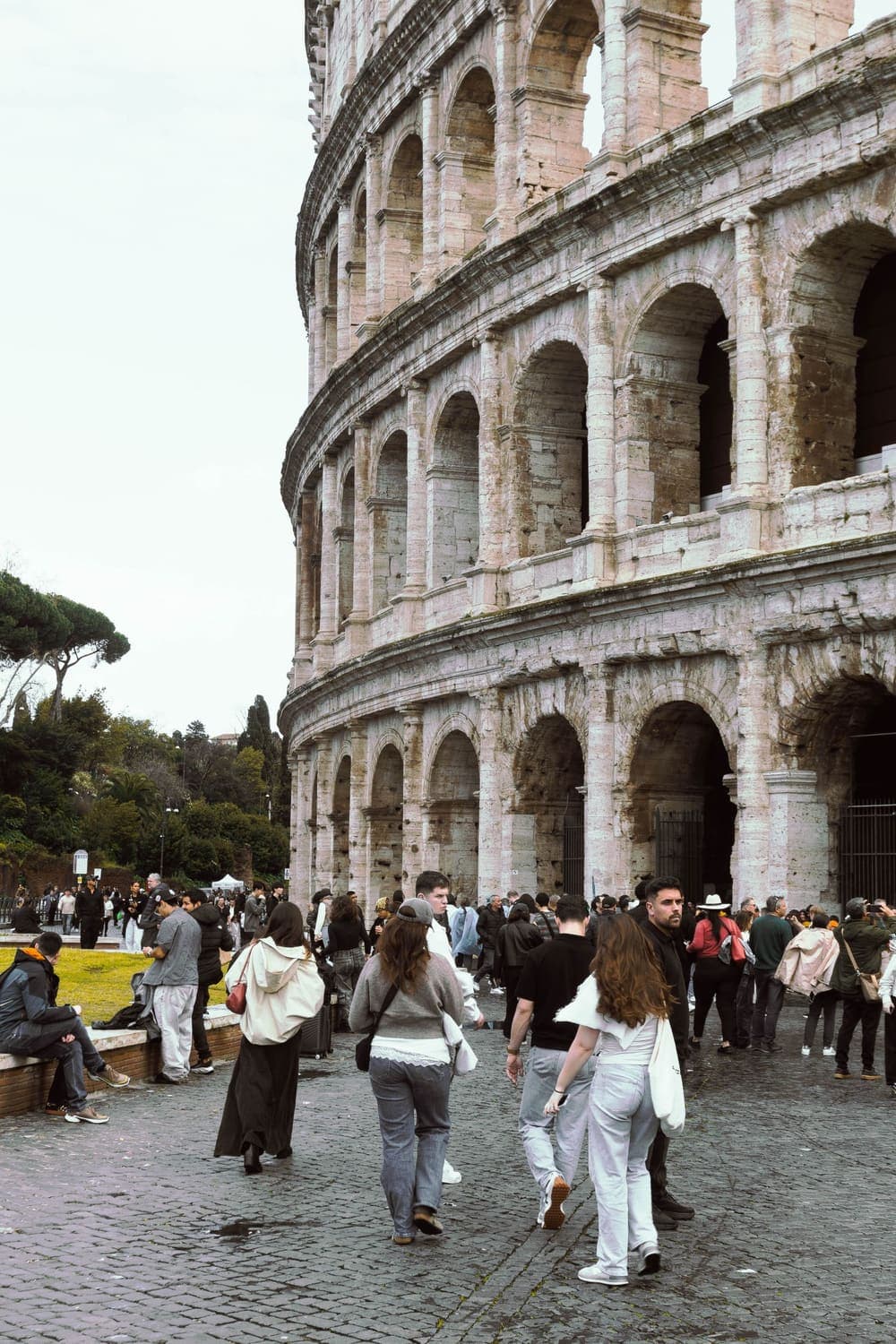
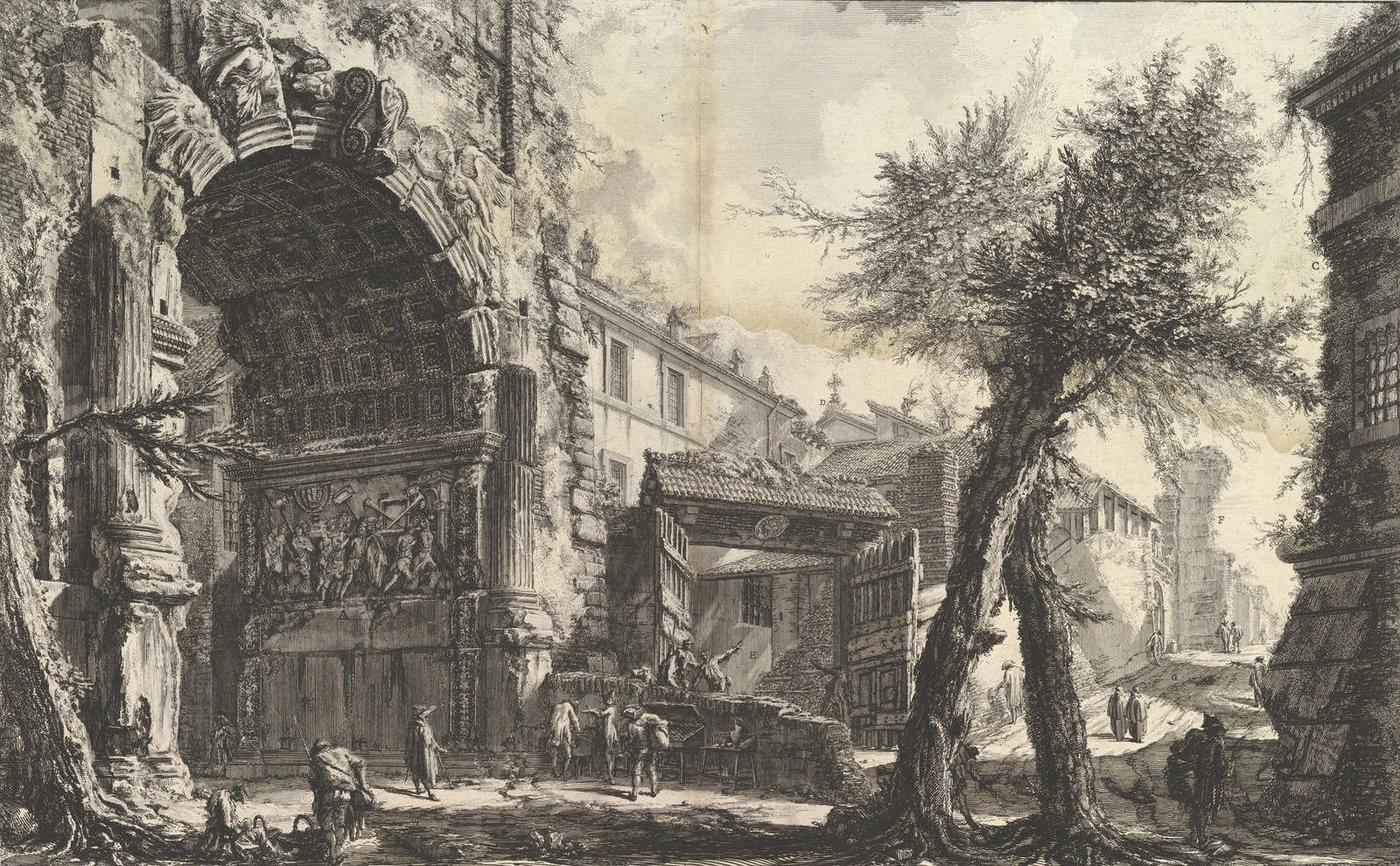
The entrance is at the west end, by the Arch of Constantine. Look up at the outer wall from the line: its pits are other holes, left where iron clamps were dug out. Inside, the Park put the Lampadius block on the second tier in 2021, so look upstairs. Afterwards, walk up the Via Sacra to the Arch of Titus, built after his death. Inside its passage, a carved panel shows the treasures of the Temple carried through Rome, with the great golden lampstand.
Trevlo's Colosseum tour has 10 stops, about 48 minutes of listening. Stop 3 tells Alföldy's story in the security line, in front of that wall, and stop 10 looks from the second level up the Via Sacra to the Arch of Titus.
A free preview of the tour plays on this page, and your first tour in the app is free.