Stories · London
Why does the British Museum have the Rosetta Stone?
British troops took it from the French army in Egypt under the surrender of 1801, and George III gave it to the museum in 1802. Many in Egypt want it back.
3 min read

Stories · London
British troops took it from the French army in Egypt under the surrender of 1801, and George III gave it to the museum in 1802. Many in Egypt want it back.
3 min read
The British Museum has the Rosetta Stone because of a surrender. In 1801 the French army in Egypt gave itself up to the British at Alexandria, and the terms said the antiquities the French had gathered were to be handed over. This broken slab was among them. It reached England early in 1802, and that July George III gave it to the museum. Whether that makes it Britain's to keep is still argued.
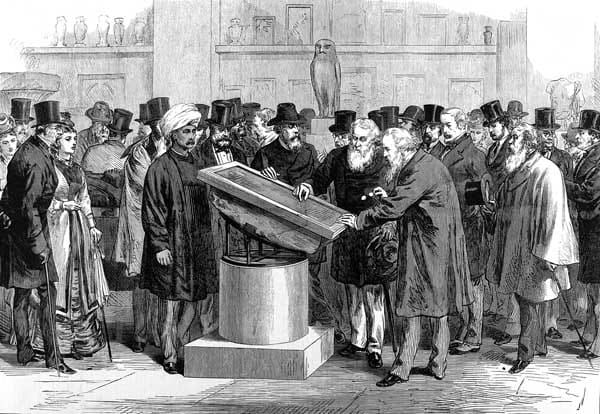
The French had found it only two years earlier. In July 1799 Napoleon's soldiers were rebuilding an old fort outside Rosetta, a delta town, when an engineer officer called Bouchard spotted a dark slab reused in a wall. It carried one decree from 196 BC in three scripts: hieroglyphs, the everyday Egyptian hand called demotic, and Greek. Scholars could read the Greek, so here at last was a way into the other two, and by 1822 it had unlocked hieroglyphs.
When the time came to give it up, the French fought for it on paper. Article sixteen of the surrender gave everything their scholars had collected to the victors. General Menou, the French commander, answered that it was all private property, and the stone was his own. Their list of antiquities even entered it as "belonging to General Menou". One French naturalist told the British his colleagues would sooner burn their finds. In the end Menou gave way.
The stone sat at his house in Alexandria, padded with cotton and matting, until French soldiers heard who was getting it. They tore the padding away and tipped it onto its face. A British officer, Tomkyns Hilgrove Turner, came one evening with gunners and an artillery wagon nicknamed the devil cart, and hauled it off through narrow streets while the French jeered. He sailed with it on a captured frigate, the Egyptienne, and reached Portsmouth in February 1802. Another Englishman remembered it hidden among Menou's luggage instead, so exactly how it changed hands isn't certain.
It lodged first with the Society of Antiquaries in London, and once it was in Britain two lines were painted on its sides: "Captured in Egypt by the British Army in 1801" and "Presented by King George III". The museum's floors couldn't bear its weight, so at first it stood in temporary buildings in the grounds. Years later Turner called it a proud trophy of British arms.
not plundered from defenceless inhabitants, but honourably acquired by the fortune of war.
Many in Egypt see it differently. The archaeologist Zahi Hawass has called the stone an icon of Egyptian identity, and by 2022 his petition for its return had passed 100,000 signatures. Egypt, he argues, had no voice in the agreement of 1801. The museum's reply is that Egypt then belonged to the Ottoman Empire, and an Ottoman admiral who fought beside the British signed the treaty. In 2022 it added that Egypt's government had made no formal request. Most known copies of the decree are still in Egypt, and in 2005 the museum sent a full-size replica to Rashid, the town the French called Rosetta. In 2025, as the Grand Egyptian Museum opened, Hawass said Egypt had now built more than 22 museums to the highest standards.
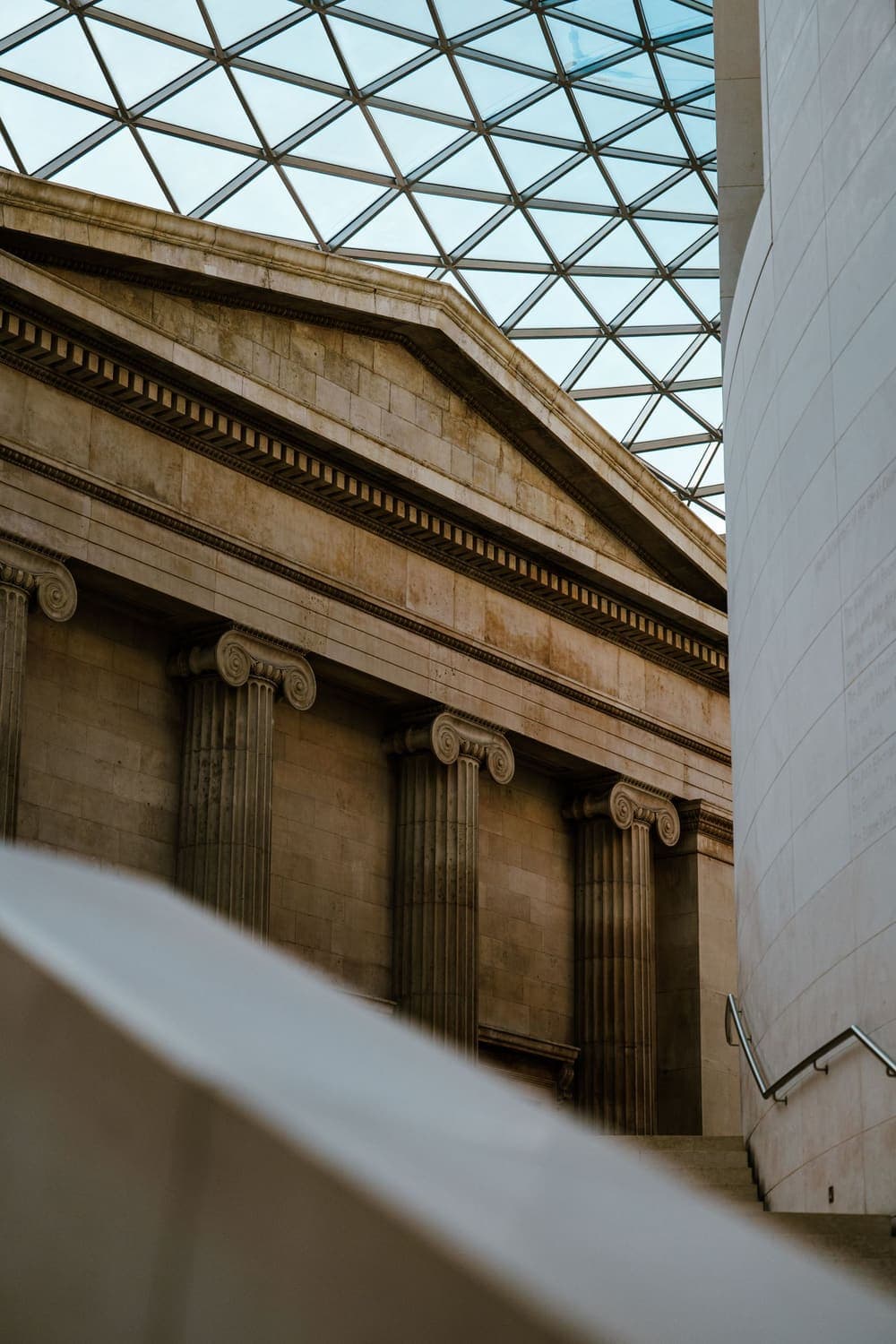
Go left from the Great Court into Room 4, where Egypt's sculpture is shown. The stone draws the biggest crowd in the building, so look over heads for the dark slab, then edge round to its narrow ends for the faded white words added in England. Room 1, the Enlightenment gallery, has a replica you may touch.
The British Museum tour has 13 stops, about 72 minutes of listening. The Rosetta Stone is stop 3, after the hidden courtyard and before the giant head of Ramesses.
A free preview of the tour plays on this page, and your first tour in the app is free.