Stories · London
Who stole the Stone of Scone?
Four Glasgow University students took the Stone of Scone from Westminster Abbey on Christmas morning 1950, broke it in two and smuggled it to Scotland.
3 min read

Stories · London
Four Glasgow University students took the Stone of Scone from Westminster Abbey on Christmas morning 1950, broke it in two and smuggled it to Scotland.
3 min read
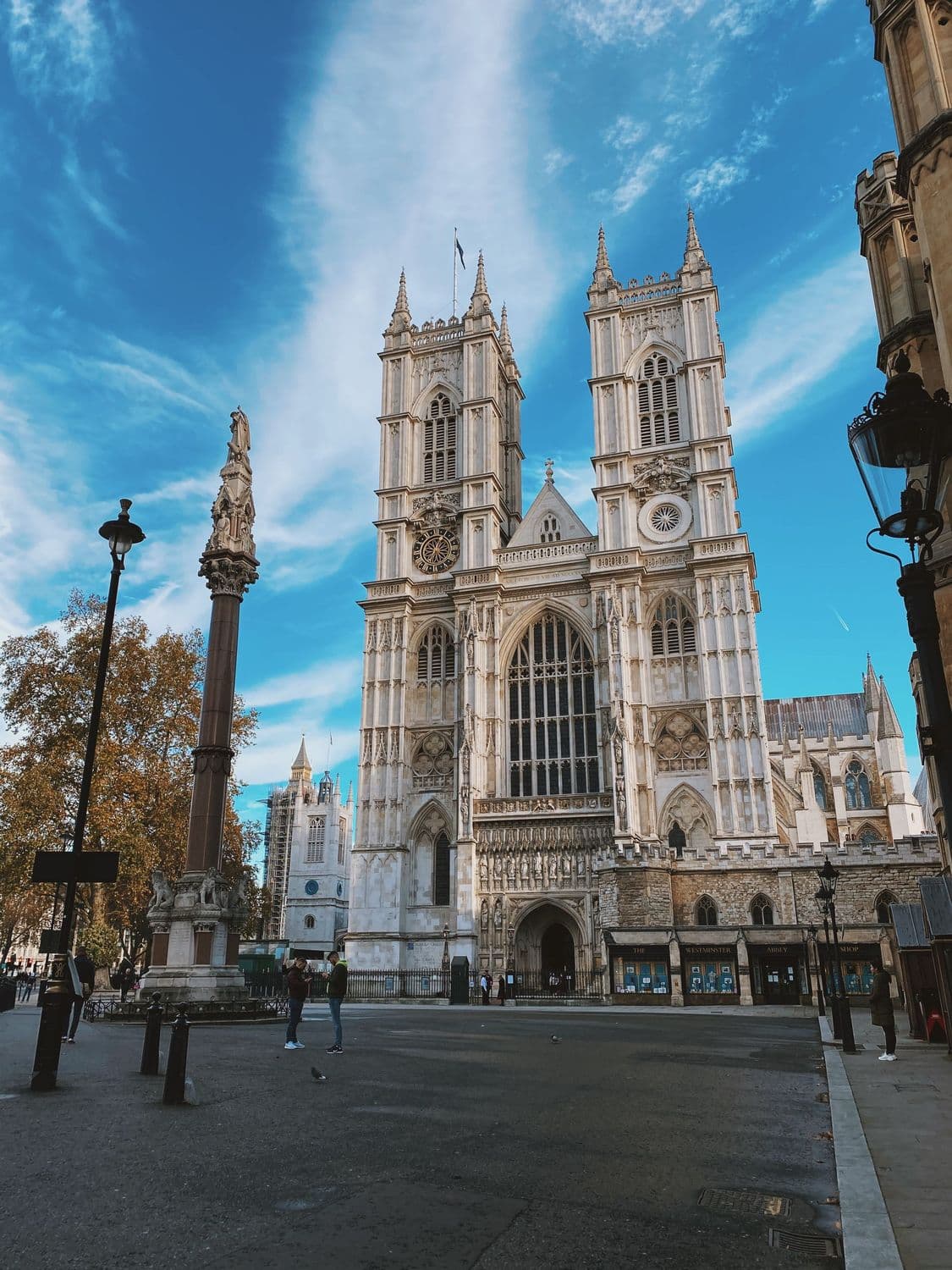
They were Ian Hamilton, a 25-year-old law student, Gavin Vernon, Kay Matheson and Alan Stuart, all Scottish nationalists. Four months later the stone, mended, turned up in the ruins of Arbroath Abbey in Scotland. It went back under the Coronation Chair in 1952, and none of the four was ever charged.
The stone is a plain block of red sandstone weighing 152 kilograms (336 pounds), about as heavy as two grown men. Scottish kings were inaugurated on it at Scone, near Perth, until 1296. That year King Edward the First of England invaded Scotland and took it south.
At Westminster he had an oak chair made to hold it, in 1300 and 1301, painted by an artist known as Master Walter. For more than six centuries after that, English and then British monarchs were crowned sitting over the stone. Scots also called it the Stone of Destiny.
On 23 December 1950, Hamilton hid inside the abbey, planning to wait for the night. A night watchman found him, questioned him and let him go.
Around midnight on Christmas Eve, three of the group got in through a builders' yard and into Poets' Corner. They pulled the stone out from under the chair's seat. It fell to the floor and broke in two. They dragged the larger piece away on Hamilton's coat.
Matheson waited outside in a borrowed Ford Anglia. When a policeman came by, two of the group pretended to be a courting couple and chatted with him until he moved on. The smaller piece went into the car. The larger piece ended up hidden in a field in Kent.
The hunt was so big that the border with Scotland was reportedly closed for the first time in four hundred years.
In Glasgow, a stonemason named Robert Gray joined the two pieces. In April 1951 the stone was left at Arbroath Abbey, linked to the Declaration of Arbroath, the letter of 1320 that asserted Scotland's independence. The police took it back to London.
The government's chief law officer, Sir Hartley Shawcross, told Parliament that prosecuting the students was not in the public interest. Hamilton later became a well-known lawyer and wrote a book about the night.
In 1996 the government returned the stone to Scotland, on condition that it comes back for coronations. It sat in the chair again for King Charles III's coronation in May 2023. As of October 2026, it is on show at Perth Museum, a few miles from Scone, where it has been since March 2024.
The Coronation Chair stands in St George's Chapel, at the west end of the nave near the Great West Door, as of October 2026. It moves to the sanctuary only for a coronation.
Look under the seat for the open space where the stone sat for nearly 700 years. The names carved on the chair are older graffiti, left by Westminster schoolboys and visitors in the 1700s and 1800s. One reads "P. Abbott slept in this chair 5-6 July 1800".
The Trevlo tour of Westminster Abbey tells this story at its last stop, the Coronation Chair, beside the Great West Door. On the way it takes in the grave of the Unknown Warrior, Newton's monument, the royal tombs, Elizabeth I's tomb and Poets' Corner. Seven stops, about eighteen minutes of listening, at your own pace.
The first stop is free to play on this page, and your first tour in the app is free.