Stories · London
Why is it called Buckingham Palace?
Buckingham Palace is named after the Duke of Buckingham, who built a grand house on the site in 1703. George III bought it in 1761, and the name stuck.
2 min read

Stories · London
Buckingham Palace is named after the Duke of Buckingham, who built a grand house on the site in 1703. George III bought it in 1761, and the name stuck.
2 min read
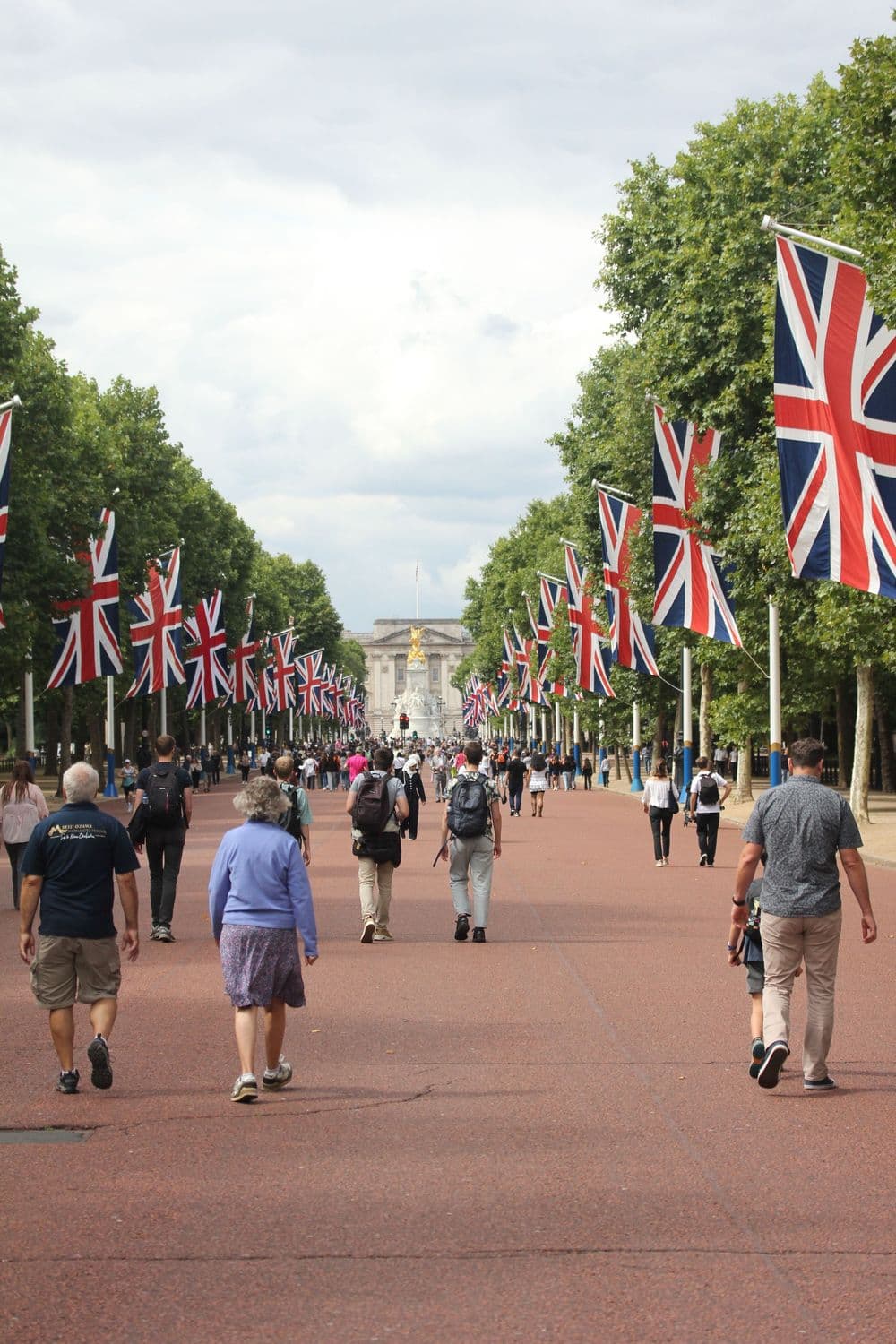
The duke was John Sheffield, a courtier and poet. His title came from Buckingham, a market town about 60 miles (95 km) north-west of London. The palace has no other link with the town. The kings who bought and rebuilt his house kept its name. Queen Victoria, the first monarch to live there, moved in during July 1837.
In 1609 King James the First planted a mulberry garden here, about four acres, to feed silkworms and start an English silk industry. It failed. The story goes that he planted black mulberries, when silkworms feed on white ones. The garden later became a public pleasure ground.
Through the 1600s, a string of courtiers built houses beside it, each named after its owner. Goring House became Arlington House, which burned down in 1674 and was rebuilt.
In 1682 Sheffield was banished from the court of King Charles the Second. He had been courting the king's 17-year-old niece, Princess Anne. Rumour said he was sent off to Tangier, in North Africa, in a leaky ship.
Twenty years later, Anne was queen. In 1703 she made her old admirer Duke of Buckingham and Normanby. That year he began a new house at the western end of St James's Park, a three-storey block with two lower wings on either side. He called it Buckingham House, and he died there in 1721.
In 1761 King George III bought the house as a private home for his wife, Queen Charlotte. Accounts of the price differ, at £21,000 or £28,000. Londoners called it the Queen's House, and 14 of the couple's 15 children were born there.
Their son, King George IV, decided in 1826 to turn it into a palace. His architect, John Nash, kept the duke's main block and doubled it with new rooms on the garden side. Parliament agreed a budget of £150,000, and the king pressed for £450,000. After George IV died in 1830, Nash was replaced.
The next king, William IV, disliked the place. When Parliament burned down in 1834, he offered it to the Lords and Commons as their new home. They turned it down.
So the half-finished palace waited for Victoria. When she moved in, it was still known by the duke's name, and it has stayed Buckingham Palace ever since.
Stand at the black-and-gold railings by the main gates, facing the palace. The front you see is the East Front, refaced in pale Portland stone by the architect Aston Webb in 1913, in just 13 weeks. Behind it, around an inner courtyard, Nash's palace is built around the duke's house.
Look at the balcony in the centre of the front, above the middle arch. That's where the royal family appears to the crowds on great occasions.
The Trevlo tour of Buckingham Palace tells this story at the main gates, its second stop. It starts at the Victoria Memorial, follows the garden railings and the palace's working side on Buckingham Palace Road, and ends at Wellington Arch. Five stops, about twenty-five minutes of listening, at your own pace.
The first stop is free to play on this page, and your first tour in the app is free.