Stories · Istanbul
Why is Jesus in the Hagia Sophia?
Hagia Sophia was built as a church in 537. Its mosaics of Christ were covered during its centuries as a mosque, then uncovered in the 1930s.
3 min read

Stories · Istanbul
Hagia Sophia was built as a church in 537. Its mosaics of Christ were covered during its centuries as a mosque, then uncovered in the 1930s.
3 min read
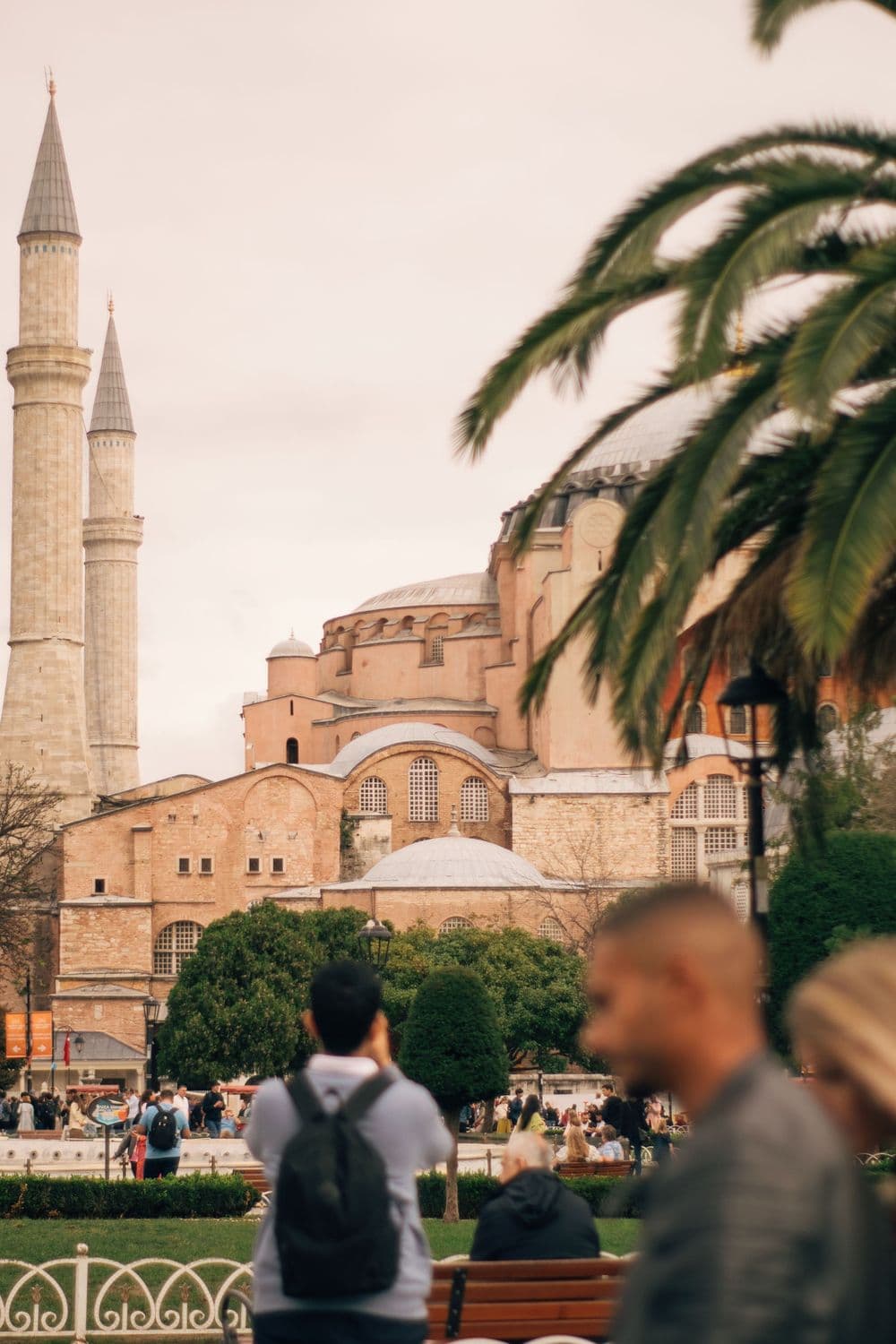
Most of the figures date from 867 onwards, after a long Byzantine quarrel over religious images had ended. When Sultan Mehmed II made the building a mosque in 1453, they were not covered all at once. They disappeared under whitewash and plaster over the following centuries, until an American scholar, Thomas Whittemore, was allowed to bring them back.
The emperor Justinian built Hagia Sophia, "Holy Wisdom" in Greek, between 532 and 537. His church glittered with gold mosaic, but its decoration was mostly patterns and crosses, not people.
From 726, Byzantine emperors turned against religious pictures, calling them idolatry. The dispute, known as Iconoclasm, or image-breaking, lasted until 843.
On 29 March 867, Photios, the patriarch who led the church in Constantinople, unveiled a new mosaic in the half-dome above the altar. It showed the Virgin Mary with the Christ Child on her lap, and it was the first of the figures to return. Emperors and empresses added more over the centuries, including portraits of themselves offering gifts to Christ.
In 1204, crusaders from western Europe sacked Constantinople and held it for over fifty years. After the Byzantines took it back in 1261, a new mosaic went up in the south gallery, the upper floor reserved for the imperial family. Most historians date it to those years, though a few place it earlier.
It is called the Deesis, Greek for "supplication". Christ is in the centre, with the Virgin Mary and John the Baptist on either side, pleading with him for humanity. The panel is about 6 metres, 20 feet, wide. Its lower half is lost.
After 1453, many of the mosaics stayed on view for a long time. Drawings published in 1680 by a French traveller, Guillaume-Joseph Grelot, still show mosaics in the building. Over time, most were whitewashed or plastered over.
In 1847 Sultan Abdülmecid hired two Swiss-Italian architects, the brothers Gaspare and Giuseppe Fossati, to repair the building. They found the mosaics, recorded them in drawings and covered them up again. The same repair hung the eight huge roundels, each about 7.5 metres across, with the names of God, the Prophet Muhammad, the first four caliphs and the Prophet's grandsons, Hasan and Husayn, in gold letters. Christ went back under plaster in the same works that gave the building its best-known calligraphy.
In 1931 Whittemore's Byzantine Institute of America began uncovering the mosaics. In 1934 the Turkish government made Hagia Sophia a museum. In July 2020 a Turkish court annulled that decision, and Hagia Sophia became a working mosque again. Officials said the figures would be veiled only during prayers.
Climb the ramp to the upper gallery and follow it round into the south gallery. The Deesis is beyond the Marble Door, a stone doorway carved to look like wooden doors. Look closely at Christ's face. Tiny pieces of glass and stone shade it like a painting.
The Trevlo tour of Hagia Sophia tells this story at the Deesis, its fifth stop. It starts outside at the Fountain of Ahmed III, then follows the upper galleries open to visitors: the great dome, the empress's loge where Mehmed II's arrival in 1453 is told, the Viking runes, and the Empress Zoe mosaic. Six stops, about twenty minutes of listening, at your own pace.
The first stop is free to play on this page, and your first tour in the app is free.