Stories · Paris
Why is the Mona Lisa in the Louvre?
Leonardo never delivered the Mona Lisa. He took her to France, Francis I very probably bought her, and the Revolution gave the kings' art to the Louvre.
3 min read

Stories · Paris
Leonardo never delivered the Mona Lisa. He took her to France, Francis I very probably bought her, and the Revolution gave the kings' art to the Louvre.
3 min read
Because Leonardo never let her go. He began the portrait in Florence around 1503, most likely for Lisa Gherardini's husband, the silk merchant Francesco del Giocondo, but he never delivered it or collected his fee. She stayed with him for the rest of his life, still being painted, and in 1516 she went with him to France, where the young King Francis I gave him a manor house and a huge salary. Francis very probably bought her two years later, and she stayed with the kings of France until the Revolution turned their paintings into the nation's and their old palace into a museum. She was never looted, though people have believed she was, and one of them stole her.
In October 1517 the Cardinal of Aragon called on Leonardo at Amboise. The cardinal's secretary, Antonio de Beatis, kept a journal. Leonardo, sixty-five by then, showed them three pictures, and one, de Beatis wrote, was a certain Florentine lady, painted from life. He added that it had been made for Giuliano de' Medici, Leonardo's late patron in Rome, which may be the secretary's slip.
The king had no need to take her. In 1518 Francis paid Salaì, one of Leonardo's most loyal pupils, 2,604 livres, a very large sum, for some paintings on panel that Salaì had handed over to the king, and the Louvre thinks she was among them. Exactly how she changed hands is tangled, but she was bought, not taken, and the historian Martin Kemp sees no case for sending her to Italy: a king hardly had to seize a painting from his own artist.
She hung at Fontainebleau until Louis XIV moved her to Versailles. The Revolution ended the monarchy in August 1792, and twelve months later the Louvre opened as the nation's museum, mostly filled with the crown's pictures. She went on display there in 1797. Bonaparte soon had her hung in the Tuileries palace, but only for a while.
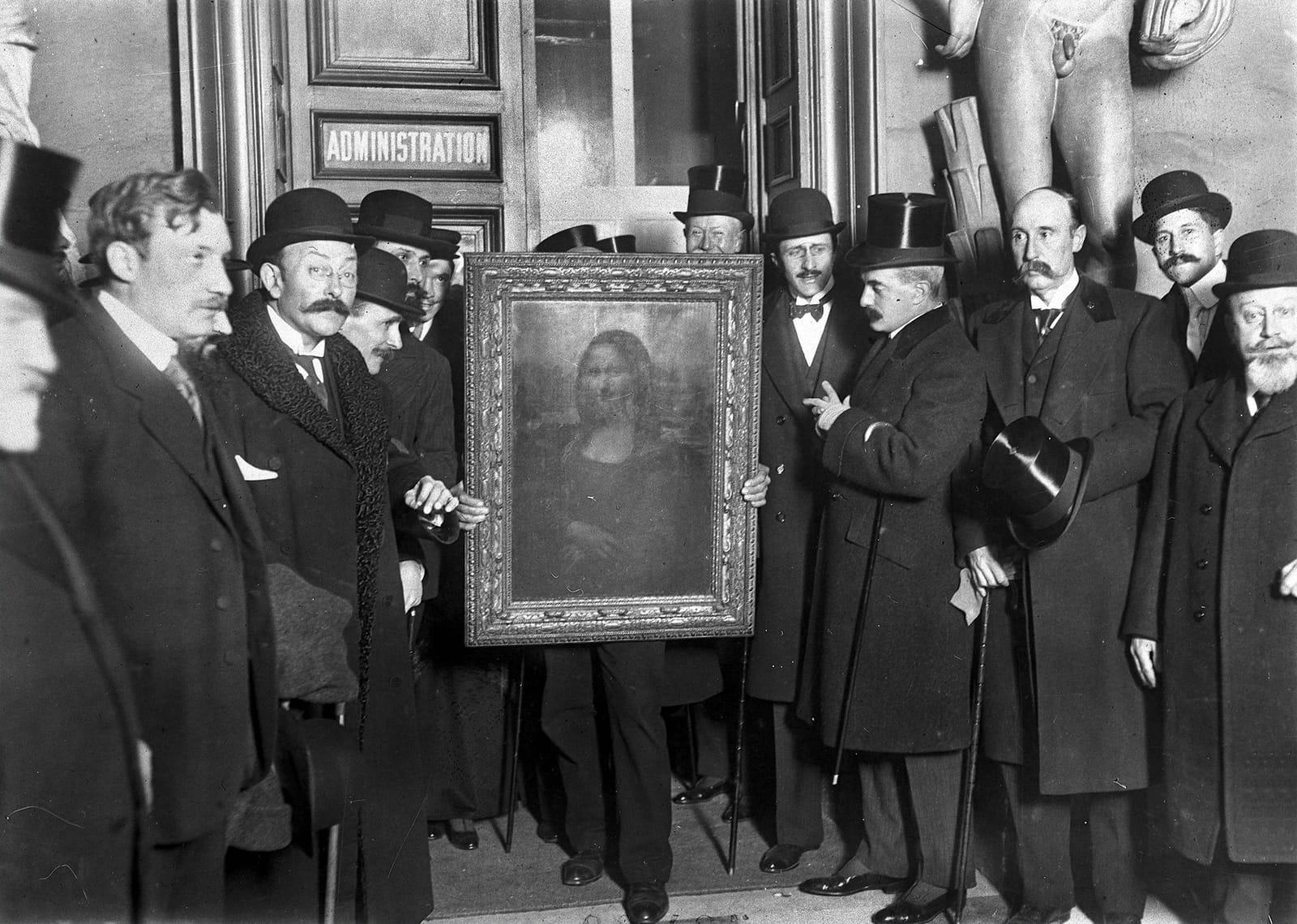
That is where the story people half remember goes wrong. Vincenzo Peruggia, the Italian glazier who carried her out of the Louvre in 1911, testified in Florence that the idea came to him on a break, in a small library.
I read, and I also saw the photographs, that many paintings were stolen from Italy by Napoleon I.
Napoleon's armies did carry off Italian paintings. The huge Veronese that faces her today was taken from a monastery in Venice in 1797. She was never one of them.
A letter Peruggia wrote in 1911 talks about making his fortune, and he was caught offering her to the Uffizi's director. Italy hailed him as a patriot; he served seven months. She was on show at the Uffizi for a little over two weeks, with thirty thousand people on the first day, and was back in the Louvre on 4 January 1914. When he heard, Peruggia shook his head and said they had understood nothing.
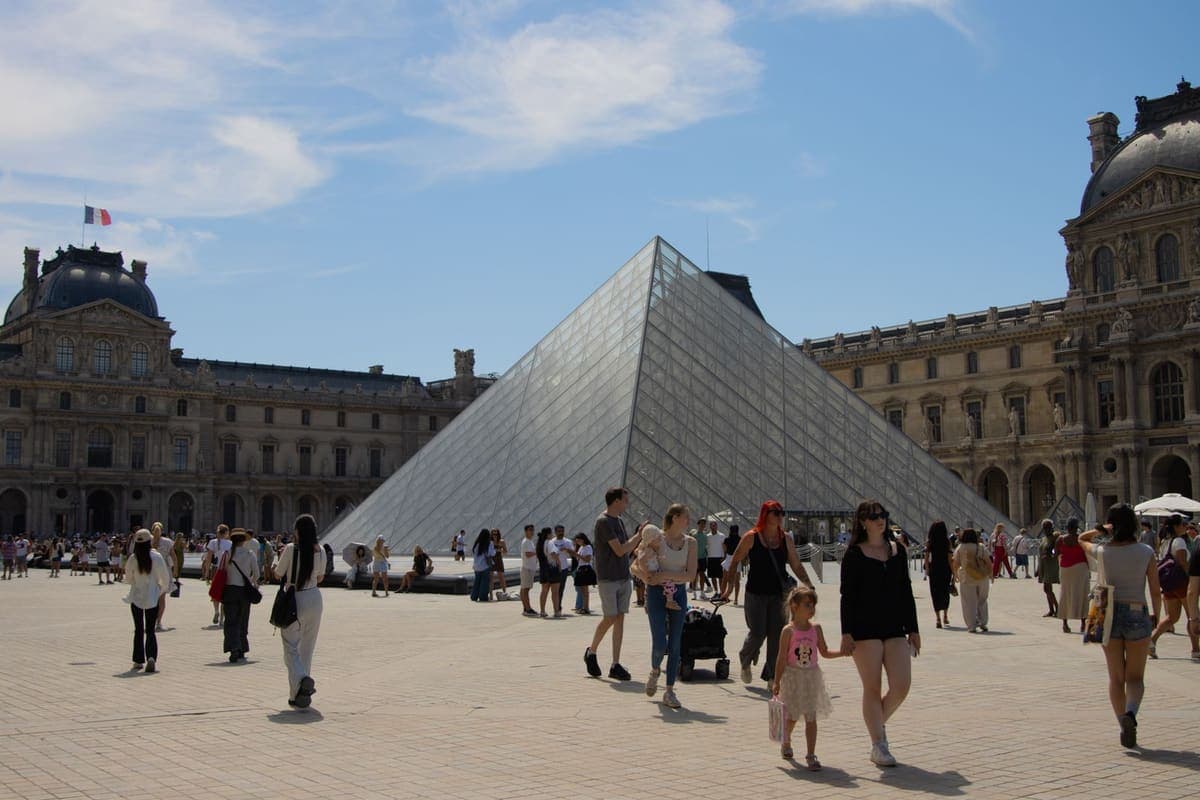
At the pyramid, the square courtyard behind it holds the palace's oldest wing, begun by Francis I, Leonardo's king. Inside, join her queue in the Salle des États, room 711. She is small, about 79 by 53 centimetres, yet life-size. Then turn round. The vast Wedding at Cana on the opposite wall is the painting Napoleon's army really did take from Italy. Leonardo's other paintings hang next door, in the Grande Galerie, room 710.
On Trevlo's Louvre tour you hear how she reached France while you queue for her, and the theft in the room she left from: nine stops, about fifty-three minutes of listening.
A free preview of the tour plays on this page, and your first tour in the app is free.