Stories · Paris
Why is the Mona Lisa so famous?
Leonardo painted a masterpiece, but her theft from the Louvre in 1911 made her a household name, and tourism and advertising have kept her one.
3 min read

Stories · Paris
Leonardo painted a masterpiece, but her theft from the Louvre in 1911 made her a household name, and tourism and advertising have kept her one.
3 min read
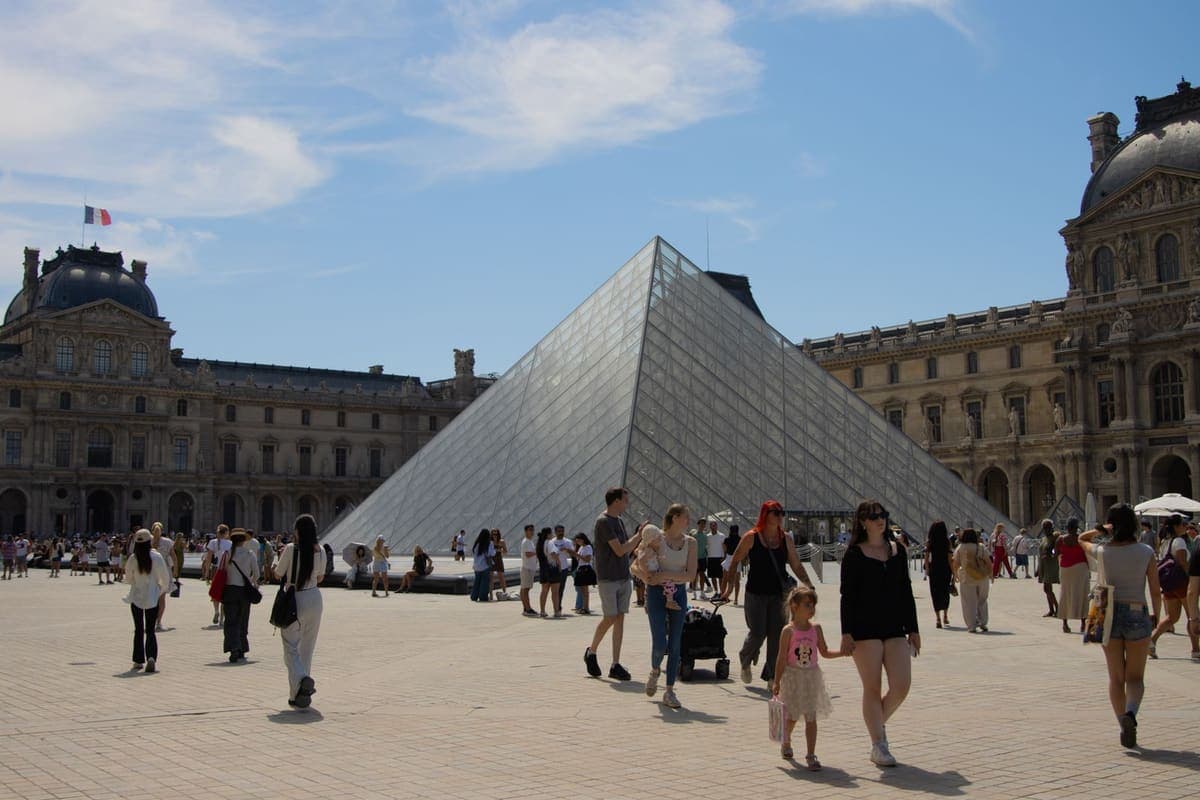
Above all, because she was stolen. Leonardo painted Lisa Gherardini, a Florentine silk merchant's wife, at life size, with glazes so fine that her face turns from light to shadow without an edge. By the 1860s she was the object of a literary cult. Yet to most visitors she was one painting among hundreds: Baedeker's guide to Paris spared her two sentences in 1907, far less than the Venus de Milo. Her theft in August 1911 changed that, and the Louvre itself says the theft gave her worldwide, popular fame. Historians add a caution: she was already the obvious painting to steal, and the advertisers who used her later would not have bothered had she not been famous.
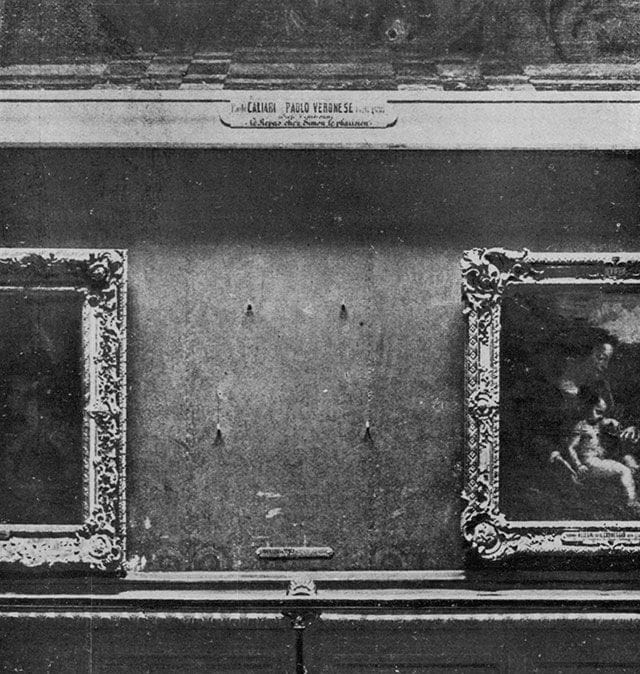
In 1910, after a threatening letter, a firm of glaziers put a dozen of the museum's treasures behind glass. One of the workmen was an Italian, Vincenzo Peruggia, and the job showed him how her case hung.
Monday 21 August was the Louvre's closing day. A repair crew crossed the Salon Carré at 7.20 a.m., and their foreman pointed her out as the most valuable picture on earth. At 8.35 they came back, and the wall was empty. The foreman joked that the museum had moved her so his men couldn't pinch her, they all laughed, and nobody reported it. Peruggia was stuck behind a locked door on a back staircase, the panel wrapped in white, until a plumber took him for one of the staff and opened it with pliers.
On Tuesday the painter Louis Béroud set up his easel. He despised the new glass, and meant to paint a girl doing her hair in its reflection. He found bare hooks. A guard told him she was with the photographers. At noon Béroud sent him to ask, and the guard hurried back without her. Twenty-six hours had gone by.
The Louvre closed for a week. When it opened again, a museum used to a few hundred visitors a day had queues round the block, for an empty space on a wall.
Crowd in the Salon Carré, excited mood, standing in groups as if the Mona Lisa had just been stolen.
For two years she lay in a trunk with a false bottom in Peruggia's room in Paris. In December 1913 he took her to Florence and lifted her out of red silk on a hotel bed. He said he had brought her home for Italy, and Italy cheered him, though his own letters talk of making his fortune. Thirty thousand people came to see her at the Uffizi on the first day, and swept the police aside. Back at the Louvre, more than a hundred thousand came in her first two days home.
Even that faded. Donald Sassoon, who wrote her history, found the public had nearly forgotten her by the 1920s. Its notoriety may have kept her known, and tourism, advertising and television did the rest. In 1963 about 1.7 million people queued in New York for twenty seconds or so with her. Today about twenty thousand a day file past.
Start in the Salon Carré, room 708, by Cimabue's great gold Madonna, and look round the walls: she hung here when she was taken. Then walk on to the Salle des États, room 711, and join her queue. She is smaller than many expect, about 79 by 53 centimetres, alone on her wall behind glass. Look for the bridge on the right, the thin crack that runs down through her hair and stops at her forehead, and the sky, turned green by old yellow varnish.
The Louvre tour tells the theft where it happened, then weighs this question in front of her: nine stops, about fifty minutes of listening.
A free preview of the tour plays on this page, and your first tour in the app is free.