Stories · Vienna
Why was Schönbrunn Palace built?
Schönbrunn Palace began as a Habsburg hunting lodge, built after the Ottomans wrecked the old house in 1683. Maria Theresa made it her summer palace.
2 min read

Stories · Vienna
Schönbrunn Palace began as a Habsburg hunting lodge, built after the Ottomans wrecked the old house in 1683. Maria Theresa made it her summer palace.
2 min read
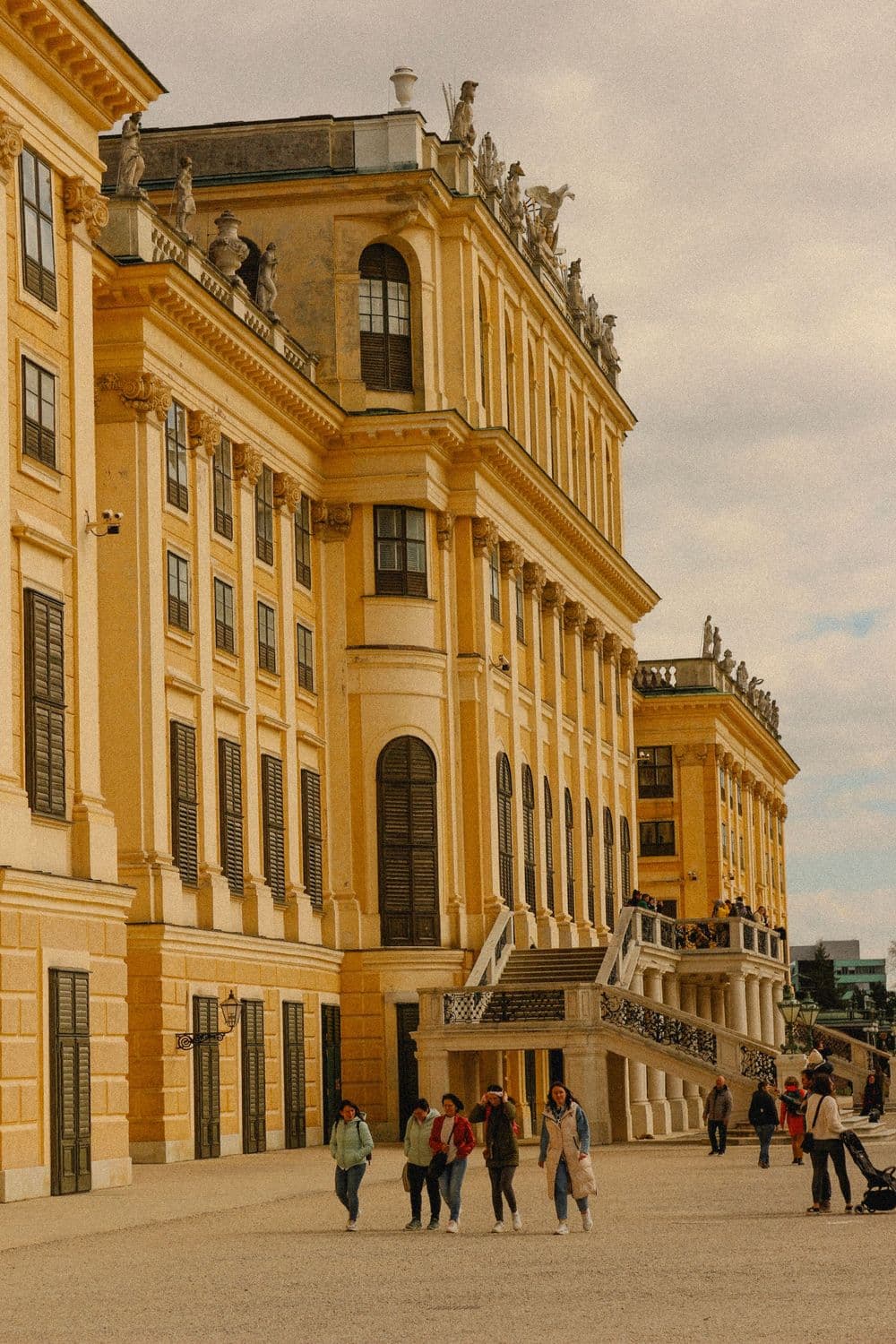
Emperor Leopold the First wanted a grand country residence for his son and heir, Joseph. His architect, Johann Bernhard Fischer von Erlach, began building it in 1696. Nearly fifty years later Empress Maria Theresa, Leopold's granddaughter, had it rebuilt as the summer home of the court and her large family. From 1745 they spent every summer there.
The Habsburgs, the family who ruled Austria for six centuries, bought the estate in 1569. It was then a farm and mill called the Katterburg, a few miles outside Vienna. Emperor Maximilian II wanted it for gardens and hunting.
The name comes from a legend. In 1612, the story goes, Emperor Matthias was out hunting when he came across a spring, a "schöner Brunnen", or beautiful fountain. Around 1642 a widowed empress, Eleonora Gonzaga, built a small palace there, and the estate's new name, Schönbrunn, appears in the records for the first time.
In 1683 an Ottoman army besieged Vienna for two months. The siege failed, but Schönbrunn was wrecked.
Leopold decided to give the estate to Joseph and build him something splendid. Fischer von Erlach's first design covered the whole slope, from the river up to the top of the hill, with ramps, colonnades and elaborate waterworks. It was never built. The palace that went up was a hunting lodge at the foot of the hill, and its central block was ready to live in by 1700.
Then the money ran short. A long war over the Spanish throne slowed the work, and it stopped altogether when Joseph died suddenly in 1711. His successor, Emperor Charles VI, acquired it in 1728 but used it mostly for shooting pheasants.
Charles gave Schönbrunn to his daughter, Maria Theresa, who loved the house and its gardens. In the winter of 1742 to 1743 she began rebuilding it as an imperial summer residence, with the architect Nikolaus Pacassi. A theatre opened in 1747. The family kept growing, and so did the rooms: she had sixteen children.
On 13 October 1762, a six-year-old Wolfgang Amadeus Mozart played for the family in the Hall of Mirrors. His father, Leopold, wrote home that the boy jumped onto the empress's lap, flung his arms round her neck and kissed her.
The rebuilding was not fully finished until just before her death in 1780.
Stand in the great courtyard and face the long palace front. The famous yellow is younger than it looks. In Maria Theresa's day the front was golden ochre, then pale ochre picked out in white. The shade called Schönbrunn Yellow took over from the middle of the 1800s, perhaps as a deliberate nod back to her reign.
The Trevlo tour of Schönbrunn Palace tells this story in front of the palace, its first stop. Then it goes inside to the Great Gallery and the Napoleon Room, and out to the Great Parterre and the Gloriette on the hill. Five stops, about twenty-five minutes of listening, at your own pace.
The first stop is free to play on this page, and your first tour in the app is free.