Stories · Rome
How does the Trevi Fountain work?
By gravity. The Trevi Fountain ends the Aqua Virgo, a Roman aqueduct of 19 BC that slopes gently for 20 km, mostly underground. Pumps recirculate its pool.
3 min read

Stories · Rome
By gravity. The Trevi Fountain ends the Aqua Virgo, a Roman aqueduct of 19 BC that slopes gently for 20 km, mostly underground. Pumps recirculate its pool.
3 min read
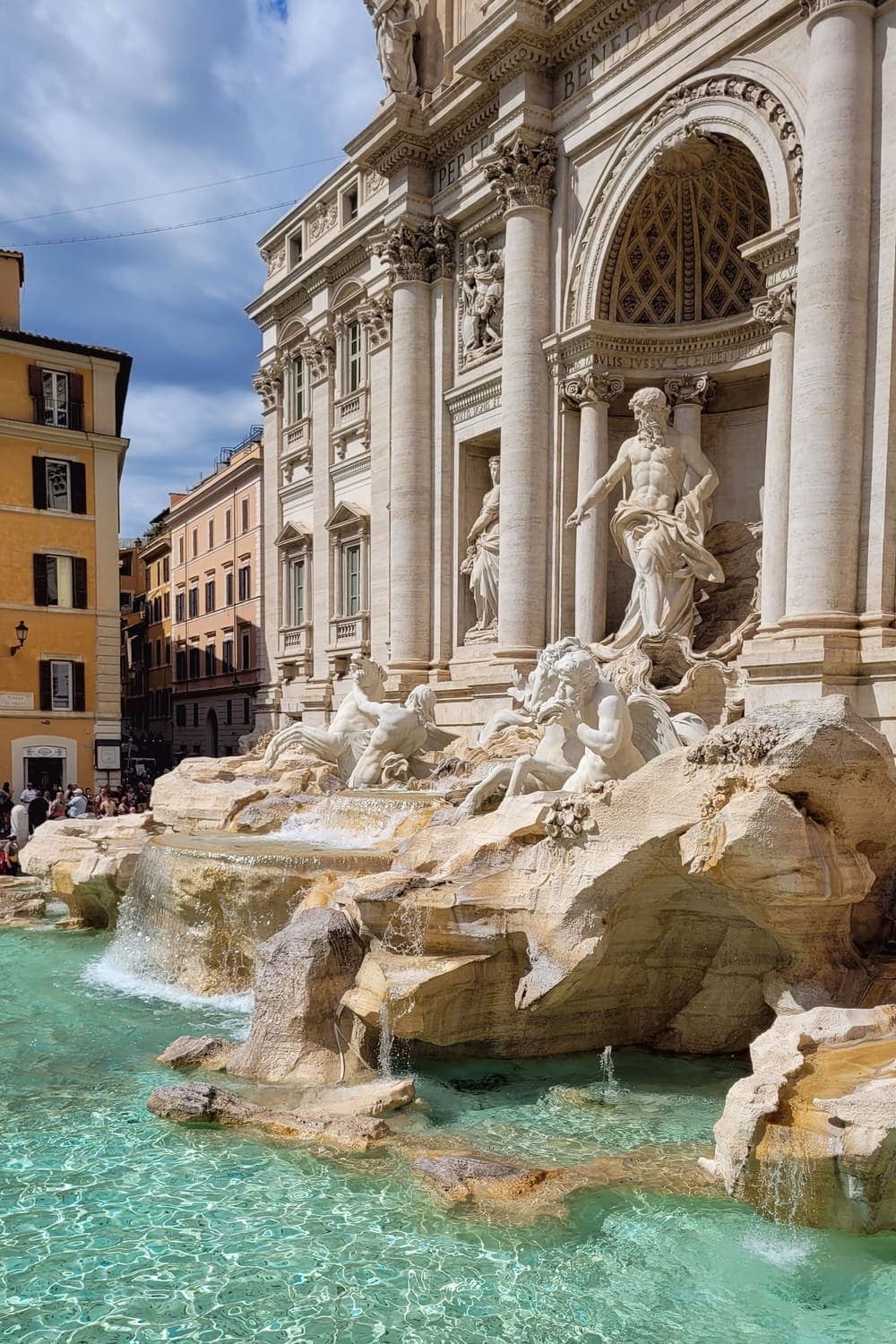
The Trevi Fountain is the end of a Roman aqueduct, and the water gets there by gravity. It comes from the Aqua Virgo, which Marcus Agrippa finished in 19 BC from a spring about 13 kilometres east of Rome. The channel winds for about 20 kilometres, nearly all of it underground, on so slight a slope that the water barely creeps along. It is the only ancient Roman aqueduct still in use, and it still feeds the fountain, while two electric pumps, watched round the clock, send the pool's water round again at 126 litres a second.
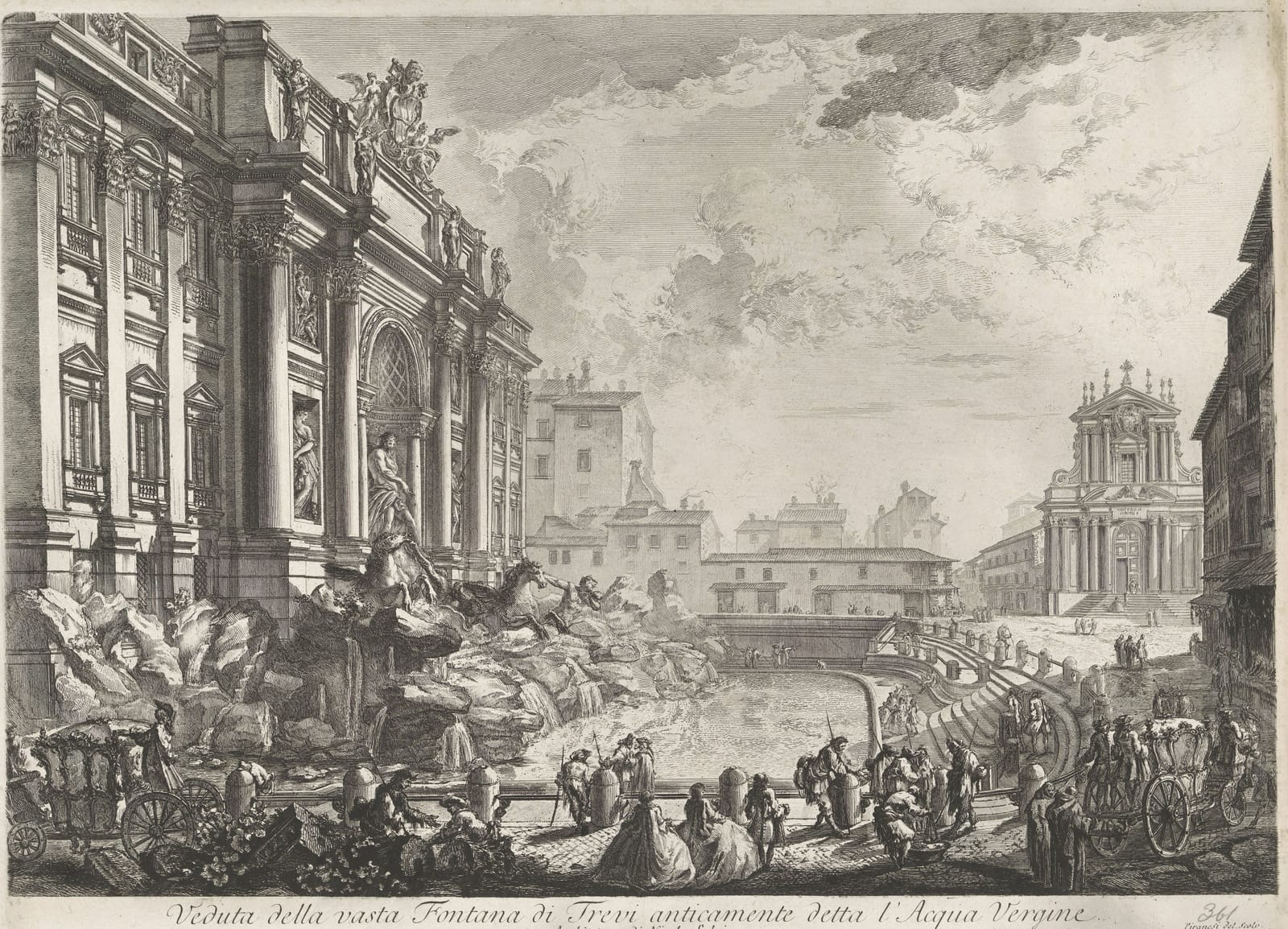
It began with a search. Agrippa, Augustus's closest ally, was paying out of his own pocket to remake the Campus Martius, and his new baths beside the Pantheon would need a steady supply. His soldiers were sent into the countryside to look. Frontinus, put in charge of the city's aqueducts about a century later, set down what they found.
It was called Virgo, because a young girl indicated certain water veins to the soldiers who were hunting for water
The soldiers followed those thin threads of water, dug where they led, and struck an enormous supply. The aqueduct took her name, the Maiden's water, and Frontinus adds that a painting of the scene hung in a little shrine beside the spring.
Then came the problem of height. A channel like this carries water only while it keeps going downhill, and the spring stood barely higher than the city. Most Roman aqueducts fell somewhere between one and a half and three metres in every kilometre. This one falls 25 millimetres in every 100 metres, the gentlest of any of them: roughly a thumb's thickness over the length of a football pitch, held for twenty kilometres in the dark. From end to end it drops only a few metres.
A fall that small leaves nothing to push with. A jet needs its water to start from higher up, the way a tap gushes because the tank is in the roof. About ten minutes' walk away, at the foot of the Spanish Steps, Pietro Bernini met the same problem with the same water in the 1620s. He couldn't make it spout, so he set his fountain, the Barcaccia, slightly below the street and carved it as a boat taking on water. The Trevi doesn't leap either. Its water bursts from the palace front and tumbles over a cliff of carved rock into the pool.
Running underground is what saved it. When the Goths besieged Rome in 537 they cut the aqueducts, and most never ran properly again. The Virgo could be patched, and was, in the 700s and the 1100s, so a trickle reached a plain fountain at the Trevi crossroads all through the Middle Ages. By 1570 it had been restored all the way back to its spring. Nicola Salvi's great fountain, begun in 1732 and finished thirty years later, was built on the end of it.
Stand at the top of the steps in Piazza di Trevi, facing the fountain. Above Health, on the right with a snake drinking from her cup, a carved panel shows the girl pointing the soldiers to the spring. Above Abundance, on the left, Agrippa approves the plans. A few minutes north, at Via del Nazareno 14, three arches of the aqueduct sit sunk below the pavement, rebuilt by the emperor Claudius in AD 46. At the foot of the Spanish Steps, the Barcaccia lies a little below the street.
Trevlo's Trevi Fountain to the Spanish Steps tour follows the Aqua Virgo on foot, from the fountain past its buried arches to the boat that leaks: seven stops, about 28 minutes of listening.
A free preview of the tour plays on this page, and your first tour in the app is free.