Stories · Rome
Who founded the Vatican Museums?
Pope Julius II, in 1506. He bought the Laocoön, an ancient statue just dug out of a Roman vineyard, and set it in his palace's statue garden.
3 min read

Stories · Rome
Pope Julius II, in 1506. He bought the Laocoön, an ancient statue just dug out of a Roman vineyard, and set it in his palace's statue garden.
3 min read
Pope Julius II founded them, in 1506, when he bought an ancient marble statue just dug out of a Roman vineyard, the Laocoön, and gave it a niche in his palace's statue garden, beside the Apollo Belvedere he already owned. That garden is now the Octagonal Court, the oldest corner of the museums, and apart from eighteen years in Paris after Napoleon carried it off, the Laocoön has stood in that niche ever since. In 1771 Clement XIV founded the Pio-Clementino museum around it, Pius VI enlarged and finished it, and the collection has grown to about seventy thousand works.
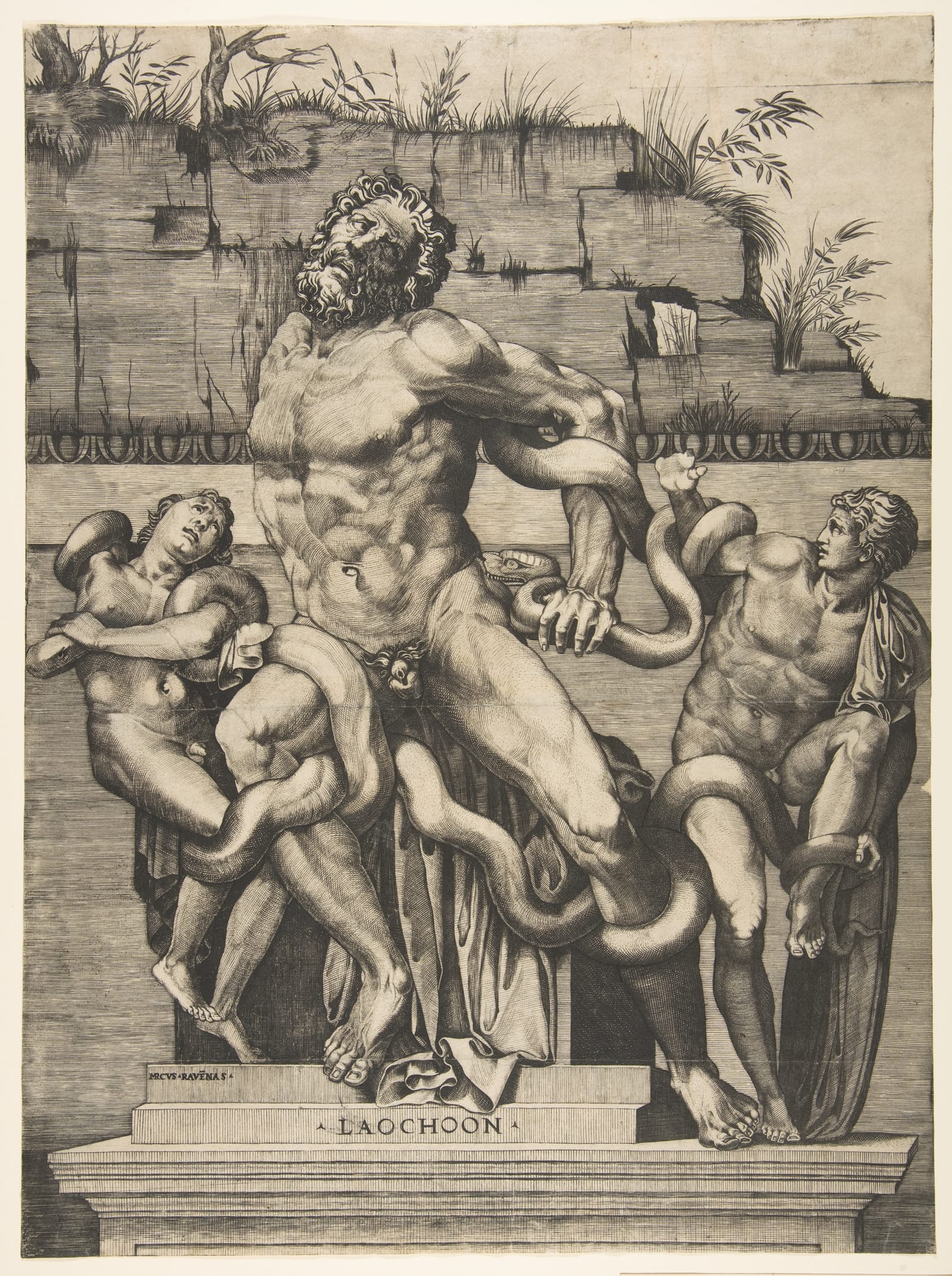
Julius reigned from 1503 to 1513. He went to war in person, earning the name the Warrior Pope. He was just as impatient with buildings: Giorgio Vasari, the artists' biographer, says Julius would have liked them to spring up without needing to be built. His architect Bramante was already laying out a courtyard on three levels, running over three hundred metres from the palace to a hilltop villa, with a court of niches for ancient statues. In the museums' own words, the aim was to bring the old imperial city back to life in the city of the popes.
On 14 January 1506, Felice de Fredis, digging among his vines on the Esquiline hill near Santa Maria Maggiore, opened up a long-closed niche and found statues in it. Julius sent a groom to tell his architect Giuliano da Sangallo to go and see them straight away. Michelangelo, thirty and already famous for the David, was at Sangallo's house, as he nearly always was: Sangallo had brought him to Rome and found him the commission for the pope's tomb. So he came along, and so did Sangallo's small son Francesco, sitting on the horse behind his father.
Francesco was the one who went down to the statues.
I climbed down to where the statues were when immediately my father said, 'That is the Laocoön, which Pliny mentions.'
The Roman writer Pliny had praised a Laocoön in the Emperor Titus's palace, carved by three sculptors from Rhodes, as finer than any painting or statue. It showed the Trojan priest who warned against the wooden horse, killed with his sons by two serpents. The diggers widened the hole to haul it out, and the party went home to eat, with nothing but ancient things to talk about.
De Fredis guarded his find in his bedroom, among endless callers. On 23 March Julius bought it, paying with a job as a scribe and the tolls of one of the city gates, and by August it stood in the pope's statue court. Its finder's tombstone, in Santa Maria in Aracoeli, credits his immortality to his own merits and to the Laocoön.
The Octagonal Court is the tour's second stop, a small eight-sided court open to the sky, signposted for the Sistine Chapel from the courtyard of the giant bronze pine cone. The Laocoön and the Apollo stand in neighbouring niches, the places both were given in the early 1500s.
Find the father's right arm, bent back behind his head. It was missing at the find, and a replacement long pointed straight up, though Michelangelo believed the original bent backwards. In 1903 the antiquarian Ludwig Pollak bought a bent marble arm from a stonecutter in Rome, and in the 1950s restorers matched a drill hole in it to one in the shoulder and fixed it on. Most scholars accept it as his own. Look for the join.
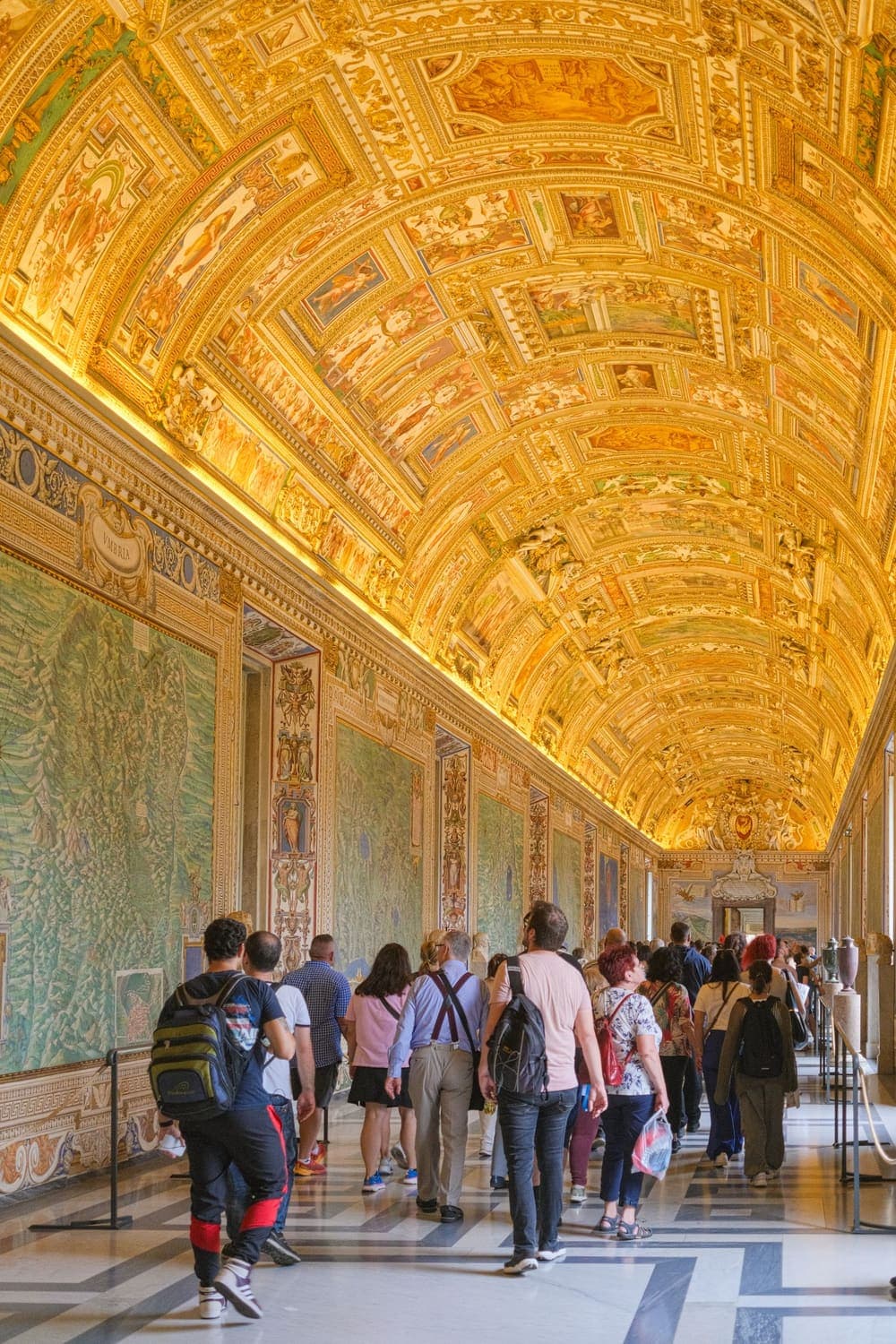
The Vatican Museums tour follows the one-way route from the bronze pine cone to the Sistine Chapel, asking why the head of the Catholic Church keeps a palace full of pagan gods. Eight stops, about forty-two minutes of listening.
A free preview of the tour plays on this page, and your first tour in the app is free.