Stories · Rome
What is under St Peter's Basilica?
A buried Roman cemetery. Under the altar, a shrine of about AD 160 marks the grave Romans honoured as Peter's, beside bones believed to be his.
3 min read

Stories · Rome
A buried Roman cemetery. Under the altar, a shrine of about AD 160 marks the grave Romans honoured as Peter's, beside bones believed to be his.
3 min read
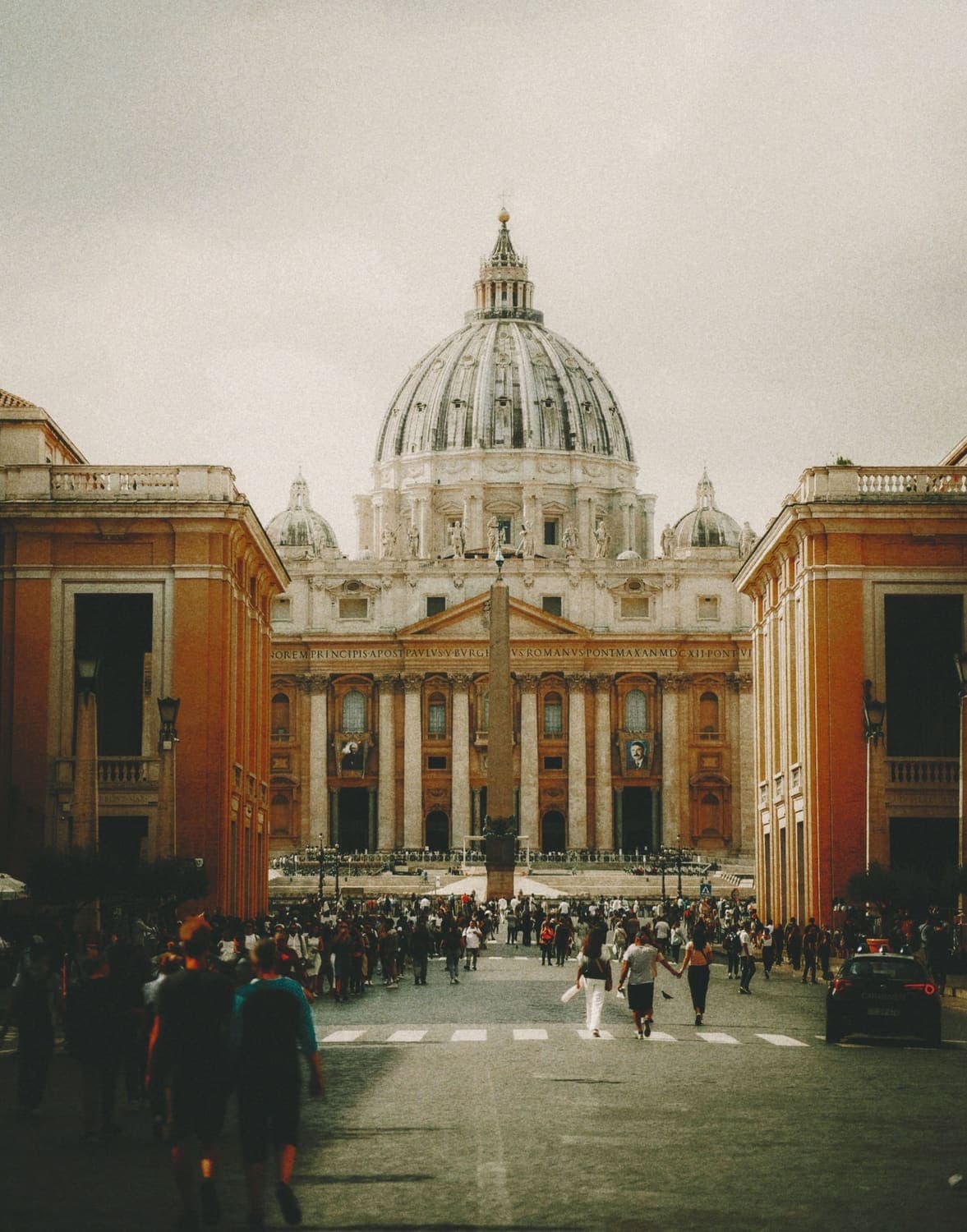
Below the floor of St Peter's Basilica, under the crypt where popes are buried, lies a Roman cemetery that the first church's builders packed with earth in the 300s. Beneath the high altar stands a little shrine, built against a red-plastered wall around AD 160, about a hundred years after Peter's death, over the place Rome's Christians believed was his grave. Every later altar rises directly above it. Beside it, in the 1940s, a foreman found the bones the Church believes are Peter's, though nobody can prove it.
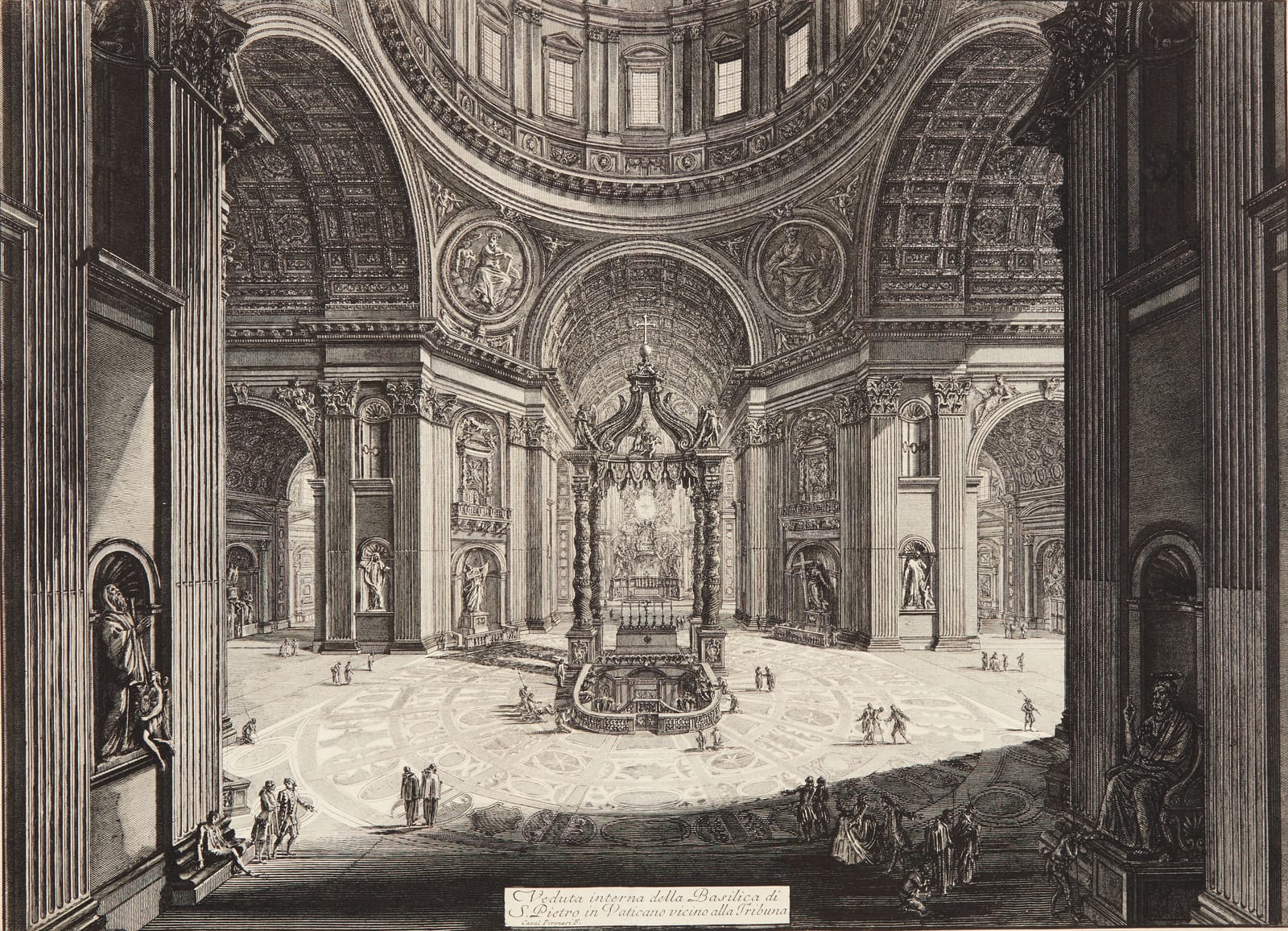
In 1939 builders preparing a grave for Pius XI in the crypt broke into ancient tombs, and Pius XII ordered a full dig. For a decade, through the war and largely in secret, a few archaeologists dug down.
First came the cemetery, whole. To level a hillside for their church, the emperor's masons had lifted off the tomb roofs, smashed the vaults and shovelled earth in over the dead. That is why it survived.
Straight under the altar came the shrine: two niches in the red wall, dated by the brickmakers' stamps. Around AD 200 a Roman priest, Gaius, had written that he could show anyone the apostles' memorials at the Vatican. The diggers felt sure this was one.
The dig was run by Monsignor Ludwig Kaas, a German priest and former party leader who had left Germany for good in 1933. At odds with the archaeologists, he toured the site after dark with his foreman, Giovanni Segoni. Next to the shrine rose a later wall covered in pilgrims' graffiti, with a small marble-lined cavity in it. In 1941 Kaas had Segoni clear it out. Its bones were boxed and stored, and the excavators weren't told. The usual explanation is reverence: Kaas disliked seeing Christian bones treated as specimens.
Pius XII announced on Christmas radio in 1950 that Peter's tomb had been found beneath the dome. Kaas died two years later, the box still in its storeroom. In 1953 Margherita Guarducci, a scholar of the pilgrims' writing, asked Segoni what the cavity had held.
Yes, I emptied it myself, when old Monsignor Kaas gave the order.
The pencilled card on the box said bones, urn, graffiti. Not until 1962 did an anthropologist sort the contents: 135 bones of a single sturdy man aged sixty to seventy, soil matching the grave beneath the shrine, shreds of purple and gold cloth, and a field mouse. There was no bone from below the ankles. Walsh, who wrote the dig's story, wondered whether a man crucified head down was cut free at the ankles, and granted that it can't be proved.
In 1968 Paul VI declared the bones convincingly identified, adding that the arguments would go on. They have. One of the original diggers stayed doubtful, and there is no DNA to compare. Even the fragments Pope Francis sent to Istanbul in 2019 went in a box engraved putantur, "they are believed to be". The place is on firmer ground than the bones: Romans had marked this spot as Peter's grave by around AD 160.
Stand at the marble rail in front of the high altar, beneath Bernini's bronze canopy, and look down into the sunken horseshoe called the confessio. The small niche at the foot of its steps sits above the grave, and most of the bones lie a level lower, in clear cases back in their marble cavity. The cemetery is open only on the excavations tour, booked well ahead.
Trevlo's St Peter's Basilica tour goes from the square to Bernini's golden Chair: 10 stops, about 44 minutes of listening. At the old bronze door it explains why the cemetery was buried, and at the rail above the confessio it tells the whole dig.
A free preview of the tour plays on this page, and your first tour in the app is free.