Stories · Rome
Was Trastevere the Jewish ghetto?
No. Rome's ghetto was across the river, walled in by Pope Paul IV in 1555. Before that, Rome's Jews had lived in Trastevere for well over a thousand years.
3 min read

Stories · Rome
No. Rome's ghetto was across the river, walled in by Pope Paul IV in 1555. Before that, Rome's Jews had lived in Trastevere for well over a thousand years.
3 min read
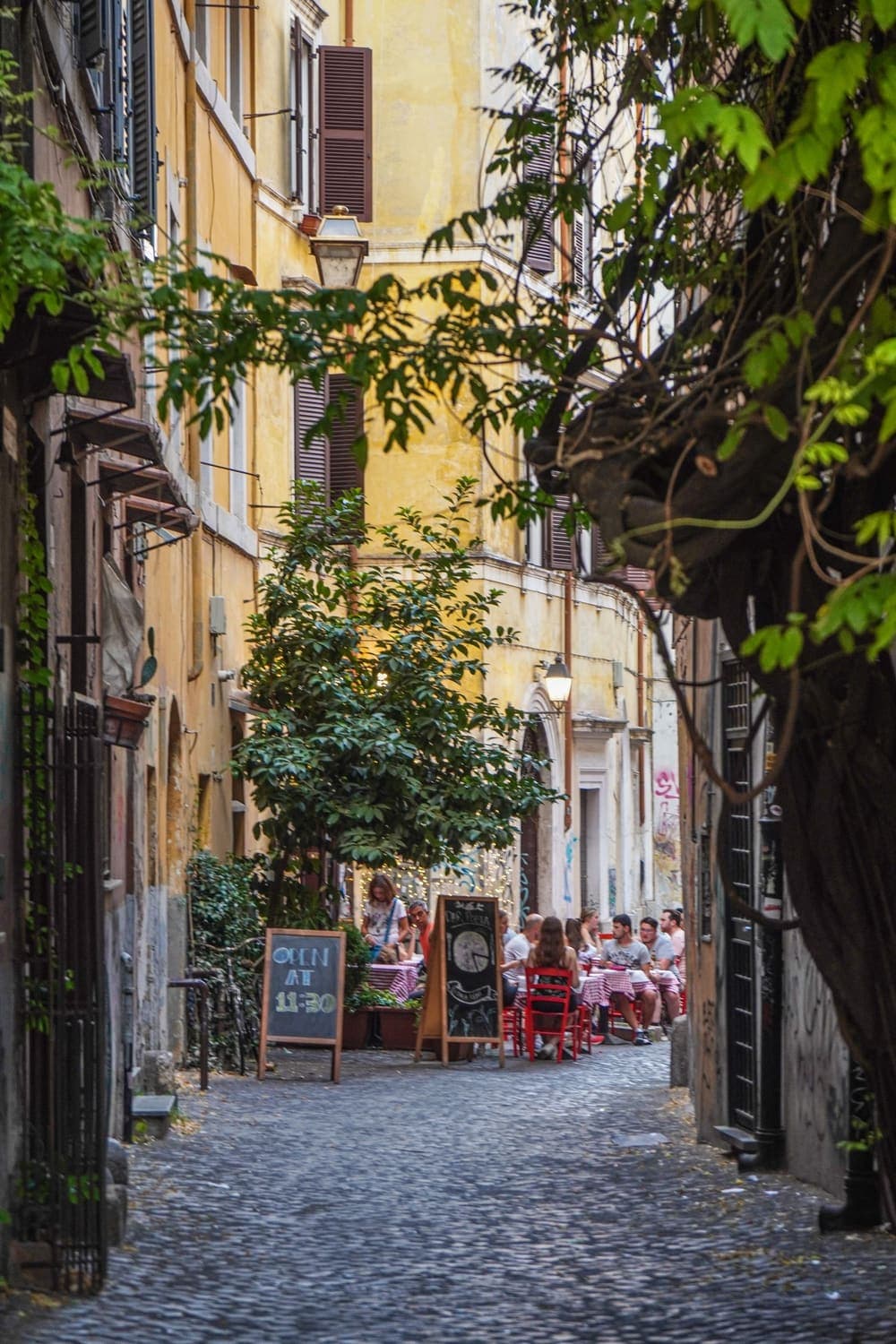
No. The Roman Ghetto stood on the other side of the Tiber, in a few streets of the Rione Sant'Angelo beside the Theatre of Marcellus, created by Pope Paul IV in July 1555. The mix-up is understandable, though: for well over a thousand years before the ghetto, Trastevere was where Rome's Jews lived.
The earliest witness is a philosopher from Alexandria named Philo, who came to Rome around AD 40 on an embassy to the emperor Caligula. In his account he mentions, almost in passing, who lived on the far bank.
How then did he look upon the great division of Rome which is on the other side of the river Tiber, which he was well aware was occupied and inhabited by the Jews?
Most, Philo explains, had been carried to Italy as prisoners of war, sold, then freed by their buyers, and as freedmen most were Roman citizens. Through all of that they had held on to their own laws and customs. So Rome's Jews were already living on the Trastevere bank before Christian times.
A thousand years later the quarter had a famous scholar of its own. Nathan ben Yehiel, born around 1035, seems to have started out as a pedlar of linen, then thought a lowly trade, and he lost every one of his children while they were small. He built a ritual bath in 1085. In February 1101 he finished the Arukh, a dictionary of the Talmud and the first book to study its Aramaic, and that September he and his brothers put up a synagogue in Trastevere.
Some sixty years on, a Jewish traveller from Navarre, Benjamin of Tudela, passed through Rome and noted what he found: about two hundred Jewish households, held in honour and paying no tribute. The man who ran Pope Alexander III's household, with the run of the papal palace, was a Jew called Jechiel, whom Benjamin describes as handsome, clever and wise. He was Nathan's grandson. Among the city's scholars Benjamin lists a second Jechiel, the only one he gives an address: he "lives in Trastevere".
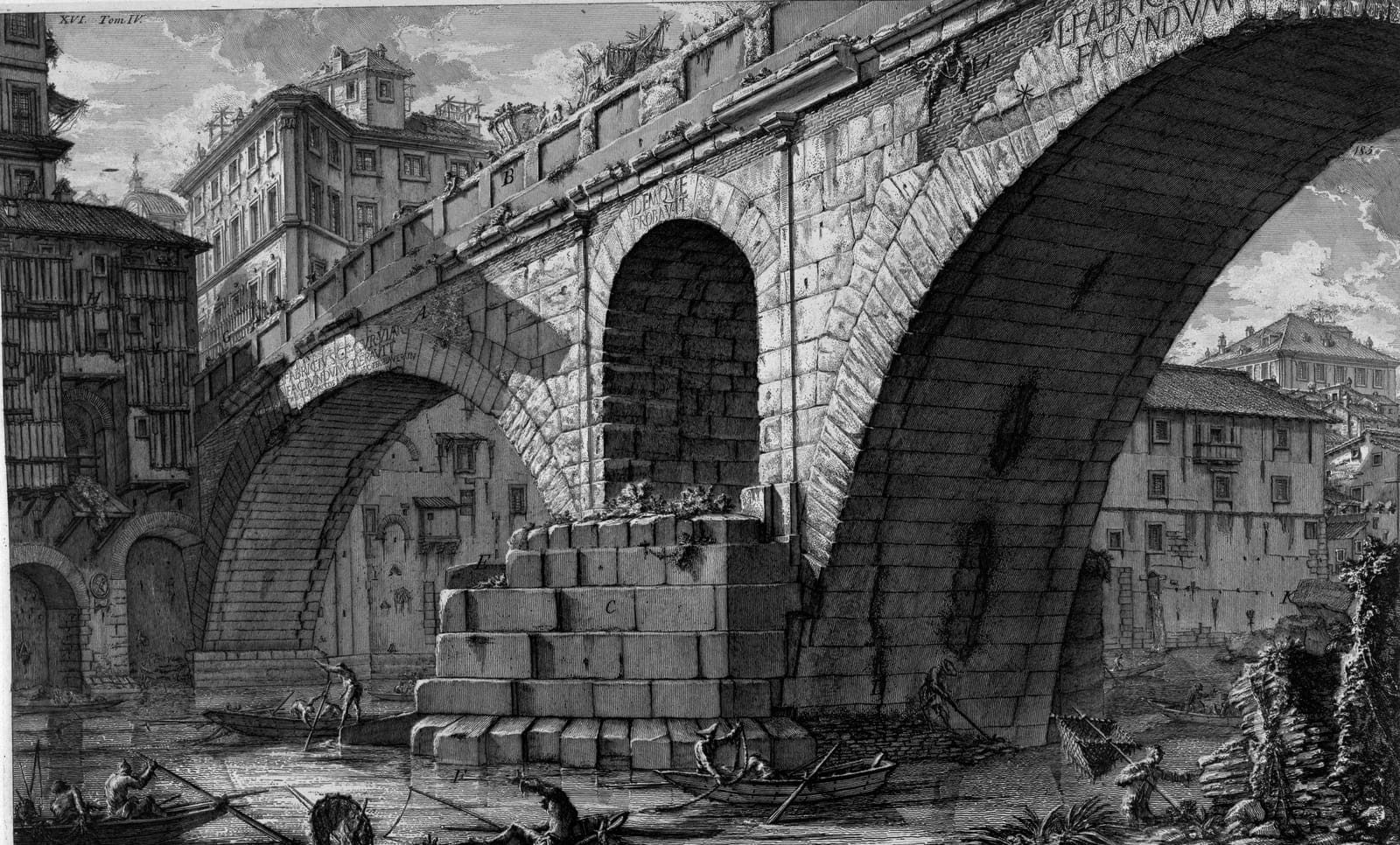
Over the following centuries the community gradually moved to the left bank, beside the Ponte Fabricio, which medieval Romans called the Jews' bridge. Not everyone went. In 2017, digging beneath the courtyard of Palazzo Leonori, behind San Francesco a Ripa, archaeologists found the old Field of the Jews: 38 graves laid out in tidy rows, dated between the mid-1300s and the mid-1500s. Two women still wore small gold rings. One man went into the ground with his iron scales. The bones showed signs of malnutrition.
Then came July 1555. Paul IV ordered every Jew in Rome, some two thousand people, into a walled quarter on the far bank that flooded whenever the river rose, its gates locked each night, and he made them pay the 300 scudi the wall cost. Apart from a few brief interruptions, the papacy kept them there until Rome became part of Italy in 1870.
Find number 14 Vicolo dell'Atleta, a narrow lane off Via dei Genovesi, a few minutes' walk from the Tiber Island. It is a brick house with a little loggia upstairs: two arches with a slim column between them. On that column, Hebrew letters spell out a name, read as Nathan Chay. Tradition links it to Nathan ben Yehiel and his synagogue, but the house itself was probably built in the 1200s or 1300s, after his death, so whether the letters are really his, nobody can say.
This house is the third stop of the Trastevere walking tour: nine stops, about 38 minutes of listening, from Ponte Garibaldi past Santa Cecilia and the gold mosaics of Santa Maria in Trastevere to Piazza Trilussa.
A free preview of the tour plays on this page, and your first tour in the app is free.