Stories · Rome
How was the Colosseum damaged?
By fire, earthquakes and centuries of stone robbing. An earthquake in 1349 brought down the Colosseum's south side, and Rome carted the stone away.
3 min read

Stories · Rome
By fire, earthquakes and centuries of stone robbing. An earthquake in 1349 brought down the Colosseum's south side, and Rome carted the stone away.
3 min read
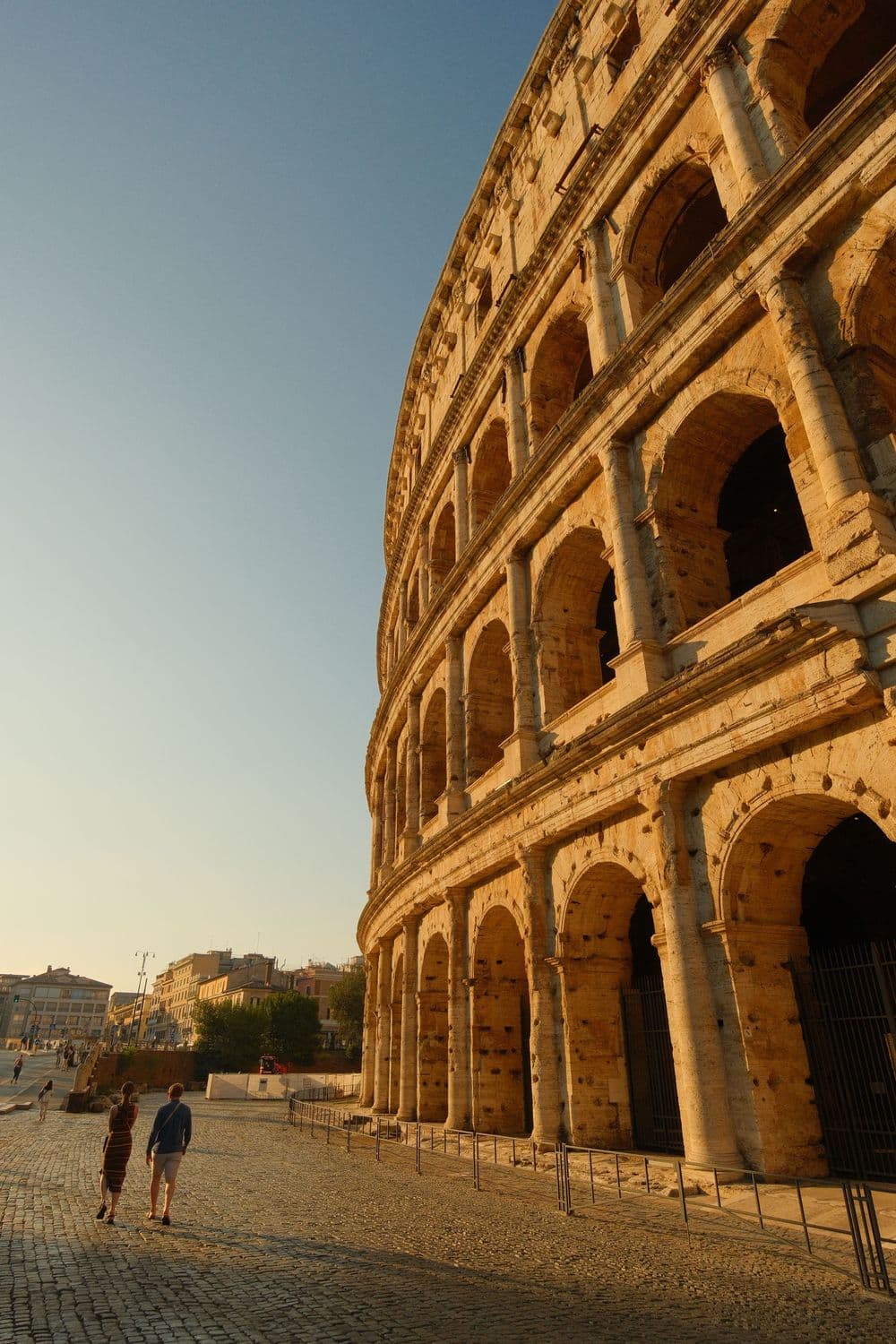
Lightning struck first. In AD 217, says the Roman historian Cassius Dio, a strike set fire to the wooden upper levels, and the games moved elsewhere for several years. The Colosseum was repaired and stayed in use for three more centuries. The heavy damage came after the games ended, when nobody was paying to keep it standing.
By around 1200 the Colosseum was no longer a place for games. The Frangipane, a powerful Roman family, had fortified it and were using it as a castle.
Then, in September 1349, a great earthquake shook central Italy. The outer wall along the south side of the Colosseum fell. That side stands on softer ground, laid down long ago by water, while the north side rests on firmer ground.
That's why the building looks lopsided today. On the north, the outer ring still rises its full four storeys. On the south, it's gone.
The fallen wall left a mountain of cut stone, and Rome helped itself. Popes took it for their own buildings, and granted licences for others to take it away.
One record shows the scale. In 1452, a contractor from Como named Giovanni Foglia took away 2,522 cartloads in nine months. That's about nine carts a day, every day. Travertine from the Colosseum went into building work at the Vatican, including St Peter's, and into the Palazzo Venezia, a Renaissance palace a short walk away.
People wanted the metal too. The stone blocks had been held together with iron clamps, set deep inside them. In the Middle Ages people hacked the iron out to sell or reuse, and left holes pitted all over the outer wall.
The stripping only stopped in the 1740s. Pope Benedict XIV declared the Colosseum a sacred place, in memory of Christian martyrs believed to have died there, and banned its use as a quarry.
By the early 1800s, the east end was in danger. After an earthquake in 1806, the outermost arches there began to slip apart. Pope Pius VII appointed a commission of architects, and the young architect Raffaele Stern led the work.
Stern didn't rebuild the arches, and he didn't take them down. In 1807 he built a huge wedge of brick against the end of the outer ring and filled the last arches with brick. It held every stone exactly where the earthquake had left it.
About twenty years later, the architect Giuseppe Valadier shored up the western end in a different way. His buttress copies the shape of the ancient arches in brick.
Stand outside the Colosseum's eastern end, facing the huge brick wedge of the buttress. As you walk round to it, notice the holes left by the iron clamps in the outer wall.
Look at the travertine arches on the brick side of the buttress. Some of the stones still sit visibly out of line, held mid-fall since 1807.
The Trevlo tour of the Colosseum ends with this story at the Great Brick Buttress. It starts with Nero's drained lake at the Arch of Constantine and reads the numbered arches. Then it takes you inside, to look down on the arena and the basement that lay buried for centuries. Five stops, about eleven minutes of listening, at your own pace.
The first stop is free to play on this page, and your first tour in the app is free.