Stories · Rome
Is the Colosseum good for kids?
Yes, with its story: a hundred days of opening games, prize balls thrown to the crowd, perhaps a sea in the arena, and a fight both fighters won.
3 min read

Stories · Rome
Yes, with its story: a hundred days of opening games, prize balls thrown to the crowd, perhaps a sea in the arena, and a fight both fighters won.
3 min read
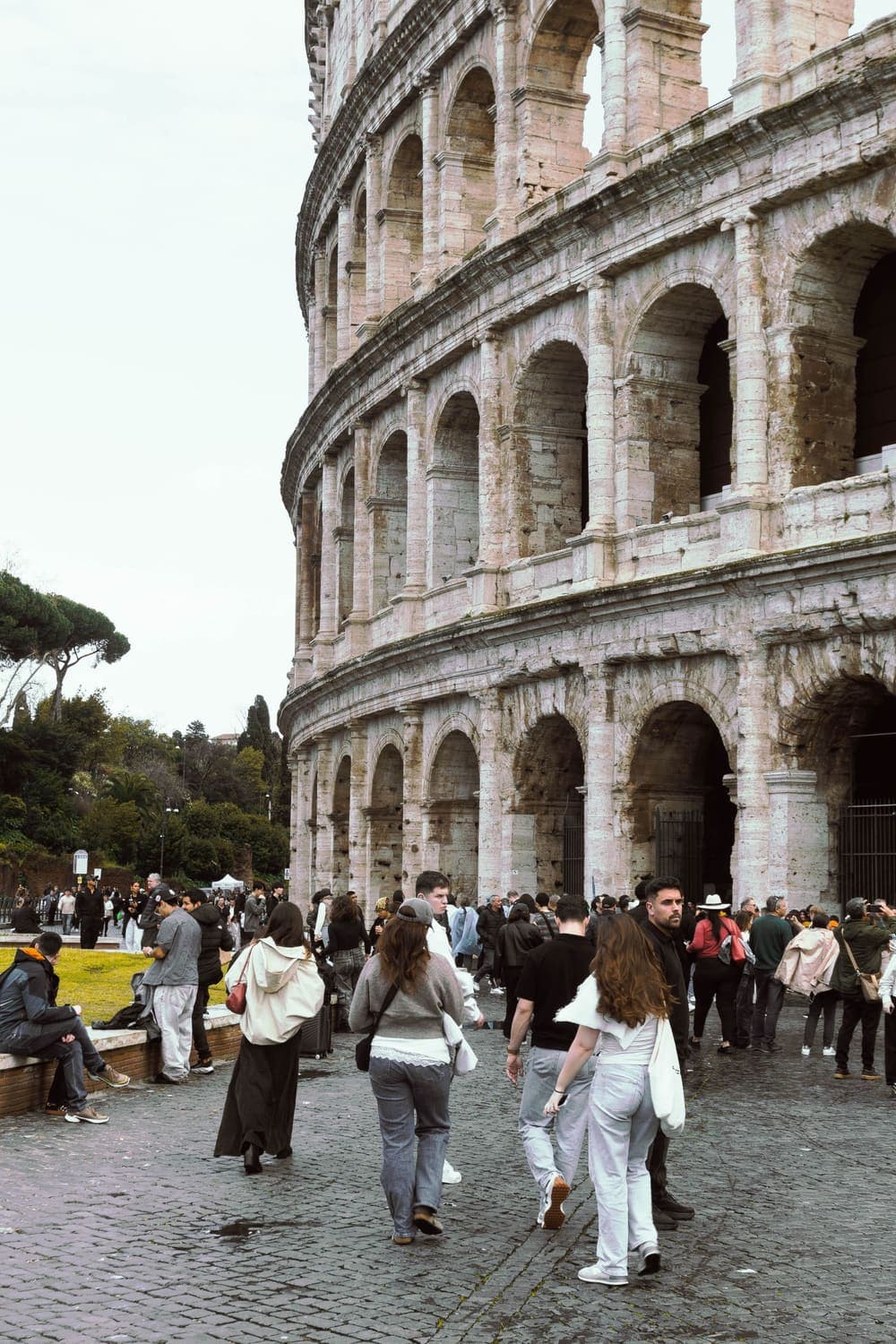
Yes, if it comes as a story rather than a list of dates. The Colosseum opened in AD 80 with a hundred days of shows, a present from the emperor Titus to the people of Rome, and much of it can still be found on a visit: the numbered arches the crowd came in by, the bowl where a sea may once have sloshed, and a cheer scratched into marble by a fan waiting between shows.
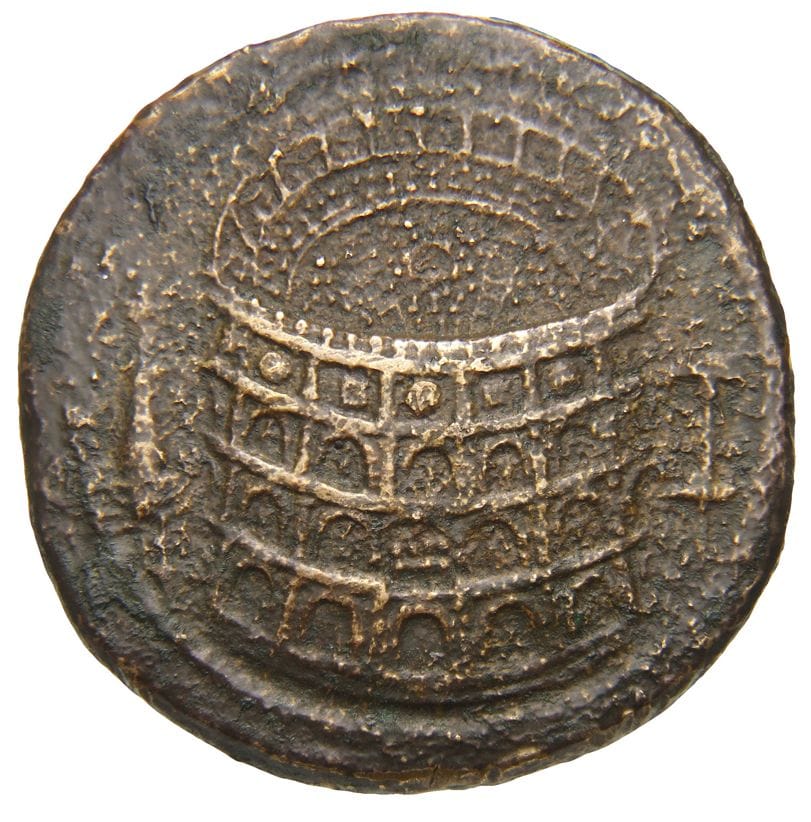
Titus makes a good guide for children, because he could not bear a day without giving someone something. The historian Suetonius says that one evening at dinner he realised he had given nobody anything all day, and told his friends, "Friends, I have lost a day."
The historian Cassius Dio says Titus suddenly filled the arena with water and brought in horses and bulls trained to behave in it as if on dry land, then ships full of men acting out an old sea battle. Historians still argue about whether that can be true. An archaeologist has found channels for draining it, an engineer reckons it could have been filled in under an hour, and others doubt it could ever have been made watertight. It makes a good argument for the way round.
Then there were the prize balls. From up high, Titus tossed small wooden balls among the spectators, every one marked with a prize: something to eat, clothes, a silver or a gold cup, and sometimes horses or cattle. Whoever caught one took it to the stewards and went home with whatever it said.
The Colosseum was built for killing. Thousands of animals died in the opening games alone, many people died here over the years, and a child deserves to hear that once, plainly. But the poet Martial, who was there in the building's first years, chose to record a different kind of ending. Two gladiators, Priscus and Verus, fought so long and so evenly that the crowd roared for both to be let go. Titus kept the rule that a bout went on until one raised a finger to give up, though, as he often did, he sent them food and gifts. In the end they both raised a finger at the same moment.
equal they fought, equal they resigned.
Each man got a wooden sword, the sign he would never have to fight again, and the winner's palm. No emperor before, Martial says, had seen a fight end with two victors.
Start on the north side, where the arches still carry their Roman numbers just under the ledge, and look for LII, gate fifty-two, near the west end. Cleaning in 2015 found traces of red paint in the letters. West of the building, a square of low walls and olive trees marks where Nero's giant statue stood. Upstairs the whole bowl opens out above the maze of walls where the floor once was, and the emperor's seat was in the middle of the south side. Lifts go up to the higher levels. In the museum rooms on level 2, look for a marble slab with a little scratched fighter holding up a palm, and above him the letters TER, the end of Feliciter, a Roman "Hurray!"
A Hundred Days of Gifts is written for children of roughly six to eleven, listening with a grown-up on one phone. The child follows Titus through the opening games as a Roman child with a token for gate fifty-two, collecting his gifts as they go: 8 stops, about 26 minutes of listening. It ends on the new stone floor of the fallen south side, where grown-up and child raise a finger together, just like Priscus and Verus.
A free preview of the tour plays on this page, and your first tour in the app is free.