Stories · Paris
Is the Eiffel Tower good for kids?
Yes, above all for ages 7 to 11. Four people put in each rivet and a boy heated them, so a child can find the rivets and follow the builders' story.
3 min read

Stories · Paris
Yes, above all for ages 7 to 11. Four people put in each rivet and a boy heated them, so a child can find the rivets and follow the builders' story.
3 min read
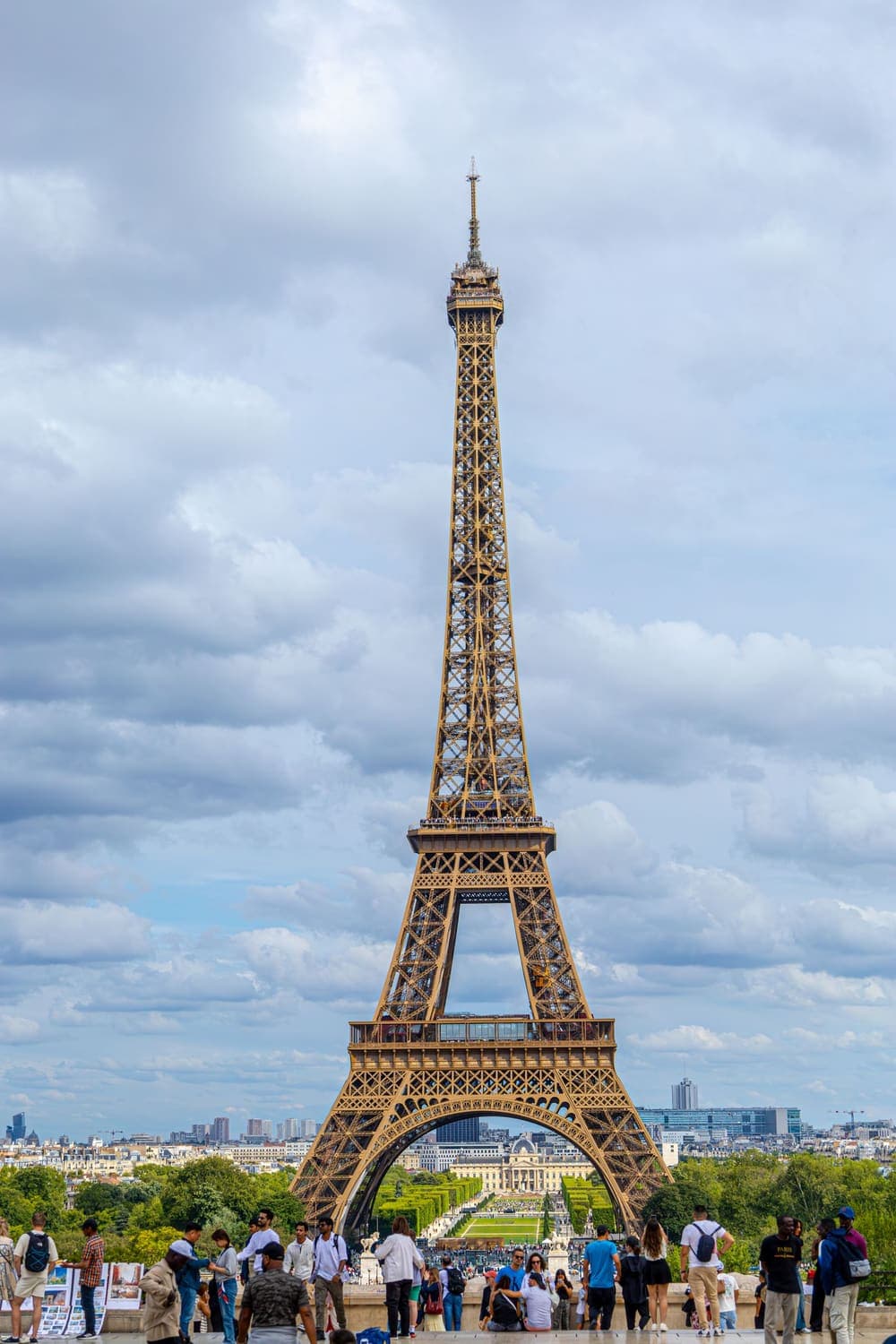
Yes, and most of all for a child of about seven to eleven who goes up it inside the story of how it was built. Close up, the famous shape becomes something a child can touch and count: round bumps in rows on every leg, each a rivet that once glowed hot. Each took a team of four to put in, and the one who heated it was a boy. Give a child that job, and the visit becomes theirs.
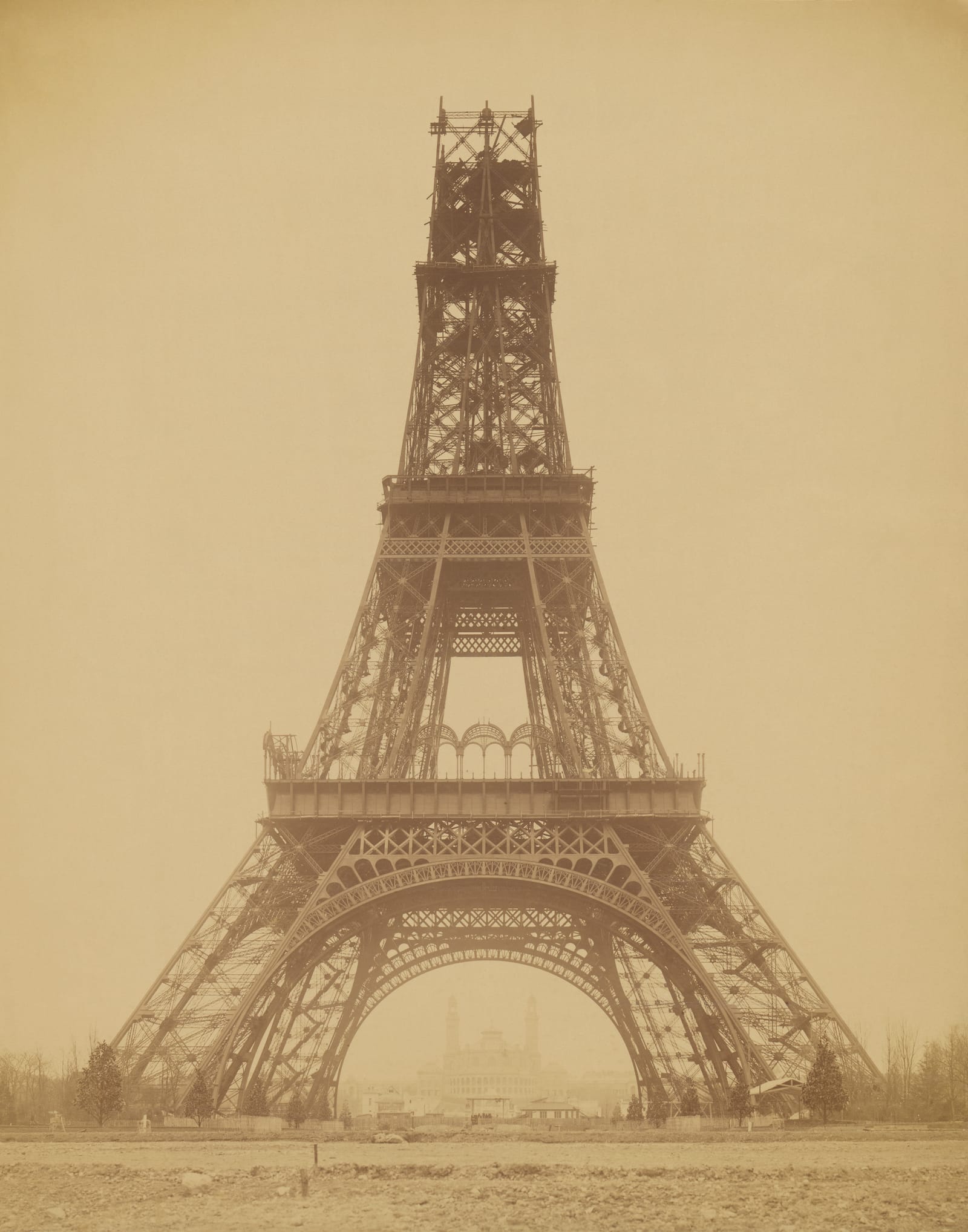
Eiffel's own book of 1900 names the four on each riveting team: the riveter, the striker, the holder-on, and a boy who did the heating, called a mousse, the old word for a ship's boy. A watcher saw him fan a portable forge and carry the rivet, white-hot, to the next man. Each piece was bolted up first, then the bolts gave way one by one to hot rivets, which shrank as they cooled and gripped the iron tight. About a million went in that way, up on the tower itself.
There were grown-ups who said it couldn't be done. In 1887 dozens of famous painters, writers and composers wrote to a Paris paper against it, and one line pictured it towering over the city like a black chimney from a factory. Some papers said Eiffel had gone mad, and critics said the men would be too dizzy to work. A journalist who went up in 1889 found them perched on ledges a few centimetres wide, hammering in thick coal smoke.
as with each blow came a shower of sparks, these black figures, appearing larger than life against the background of the open sky, looked as if they were reaping lightning bolts in the clouds.
On Sunday 31 March 1889 the tower was finished. The two hundred men of the site gathered inside the West leg for a snack, and Eiffel, a little unwell, led a climb by the stairs. Most stopped on the way. About fifteen reached the top with him, where he raised a flag seven and a half metres long, to one bang and then twenty more. The way down took about forty minutes.
Waiting in the West leg was the minister, Tirard. At first, he told them, he hadn't believed the tower could be finished, and he had been wrong. Then a mechanic named Rondel handed Eiffel some flowers and hoped that one day they could tell their grandchildren's children they had worked on it. A child in the West leg today belongs to the far-off generations he was picturing.
It starts on the esplanade, close enough to touch the rivets on the nearest leg, with Eiffel's gold bust at the foot of the North leg. The best moment is the exact middle: eyes down for a few steps, then look up at four giant legs leaning in to meet. While waiting to go up, watch a lift slide up the sloping track the cranes once climbed. On the first floor, the glass floor looks straight down to the middle where the child stood looking up, and a piece of the old spiral stair stands on the outer walkway. It ends at the West leg, by the information desk. The stairs go as far as the second floor, and only a lift goes to the top.
The Eiffel Tower Rivet Team, for a child of seven to eleven with a grown-up, has 10 stops, about 27 minutes of listening. The child plays the heater on a rivet team, from the first rivets to the flag, then down to the West leg to hear the minister. A bonus stop at the top visits Eiffel's office, where a composer who signed the angry letter later sang at the piano.
A free preview of the tour plays on this page, and your first tour in the app is free.