Stories · London
Is the Tower of London good for kids?
Yes. For 600 years it was the king's zoo too. Children can hunt for wire sculptures of its lions, polar bear and elephant, then meet the ravens.
3 min read

Stories · London
Yes. For 600 years it was the king's zoo too. Children can hunt for wire sculptures of its lions, polar bear and elephant, then meet the ravens.
3 min read
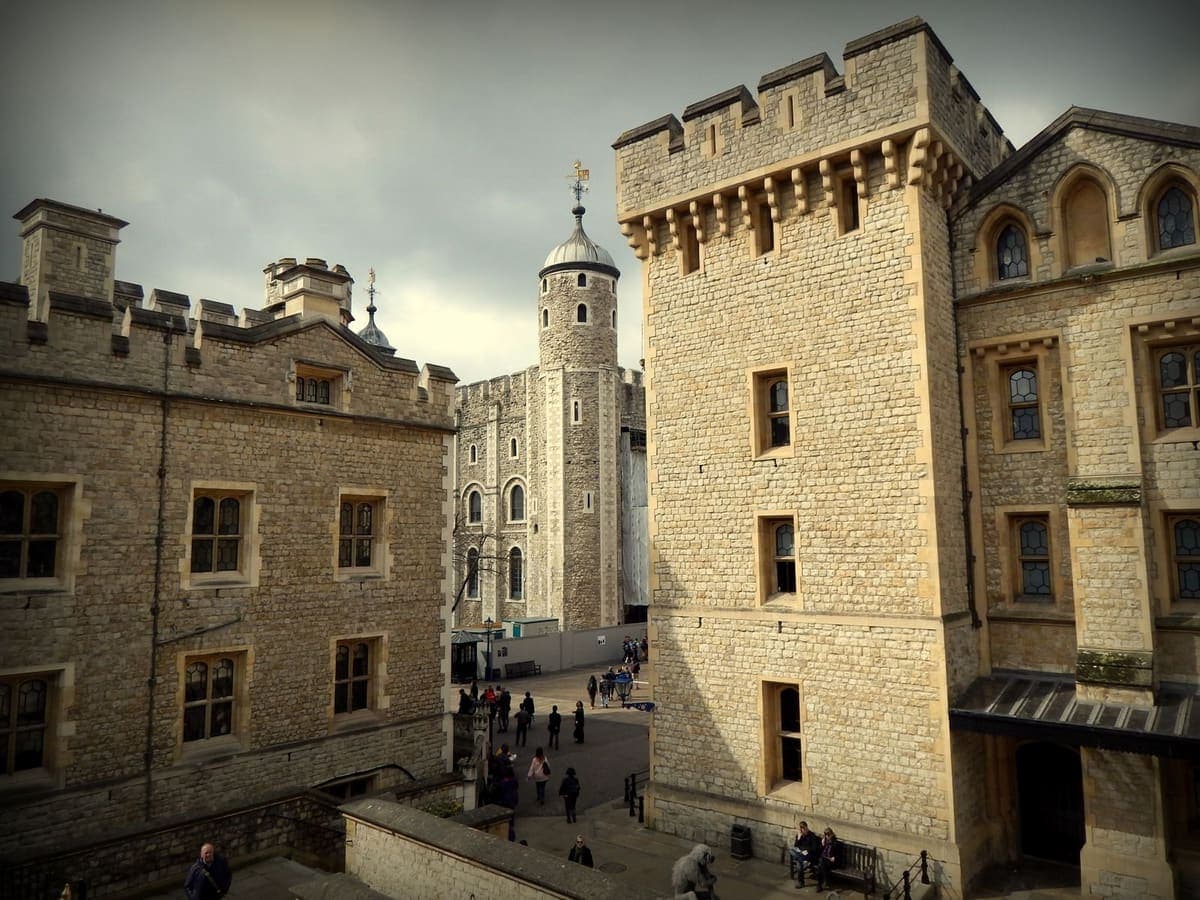
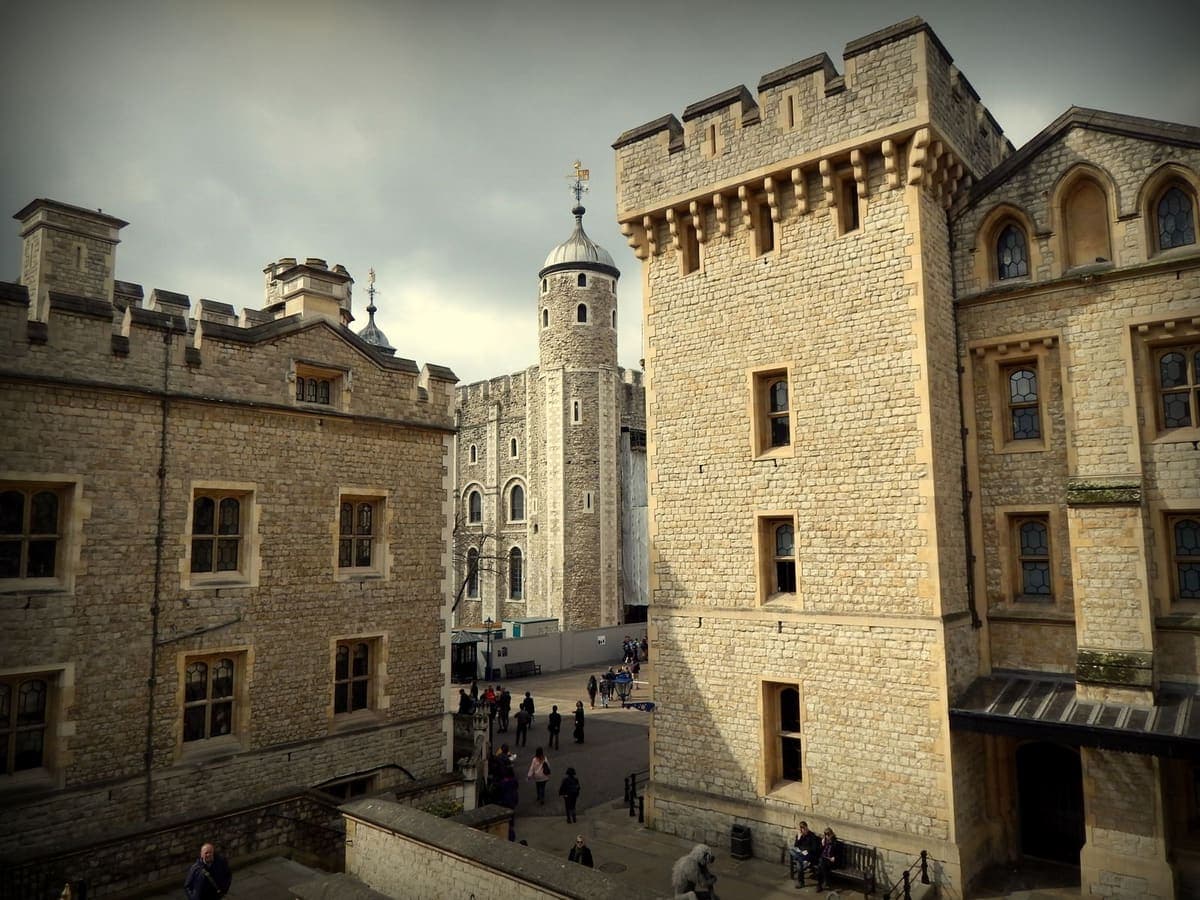
Yes, and the best reason is hidden in plain sight. For six hundred years the Tower of London was not only a fortress, a palace and a prison. It was also the king's zoo, and its story runs all the way round the castle, from the lions at the gate to the river.
The zoo was running by 1210, and it got going properly in 1235, when the Holy Roman Emperor sent Henry III three big cats. Three suited the king nicely, because there were three lions on his shield. Later kings kept them in the Lion Tower at the front gate, so visitors to the king passed the lions first. One visitor in the 1600s reported that the smell had stuffed up the keeper's head so badly it changed the way he talked.
Then, in 1252, the King of Norway sent a white bear. Henry's orders survive, and read like a list written the night before a holiday. London's sheriffs had to find fourpence a day for the bear and its keeper. A few weeks later the king wanted more:
a muzzle and an iron chain to hold the bear when out of the water, and a long and strong cord to hold it when fishing in the Thames.
So a polar bear went fishing in the river on the end of a rope, and London's sheriffs paid for the rope.
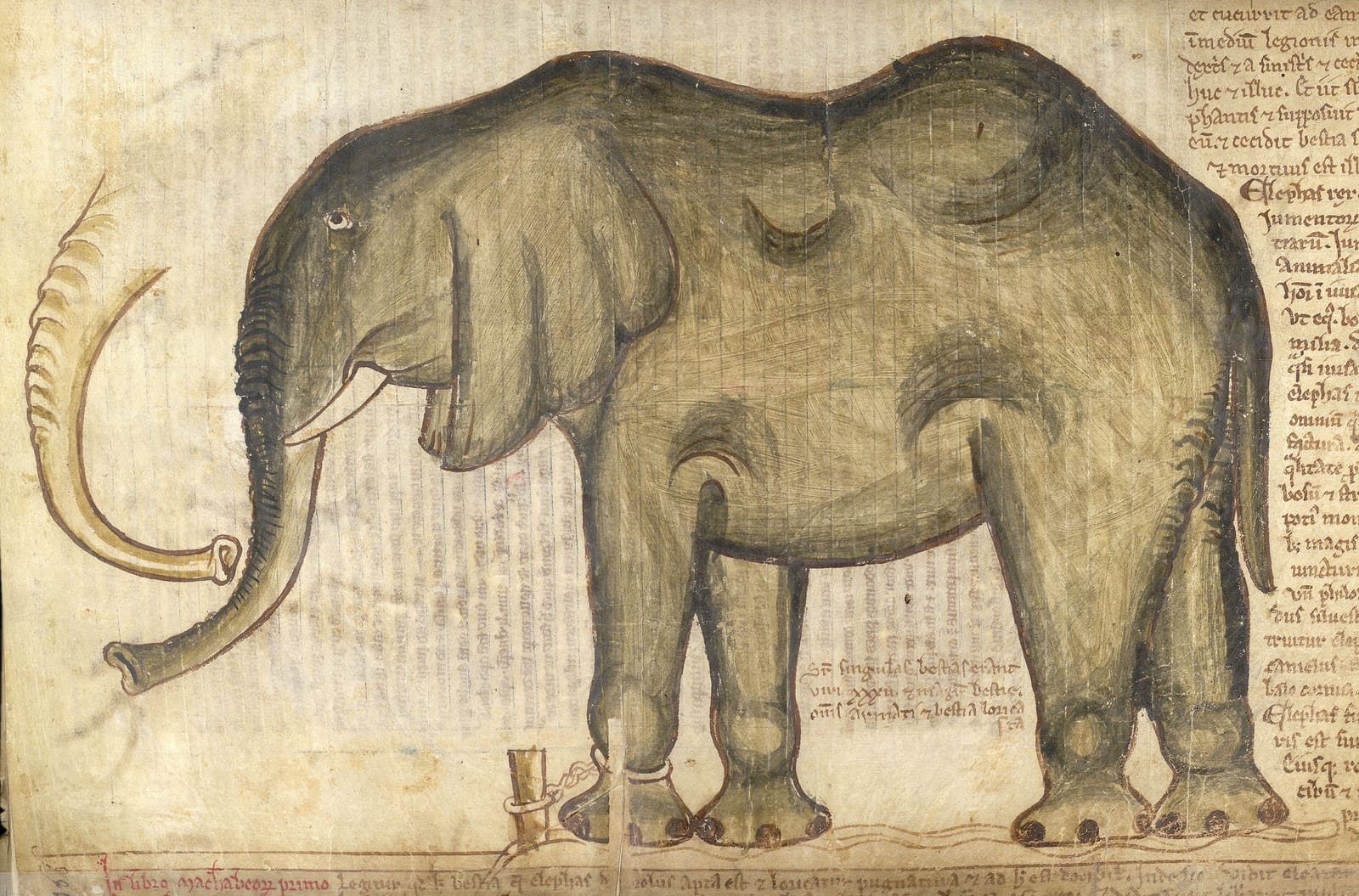
Three years later the King of France sent an elephant. The monk Matthew Paris believed no elephant had been seen in England before, and crowds flocked to the Tower to stare at it. He drew it from life, when plenty of people believed elephants had no knees. His elephant has knees.
A cartoon from 1799 shows monkeys warming themselves at an ordinary fireplace, with no cages, while visitors giggle. A zebra trotted off to the soldiers' canteen for a drink. Near the end, a showman keeper called Alfred Cops brought in nearly three hundred new animals, and one list counts a hundred rattlesnakes. From 1831 the Duke of Wellington sent them to a new zoo in Regent's Park, the one now called London Zoo, and by 1835 the Tower's zoo had closed for good. The only animals kept there now are the ravens, and the earliest pictures of them date from nearly fifty years after the zoo closed.
The artist Kendra Haste has remade the animals in galvanised wire, and they stand around the castle. Start just inside the entrance, looking down into the moat, where three wire lions stand on the site of the old Lion Tower. Look for the wire polar bear beside Traitors' Gate, and for an elephant's head pushing out of a stone arch in the courtyard between the Lanthorn and Salt Towers. Up on the wall walk, a wire baboon roars from the wall by the Martin Tower. In the Brick Tower, up stairs with no lift, you can hear what the zoo sounded like, and the ravens hop about on the grass below the White Tower.
The King's Lost Zoo is a family tour for a child of about 6 to 11 and a grown-up, sharing one phone out loud. It tells the Tower's story through its animals, so the grim chapters stay out of it. The child plays the king's newest Keeper of the Beasts, walking through six hundred years with games along the way: 7 stops, about 32 minutes of listening. It ends by the river, where the child answers the big question of where all the beasts went, and hears about what many historians call the oldest April Fool's trick on record, which sent people to the moat in 1698 to watch the lions being washed.
A free preview of the tour plays on this page, and your first tour in the app is free.