Stories · Rio de Janeiro
Was Christ the Redeemer a gift from France?
No. Brazilians paid for it with donations and a Rio engineer designed it. Only two Frenchmen worked on it, and its sculptor never came to Brazil.
3 min read

Stories · Rio de Janeiro
No. Brazilians paid for it with donations and a Rio engineer designed it. Only two Frenchmen worked on it, and its sculptor never came to Brazil.
3 min read
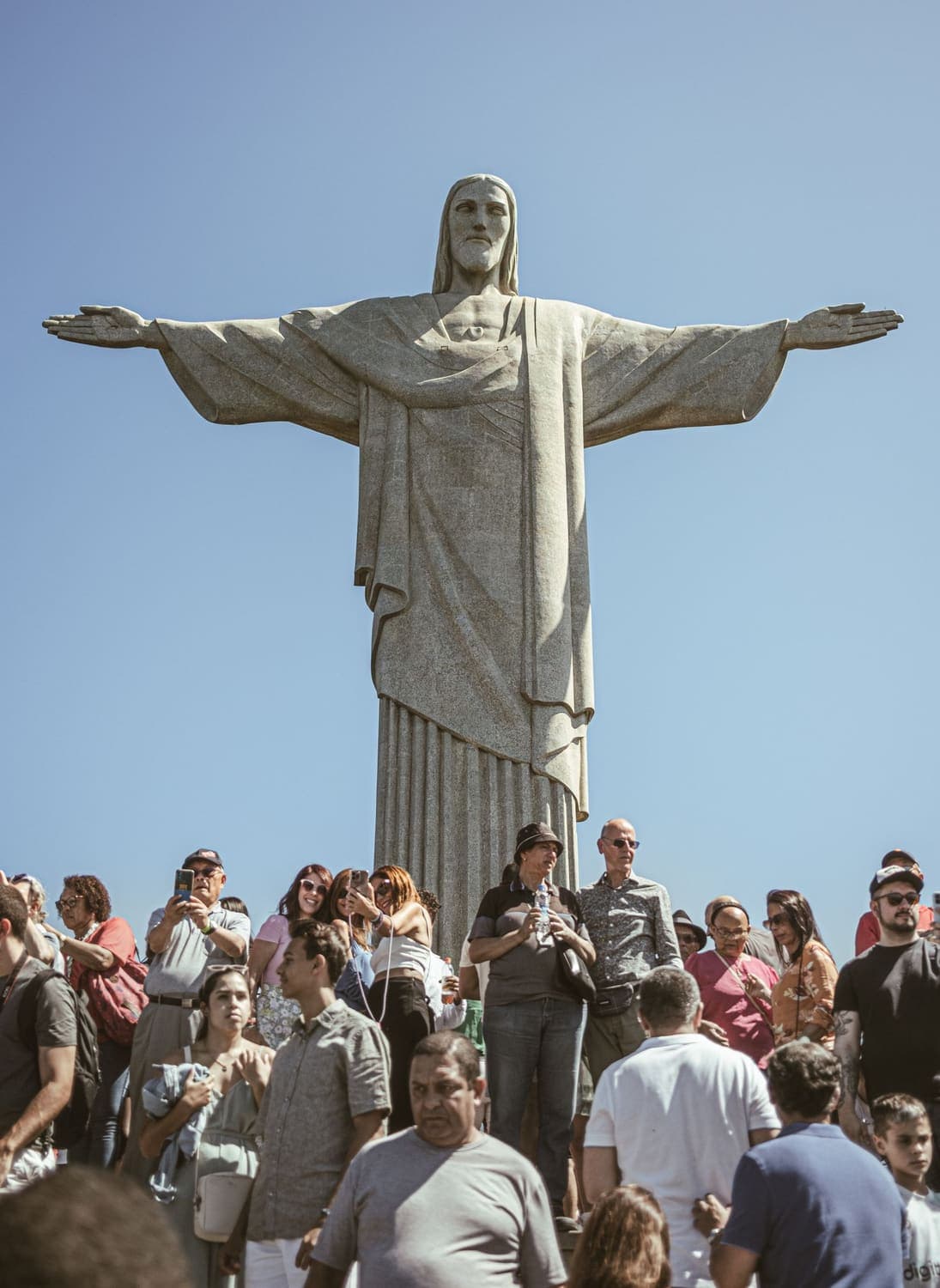
No. Christ the Redeemer was paid for by Brazilians, in donations gathered by Rio's Catholics, and it was designed by an engineer born in Rio, Heitor da Silva Costa. Of everyone who made it, only two were French: the sculptor Paul Landowski, who modelled the head and hands in his studio outside Paris, and the engineer Albert Caquot, whose firm designed the reinforced concrete body and supplied its ironwork. Landowski never came to Brazil, and he never saw the finished statue, which opened on its mountain in October 1931.
The mix-up is easy to forgive: New York's great statue was a French present, and this one carried a famous Paris sculptor's name. But the idea was Rio's own, and older than most people guess. In 1888, after Princess Isabel signed the law that ended slavery in Brazil, campaigners wanted to put a statue of her on Corcovado as the Redemptress. She turned them down, saying the true Redeemer was Christ. The empire fell the next year and the idea went quiet until 1920, when Rio's Catholics spent a week raising money for a monument. In 1922, a century after independence, over twenty thousand women petitioned the president for leave to build on the mountain, and the first stone went down.
Silva Costa's design won the competition: a copper Christ carrying a globe and a cross. Critics called it old-fashioned, and Rio's archbishop, Sebastião Leme, wanted something that would read from right across the city, like a cross. So the artist Carlos Oswald drew a Christ with his arms held open, and in 1924 Silva Costa carried the drawings to Paris to find someone to sculpt it.
The first sculptor he asked, Antoine Bourdelle, turned him down. Landowski agreed, as long as he had a free hand with the look of it. He modelled the head and hands at their real size, in plaster, the head nearly four metres tall. A Romanian sculptor working for him, Gheorghe Leonida, is often credited with the face, though Landowski's family says the work was his alone. The plaster was cut into numbered pieces, shipped across the Atlantic and put back together in Rio, where it served as the mould for the concrete.
Landowski stayed in France, fretting over whether the head would sit right on a body he would never see. "What are they going to do over there with my model?" he wrote in January 1927. He gave up his rights to the statue and never signed it.
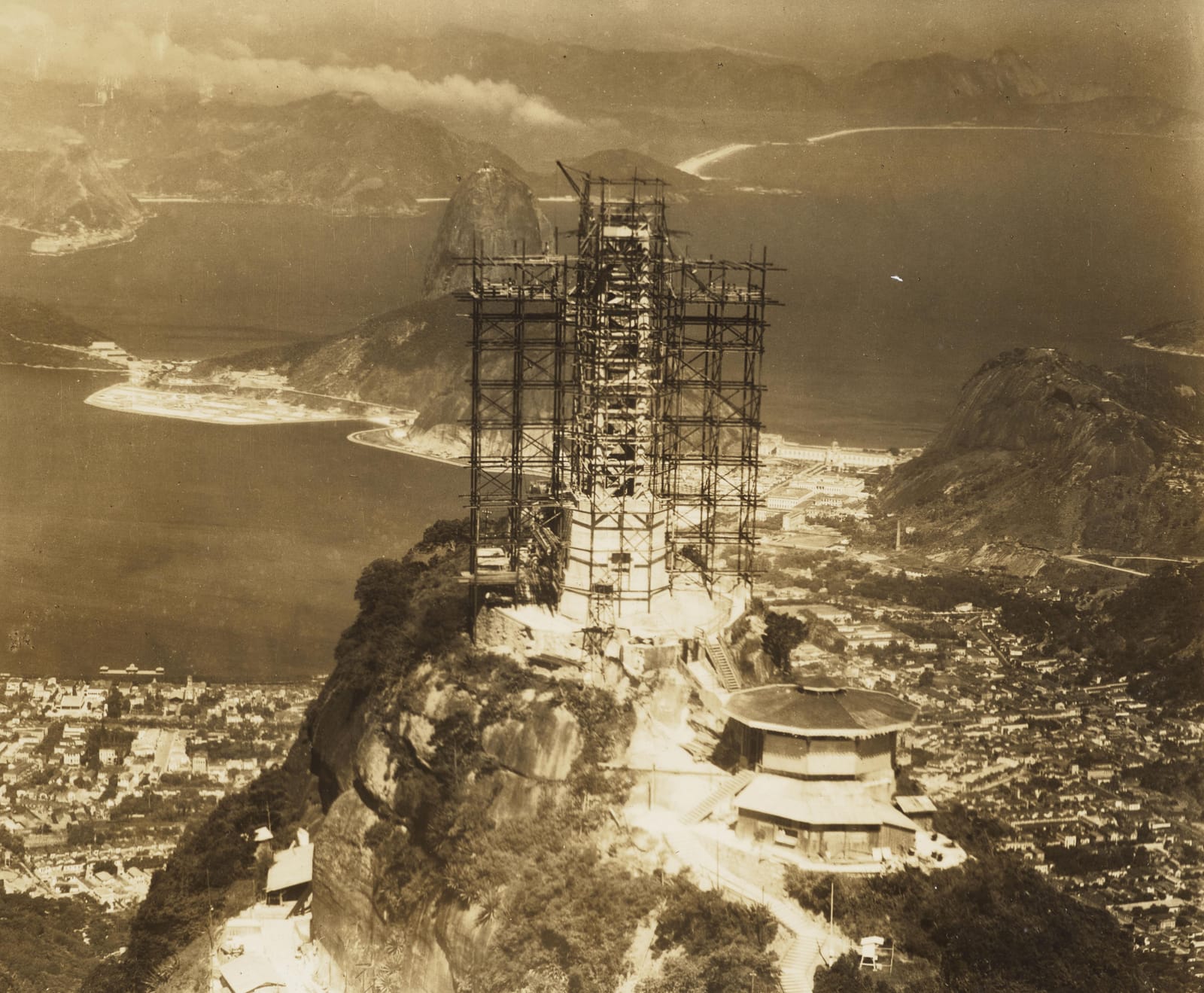
The building itself was done in Brazil. For four years, the pieces went up the mountain on the Corcovado railway. The master engineer, Heitor Levy, lived on the summit while it rose. And the statue's pale skin, roughly six million little triangles of soapstone from Minas Gerais, was glued onto broad strips of cloth by the society women of Rio's parishes, many of whom wrote the names of their families on the backs. Those names now face inwards, all over him.
On the south side of the platform, under his right arm, follow the arm out to the hand, more than three metres across. That hand and the head are what Landowski made in Paris. Behind the statue, close against the pedestal, the hem of his robe hangs just overhead, and the tiny triangles there are the women's mosaic.
The Christ the Redeemer tour is eight stops, about 24 minutes of listening, from the platform where the train arrives to the chapel inside the pedestal. It meets the Brazilians who dreamed him up and built him, from the forest replanted around the mountain to the night his lights first came on.
A free preview of the tour plays on this page, and your first tour in the app is free.