Stories · Paris
What happened to the Palace of Versailles during the French Revolution?
A Paris crowd forced Louis XVI and Marie-Antoinette out of Versailles in October 1789. The palace was emptied and auctioned, then saved as a museum.
3 min read

Stories · Paris
A Paris crowd forced Louis XVI and Marie-Antoinette out of Versailles in October 1789. The palace was emptied and auctioned, then saved as a museum.
3 min read
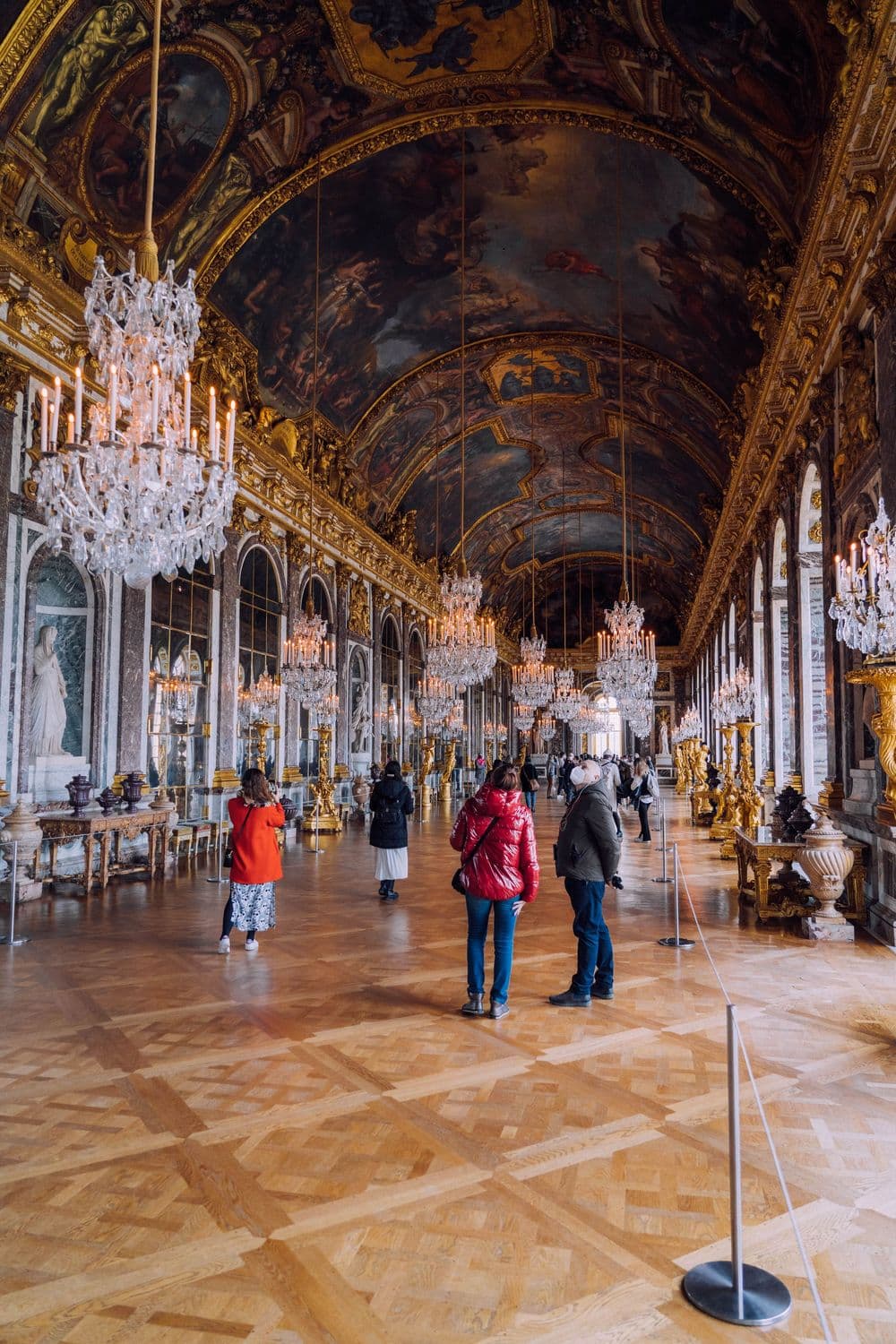
The royal family left on 6 October 1789 and never lived there again. In 1793 and 1794 the revolutionary government sold off the palace's furniture in more than 17,000 lots, but it kept the building. In 1837 King Louis-Philippe reopened Versailles as a museum of French history, and that is what it has been ever since.
On the morning of 5 October 1789, bread in Paris was scarce and dear. A crowd of market women gathered, and some six or seven thousand people set off for Versailles, about 20 kilometres (12 miles) away, in the rain. Men joined them. That evening the Marquis de Lafayette, the hero of the American war who now led the Paris National Guard, arrived with thousands of his guardsmen.
King Louis XVI agreed to some of the crowd's demands. The crowd camped outside the palace for the night.
At about six the next morning, some of the protesters found a small gate unguarded and ran up the stairs toward the queen's rooms. Two of the royal bodyguards were killed. A nobleman, the Marquis de Ferrières, later wrote that one guard, Miomandre, flung open the door of the first anteroom and called out to a lady: "Save the Queen, they mean to kill her."
Her women woke Marie-Antoinette. She ran out through a small door beside her bed and along a passage to the king's rooms.
By the end of the morning, Lafayette had the king and queen out on a balcony above the courtyard. He bowed and kissed the queen's hand, and the crowd cheered. At about one o'clock the royal family set off for Paris, escorted by a procession of tens of thousands. People sang that they were bringing back "the baker, the baker's wife and the baker's boy": the king, the queen and their son. With the king in Paris, they hoped, bread would follow.
The family was lodged in the Tuileries palace in Paris. Louis XVI and Marie-Antoinette were executed in 1793.
Revolutionaries chiselled the crowns and royal lilies off the walls. From August 1793 to August 1794, auctioneers sold the palace's furniture and fittings. Paintings went to the Louvre. In 1794 an inspector wrote that the pillage and dirt could not go on.
Yet the government kept Versailles, decreeing that it would be maintained "for the enjoyment of the people". For decades the palace stood largely empty.
In 1833 Louis-Philippe, a king who had backed the Revolution in his youth, decided to fill it with paintings of French history, "to all the glories of France". To make the Gallery of Great Battles, 120 metres (nearly 400 feet) long, he knocked through apartments that had housed royal princes, among them his own Orléans ancestors. It opened on 10 June 1837. The writer Victor Hugo said the king had given the magnificent book of French history "this magnificent binding that is called Versailles".
In the Queen's Bedchamber, face the bed behind its gilded rail. Two doors hide in the fabric of the walls on either side. Look at the one on the left. That is the door Marie-Antoinette ran through on 6 October 1789, the last morning she slept at Versailles.
The Trevlo tour of Versailles tells this story in the Queen's Bedchamber, its fourth stop. It starts in the Royal Courtyard, then walks through the Hall of Mirrors and Louis XIV's throne room, the Salon of Apollo. It ends in Louis-Philippe's Gallery of Great Battles. Five stops, about twenty-seven minutes of listening, at your own pace.
The first stop is free to play on this page, and your first tour in the app is free.