Stories · Paris
Why was the Sacré-Cœur built?
The Sacré-Cœur was built to fulfil a Catholic vow made after France's defeat by Prussia in 1870. It rose on the hill where the Paris Commune began.
3 min read

Stories · Paris
The Sacré-Cœur was built to fulfil a Catholic vow made after France's defeat by Prussia in 1870. It rose on the hill where the Paris Commune began.
3 min read
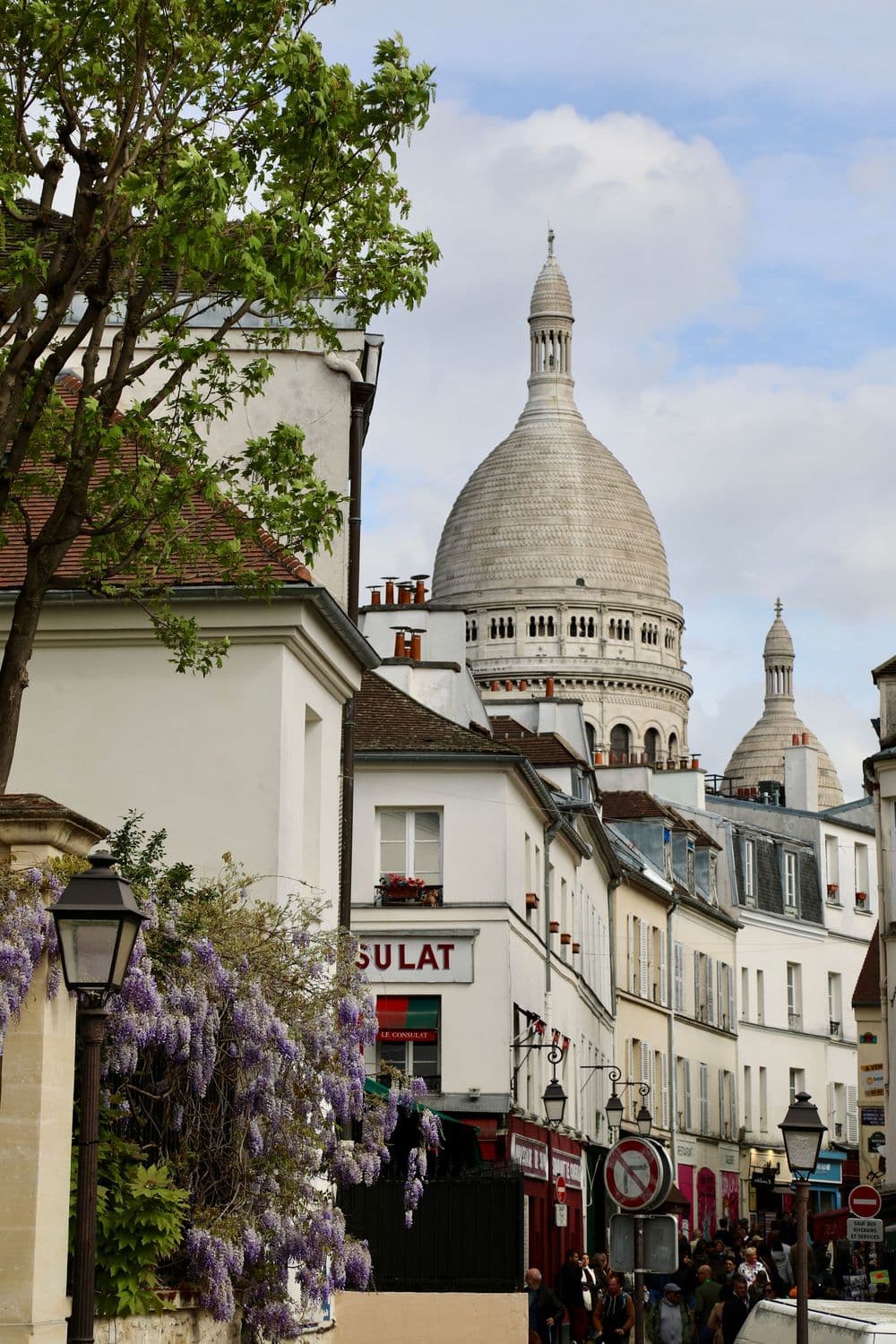
The vow came from two devout Catholic laymen, Alexandre Legentil and his brother-in-law Hubert Rohault de Fleury. In the winter of 1870–71 they promised to help build a church in Paris to the Sacred Heart of Jesus, as penance for the sins they believed had brought defeat. In 1873 the National Assembly backed the project, and the first stone was laid in 1875.
In 1870 Prussia and its German allies crushed France's armies, captured the emperor Napoleon III and laid siege to Paris. To many Catholics the disaster looked like a judgement on a nation that had drifted from its faith.
The Archbishop of Paris, Joseph Guibert, chose Montmartre for the church. The hill's name was traditionally said to come from Mons Martyrum, the Mount of Martyrs. Saint Denis, the first bishop of Paris, and his companions were believed to have been martyred there in the third century.
Between the vow and the vote came the Commune. Early on 18 March 1871, government troops climbed Montmartre to take away cannons that the city's National Guard had parked there. Crowds and guardsmen stopped them, and many soldiers refused to fire. That afternoon two generals, Claude Lecomte and Jacques Clément-Thomas, were shot.
Paris rose against the government, and for two months it ran itself as the Commune. In the "Bloody Week" of May 1871 the army retook the city. Modern historians estimate that 10,000 to 15,000 Parisians were killed.
In July 1873 the conservative National Assembly, elected after the defeat, voted 382 to 138 to declare the basilica a work of public utility. Its supporters spoke of expiation. The vow came before the Commune, so the church was not first planned as penance for it. But to much of the left it looked like the victors' monument, planted on the spot where the revolt began, and the argument never quite ended.
Paul Abadie, an architect known for restoring medieval churches, won the design competition in 1874. The hill had been quarried for gypsum, so the builders sank 83 shafts about 33 metres (108 feet) deep to reach firm ground. Money came from a national subscription. Families could pay for a single stone and have their name carved on it.
In 1895 the great bell, the Savoyarde, arrived. It weighs nearly 19 tonnes, about as much as three elephants, and a team of 28 horses dragged it up the hill. The building was finished in 1914, but the First World War held back its consecration until 16 October 1919.
The white stone comes from Château-Landon, south of Paris. When it rains, the stone gives off calcite, which keeps it white. In 2022 the basilica was finally listed as a national historic monument, over objections from the left.
Climb the long stone staircase through the gardens below the basilica, and stop partway up. Look up at the white domes above you. The gardens on this slope were renamed in 2004 after Louise Michel, one of the best-known fighters of the Commune. Her name now sits at the foot of the church built on the hill where her revolution began.
The Trevlo walk through Montmartre tells this story on the Sacré-Cœur steps, then ends on the terrace in front of the basilica. On the way up it passes the Art Nouveau entrance of Abbesses Métro, Rue des Abbesses, the Moulin de la Galette and the painters of Place du Tertre. Six stops, about twenty-nine minutes of listening, at your own pace.
The first stop is free to play on this page, and your first tour in the app is free.