Stories · Istanbul
Who lived in the Topkapı Palace Harem?
The sultan's mother, wives, concubines, children and servants, guarded by eunuchs. They moved in after 1541, when Suleiman's wife Hürrem led the way.
3 min read

Stories · Istanbul
The sultan's mother, wives, concubines, children and servants, guarded by eunuchs. They moved in after 1541, when Suleiman's wife Hürrem led the way.
3 min read
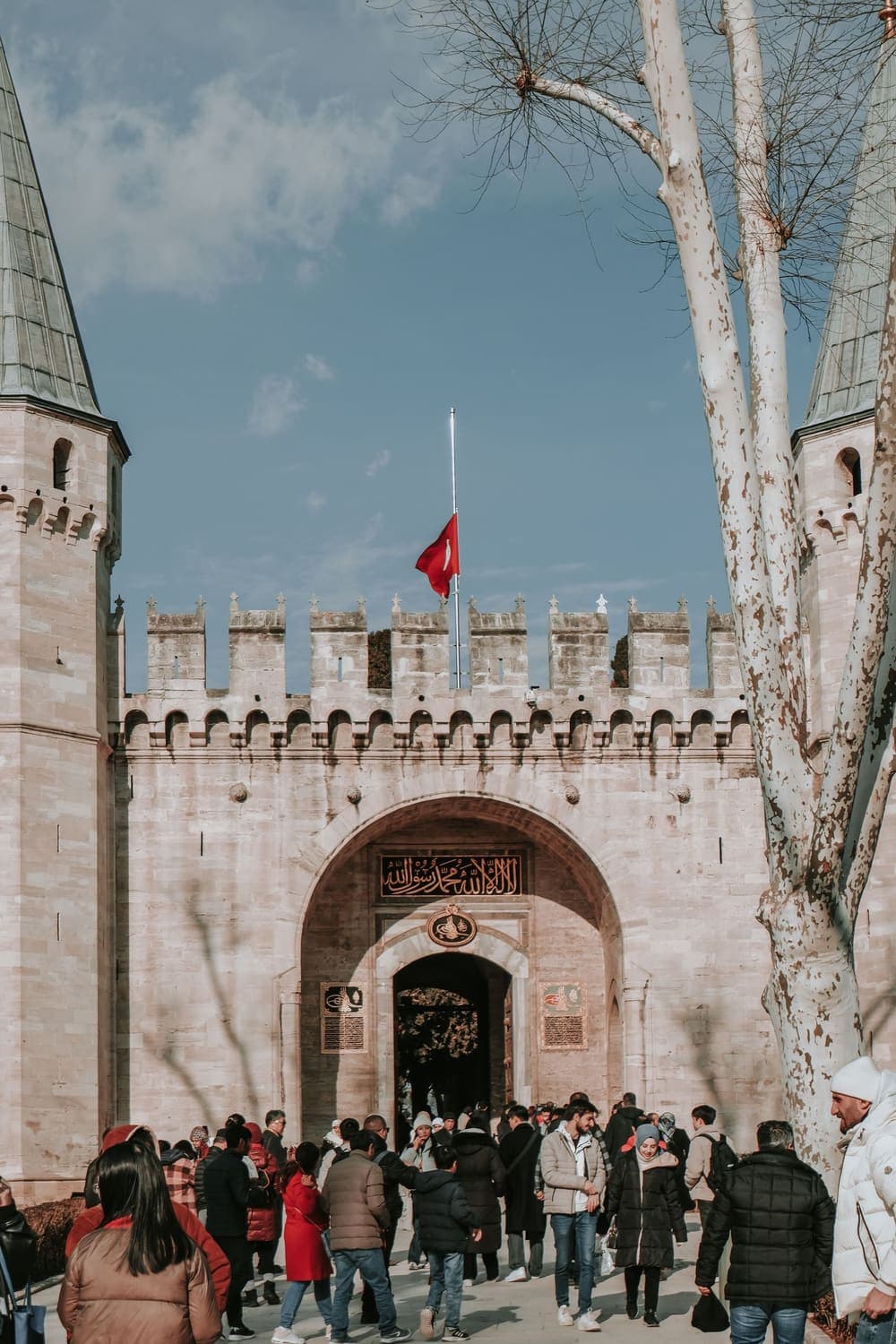
Harem means a protected, forbidden place. At Topkapı it was the private home of the sultan's family: his mother, his wives and concubines, his children and the women who served them, all guarded by eunuchs. Its most famous resident had arrived in Istanbul as a captive.
Mehmed the Second, the sultan who took Constantinople in 1453, began Topkapı six years later as his New Palace. He laid it out as a series of courtyards, each more private than the last, and he made a rule. No women would live in the building where the empire was governed.
So for its first eighty years, the palace was for government and the sultan's own household of men and boys. The women of the dynasty lived in the Old Palace, across the city, where the University of Istanbul stands today.
Hürrem was born in Ruthenia, then part of Poland and now western Ukraine. Crimean Tatar raiders captured her as a girl and sold her through the slave markets of the Black Sea. She ended up in the harem of the young sultan Suleiman. Her name means the joyful one. Europeans called her Roxelana, the girl from Ruthenia.
Ottoman sultans did not marry the women of their harem. Suleiman did. Around 1534 he freed Hürrem and made her his legal wife, something no sultan had done before.
In 1541 a great fire damaged the Old Palace. Hürrem moved into Topkapı, next to the sultan, with her household. From then on the Harem lived beside the council hall, and its women had a voice in the empire's affairs. Hürrem wrote to the king of Poland as one royal to another, and her letters to Suleiman on campaign survive, full of how much she missed him.
Over the next three centuries the Harem grew into a maze of courtyards, corridors, baths and tiled rooms. Its most powerful woman was usually the sultan's mother, the valide sultan. The young women who arrived as servants and concubines were trained in the Harem, and some rose to great influence.
Deep inside were apartments known as the Kafes, the Cage. From the 1600s, princes who might one day be sultan lived there, shut away from the world. In 1808 one of them, the future Mahmud the Second, escaped assassins across the Harem roofs after a servant named Cevri threw hot ashes in their faces. That night he became sultan.
The sultans left Topkapı for a new palace on the Bosphorus in the 1850s, and in 1924 the old palace became a museum.
The Harem's entrance is in the second courtyard of Topkapı Palace, beside the Imperial Council Hall and below the tall Tower of Justice. Visitors go in through the Carriage Gate, where the Harem's women stepped into their closed carriages. Today's palace ticket covers the Harem.
Look at the Carriage Gate before you go in. For centuries it was the Harem's door to the outside world.
The Trevlo tour of Topkapı Palace tells this story at the Harem entrance, its third stop. It starts at the Gate of Salutation. Then it visits the Imperial Council Hall, the Gate of Felicity, the Audience Chamber, the Imperial Treasury and the Baghdad Kiosk. Seven stops, about nineteen minutes of listening, at your own pace.
The first stop is free to play on this page, and your first tour in the app is free.