Stories · Istanbul
Why is it called the Blue Mosque?
For the 21,000 Iznik tiles, mostly blue, that line its walls inside. Its real name is the Sultan Ahmed Mosque, after the sultan who began it in 1609.
2 min read

Stories · Istanbul
For the 21,000 Iznik tiles, mostly blue, that line its walls inside. Its real name is the Sultan Ahmed Mosque, after the sultan who began it in 1609.
2 min read
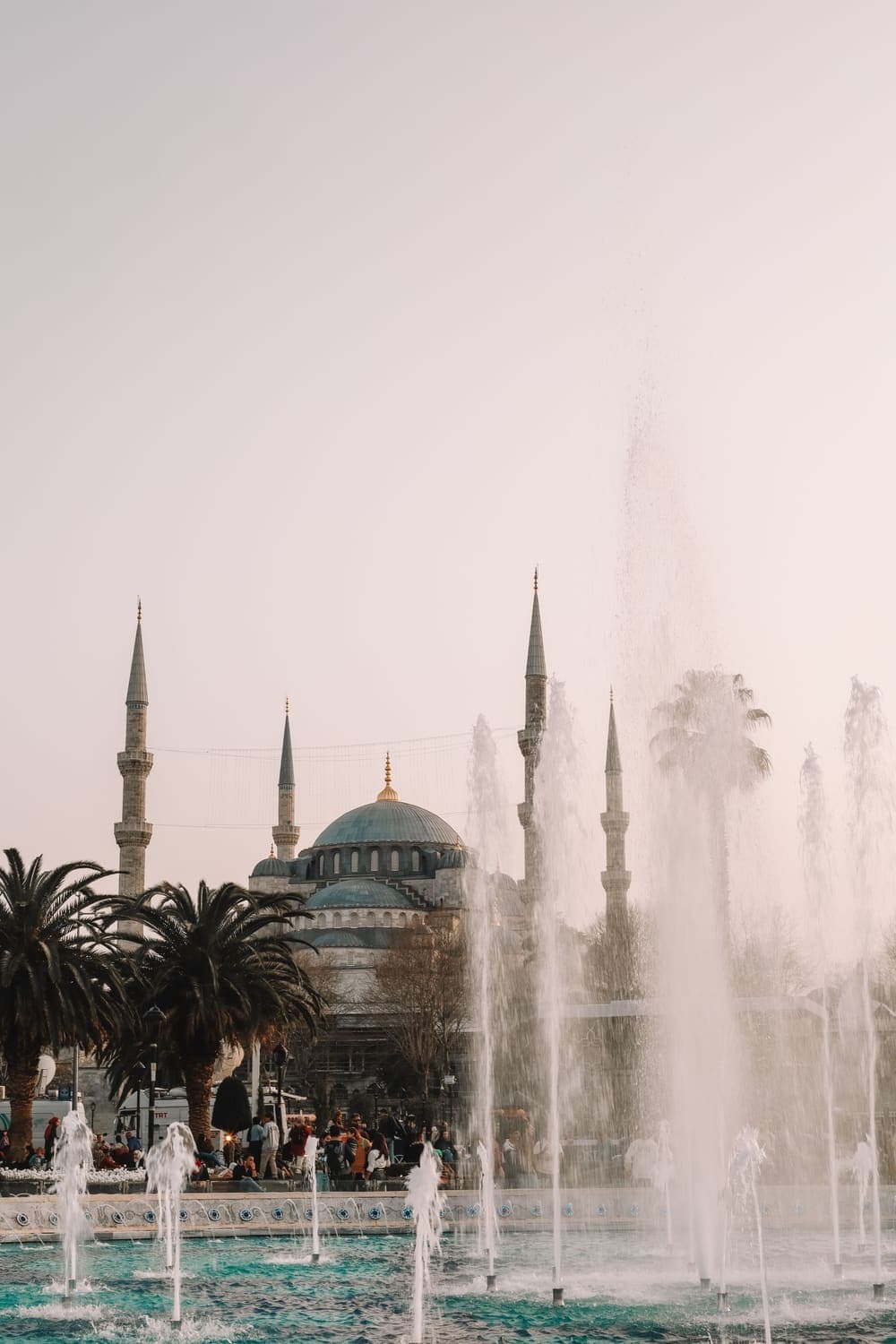
From the outside, the mosque is grey stone and lead domes. The blue is inside: more than twenty-one thousand glazed tiles from the town of Iznik, in over fifty designs, along with painted decoration in the same colours on the domes and arches above. In Turkish it is Sultanahmet Camii, the Sultan Ahmed Mosque, and the whole neighbourhood around it takes its name.
Ahmed the First became sultan in 1603, at thirteen. By custom, a sultan built a great mosque to give thanks for his conquests and paid for it with the spoils of war. Ahmed had won no great war. A long war with the Habsburgs had ended in a draw, and the fighting against Persia was going badly.
He decided to build anyway, facing Hagia Sophia, on ground covered by the mansions of powerful ministers. Buying them out cost a fortune, and the money came from the state treasury. The scholars of Islamic law protested, and some even forbade Muslims to pray in the new mosque. Building began in 1609, when Ahmed was nineteen.
The architect, Mehmed Ağa, had started out as a craftsman setting mother-of-pearl into wood, and had trained in the school of the great architect Sinan. Ahmed loved Iznik tiles. Orders went out to the kilns of Iznik from 1607, and in 1613 the sultan banned the making and selling of the tiles for anyone else until his own were done.
The tiles cover the lower walls and the galleries with tulips, carnations, cypress trees and fruit, mostly in blue, with green, red and turquoise. Some of the finest are on the upper north gallery, which visitors can't easily reach. More than two hundred windows let in the light that shows them off.
The mosque was finished in 1617. Ahmed died the same year, aged twenty-seven. The lavish opening ceremonies won the city over, and it became one of Istanbul's best-loved mosques.
A popular story says Ahmed asked for golden minarets, altın in Turkish, and the architect heard altı, six. At the time only the great mosque in Mecca had six, so, the story goes, Ahmed paid for a seventh there. Historians agree it's only a story. Six minarets fit a building made to impress from every side.
The mosque's courtyard is entered from the side facing the long square of the old Hippodrome. It's a working mosque: visitors go in outside prayer times, with shoulders and knees covered, women with their hair covered, and shoes off.
Inside, look at the lower walls under the galleries, where the tile panels are within arm's reach of the floor. That's the blue the mosque is named for.
The Trevlo tour of the Blue Mosque and the Hippodrome tells this story in the mosque's courtyard, its third stop. It starts at the Basilica Cistern, then visits Sultanahmet Park, the German Fountain, the Egyptian obelisk, the Serpent Column and the Walled Obelisk. Seven stops, about nineteen minutes of listening, at your own pace.
The first stop is free to play on this page, and your first tour in the app is free.