Stories · Barcelona
Why is the Sagrada Familia taking so long?
The Sagrada Família is paid for only by gifts, Gaudí built it to be handed on, and a 1936 fire burned his plans. The main front is due around 2035.
3 min read

Stories · Barcelona
The Sagrada Família is paid for only by gifts, Gaudí built it to be handed on, and a 1936 fire burned his plans. The main front is due around 2035.
3 min read
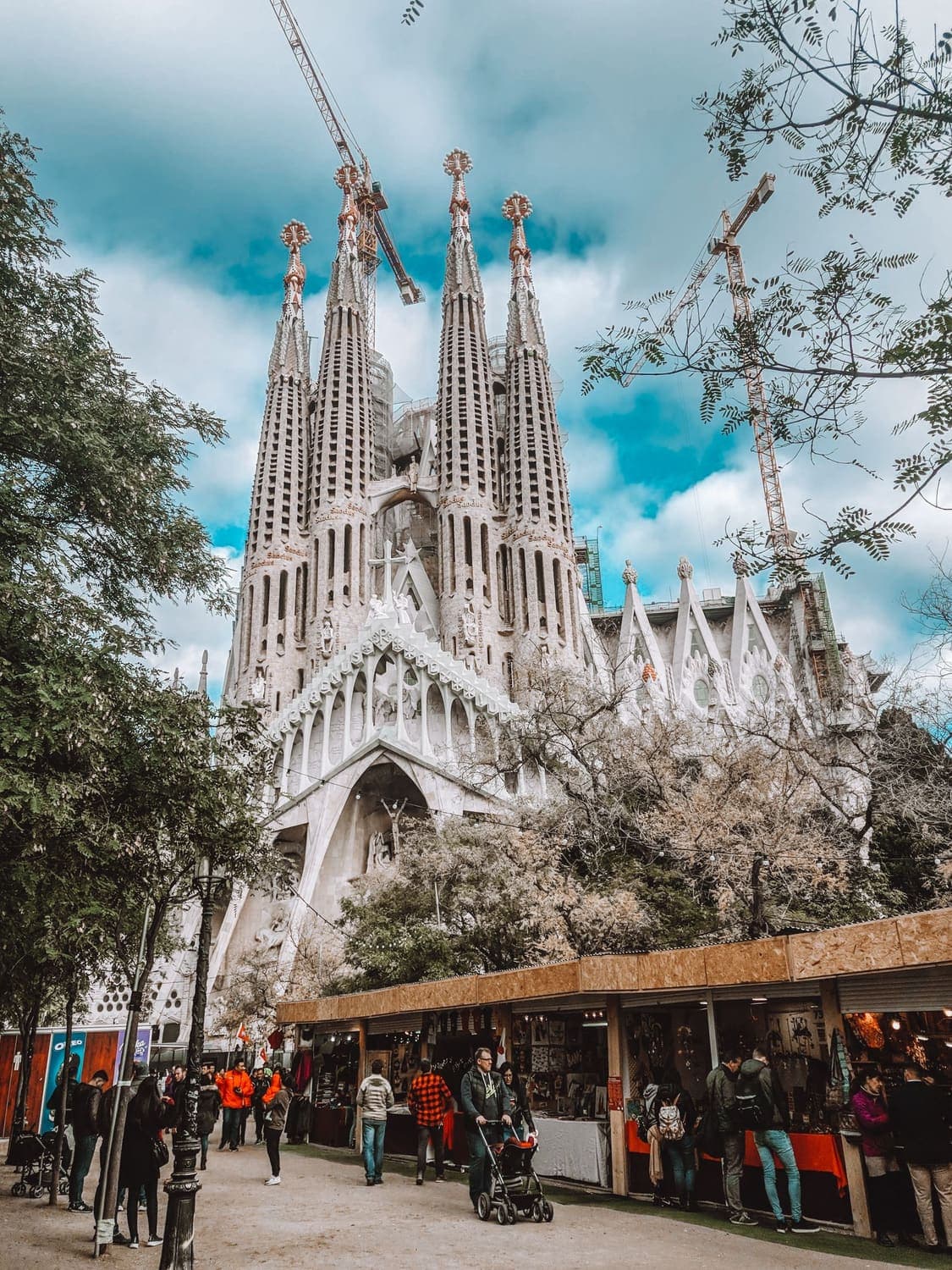
The Sagrada Família has been going up for 144 years, since 1882, for three reasons. Its money has only ever come from gifts, so the walls rose no faster than the donations. Gaudí never expected to see it done and designed it for others to complete. And in 1936 a fire burned his drawings and smashed his models, leaving those who came after to piece his plans back together. Its tallest tower was finished in 2026; the main front, and so the church, is still to come.
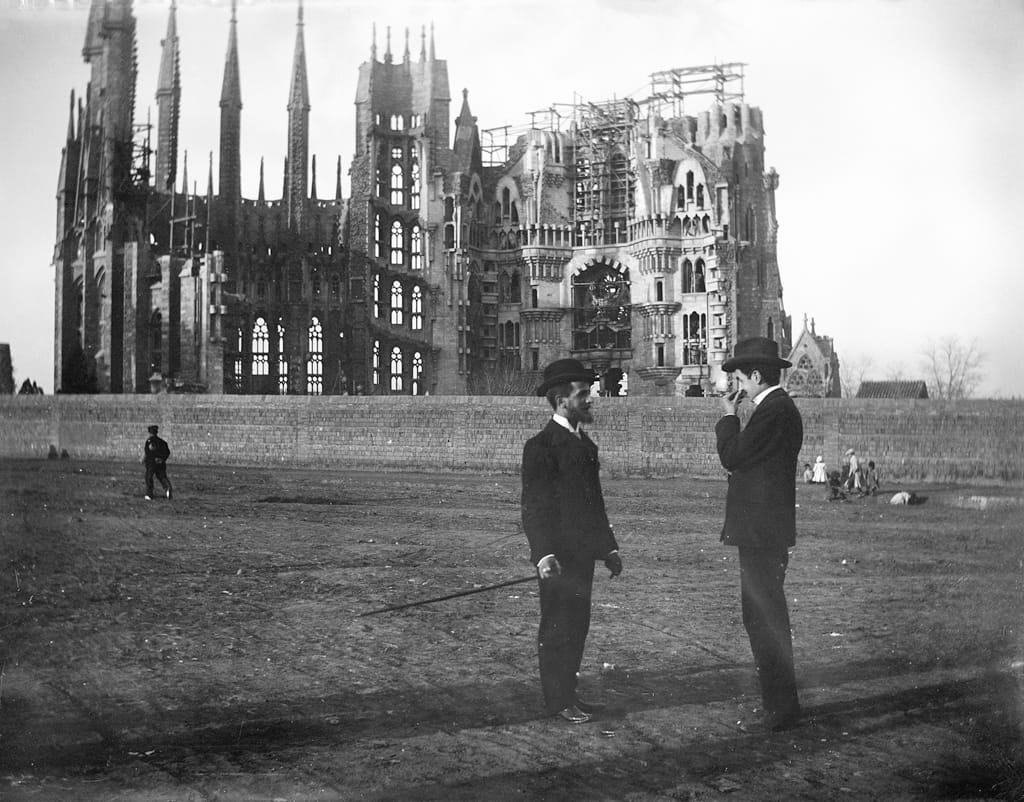
It began with a Barcelona bookseller, Josep Maria Bocabella, whose society of devotees of Saint Joseph wanted a church of atonement under one rule: it would be paid for with alms from the faithful and nothing else. They bought scrubland on the outer edge of the new city, where goats grazed, and laid the first stone in 1882. In 1883 the job went to Antoni Gaudí, aged 31, who had never designed a church. One biographer points out that a beginner came cheaper.
That rule set the pace. When a large legacy came in early on, building sped up for as long as the money lasted. Gaudí went knocking on doors himself, and when he met greed he answered with irony: he wasn't asking for himself but for the house of God. "I am the doorman."
Nor was he in a rush. Asked when it would be done, he liked to answer that his client was in no hurry, meaning God. He left one tower finished, in 1925, so people could see what the whole would be, for his disciples to carry on. He died in 1926.
There is no reason to regret that I cannot finish the church. I will grow old but others will come after me.
Then came the war. On 20 July 1936, two days after the coup that began the Spanish Civil War, anarchists set the crypt alight, and with it the workshop where Gaudí had kept his plans. His drawings and photographs went up in the fire and his plaster models were smashed. His disciples saved the broken pieces, and from 1940 they fitted them back together, several jigsaws scrambled in the same boxes. Work carried on from those and from published plans and photographs.
There was paperwork too. Gaudí applied for a building permit in 1885 and never had an answer. The licence came in 2019 and promised a finish in 2026, a hundred years after his death. The central tower made it: on 20 February 2026 its cross went on, at 172.5 metres the tallest church in the world. The church did not.
What remains is the Glory façade, the main entrance, with four more bell towers. Gaudí drew a great staircase from it across Carrer de Mallorca, landing where people live now. The residents say the staircase was never his; the church says there is an agreement in principle and it is waiting for the city. The estimates say 2035 or 2036. The money now comes from visitors: almost 4.9 million in 2025, and €134.5 million in income, all of it private.
From the pond in Plaça de Gaudí, face the four towers of the Nativity façade, with the central tower and its cross above. One of those four is the only tower Gaudí saw finished. In the museum downstairs are the white plaster models, some rebuilt from the pieces saved in 1936. Finish on Carrer de Mallorca, facing the building site where the front door will be.
The Sagrada Família tour follows the visit in nine stops, about fifty minutes of listening, from the pond through the nave and the museum to the street where the front door has yet to be built.
A free preview of the tour plays on this page, and your first tour in the app is free.