Stories · Tokyo
Why was Senso-ji Temple built?
Senso-ji, Tokyo's oldest temple, was built for a small statue of Kannon that, by the temple's account, two fishermen netted in the Sumida River in 628.
3 min read

Stories · Tokyo
Senso-ji, Tokyo's oldest temple, was built for a small statue of Kannon that, by the temple's account, two fishermen netted in the Sumida River in 628.
3 min read
Kannon is the Buddhist bodhisattva of compassion: a being who has reached enlightenment and stays in the world to help others. The statue has been hidden since 645, and nobody is allowed to see it. People still come in their millions to pray to it, in Asakusa, a district of old Tokyo, at a hall rebuilt in 1958 to protect it.
Early on the morning of 18 March 628, by the temple's account, two brothers were fishing in the Sumida River. Hinokuma Hamanari and Hinokuma Takenari hauled in their net and found a small statue of Kannon in it. The legend adds that they put it back in the river, and it kept coming back to them.
They took it to their village headman, Haji no Nakatomo. He recognised it as a sacred image, became a monk and turned his own house into a temple for it. That house was the start of Senso-ji.
Tokyo did not exist yet. The city grew up around a castle here many centuries later, and the temple in its marshy fishing village became its oldest.
In 645 a monk called Shokai built a proper hall for the statue. The temple says a vision told him to hide it, and he did. It has been a hibutsu, a "secret Buddha", ever since, kept in a locked shrine that even the temple's chief priests don't open.
Its size is a mystery too. A popular saying puts it at about 5.5 centimetres, a little over 2 inches. Senso-ji calls that a folk tale from the Edo period, the centuries of rule by the shoguns, Japan's military rulers.
In 1869 Japan's new government doubted the statue existed at all, and officials had the shrine opened. Their findings, as later retold, describe a figure about 20 centimetres (8 inches) tall, scorched, with no hands or feet.
In 1649 the shogun Tokugawa Iemitsu paid for a grand new main hall. It stood for almost 300 years and came through the great earthquake of 1923.
On 10 March 1945, American bombers set much of Tokyo on fire in a single night. The hall and the temple's five-storey pagoda burned. By later accounts, the hidden statue had been buried about 3 metres (10 feet) under the hall beforehand, inside a bronze water basin, and survived.
Donations from all over Japan paid for a new main hall, finished in 1958. It is built of reinforced concrete, so it won't burn the way the old wooden one did. Since 2010 its roof has been covered in titanium tiles.
The great red gate on the street, Kaminarimon, the Thunder Gate, had burned long before, in 1865. It was rebuilt in 1960 with money from Konosuke Matsushita, the founder of the company now called Panasonic.
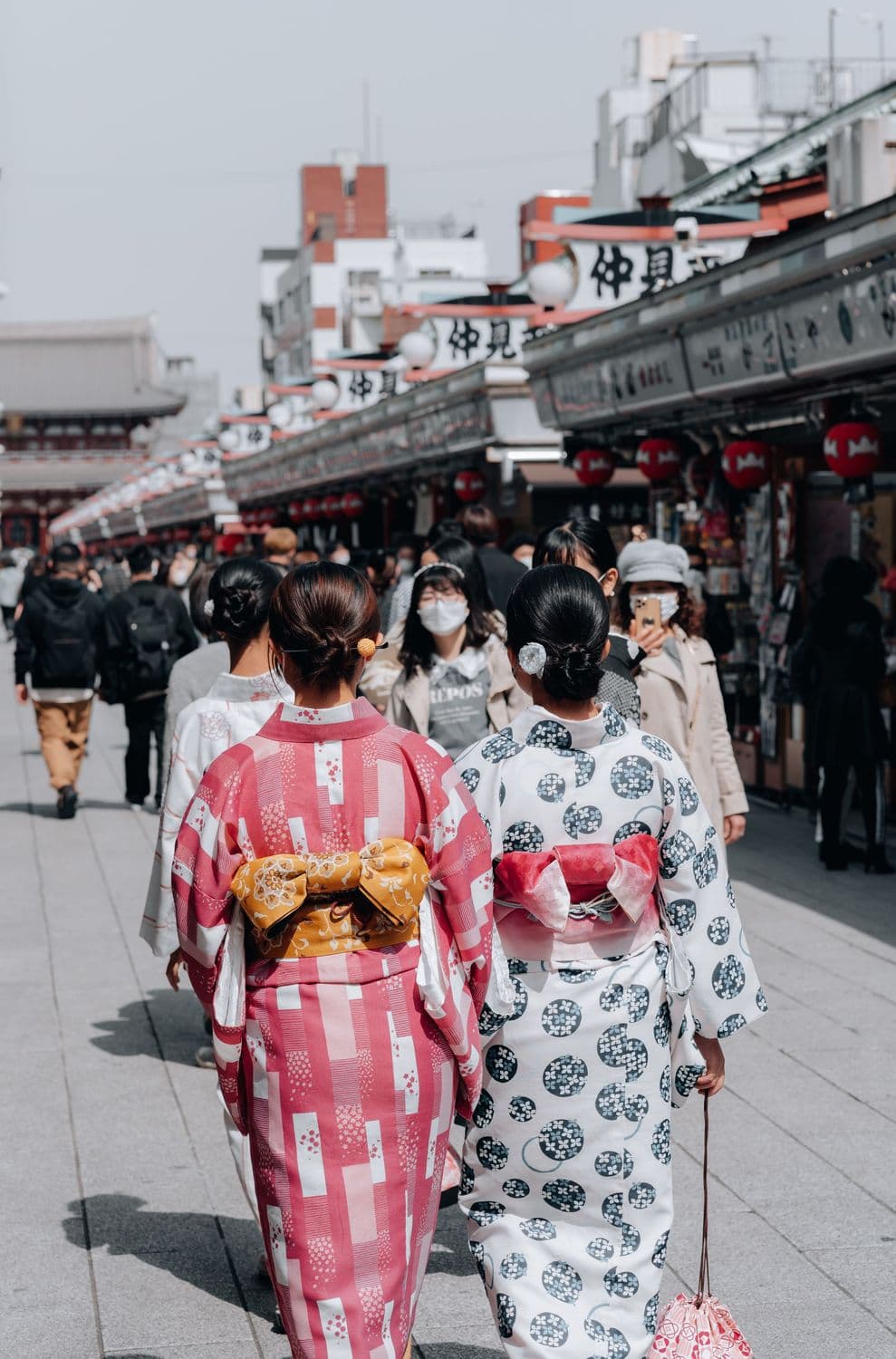
Walk up Nakamise-dori, the lane of small stalls from the Thunder Gate, to the main hall with its sweeping roof. Stop at the foot of its wide steps, by the big bronze incense burner, where people waft the smoke over themselves before they pray.
The statue's shrine is inside, in the inner sanctuary beyond the offering area, closed from view. This is a working place of worship, and the people on the steps have mostly come to pray.
The Trevlo tour of Asakusa tells this story at the Senso-ji Main Hall, its third stop. It begins at the Kaminarimon Thunder Gate and its giant red lantern, walks up Nakamise-dori, then visits the Five-Storey Pagoda and ends at the gate of Denpoin Garden. Five stops, about twenty-six minutes of listening, at your own pace.
The first stop is free to play on this page, and your first tour in the app is free.